~1 min
Average Reply Time
~1 hour
To Be Matched With A Tutor
30 Min Trial
75% Find Their Tutor On The 1st Trial
$20-35+/hr
Premium Yet Affordable Learning
Struggling with transgenic animal production, gene editing protocols, or cloning techniques — and your exam is weeks away?
Animal Biotechnology Tutor Online
Animal biotechnology is an applied biological science that uses genetic, cellular, and reproductive technologies to modify or study animals for agricultural, biomedical, and industrial purposes, equipping students to design experiments, interpret genomic data, and evaluate ethical and regulatory frameworks.
If you’ve searched for an Animal Biotechnology tutor near me and found nothing useful, MEB has covered this subject since 2008 — 1:1 online tutoring and academic guidance in Biotechnology and its specialist branches, including Animal Biotechnology. Every session is matched to your exact syllabus, your current gaps, and your exam date. No generic slides. No pre-recorded content.
- 1:1 online sessions tailored to your course or university module
- Expert-verified tutors with subject-specific postgraduate knowledge
- Flexible time zones — US, UK, Canada, Australia, Gulf
- Structured learning plan built after a diagnostic session
- Ethical academic guidance — you understand before you submit
52,000+ students across the US, UK, Canada, Australia, and the Gulf have used MEB since 2008 — including students in Biotechnology subjects like Animal Biotechnology, Protein Engineering, and Fermentation Technology.
Source: My Engineering Buddy, 2008–2025.
How Much Does an Animal Biotechnology Tutor Cost?
Most Animal Biotechnology tutoring sessions run at $20–$40/hr. Graduate-level or highly specialised topics — CRISPR therapeutics, transgenic livestock design, advanced reproductive technologies — can run up to $100/hr depending on tutor depth. A $1 trial gets you 30 minutes of live tutoring or one homework question explained in full before you commit to anything.
| Level / Need | Typical Rate | What’s Included |
|---|---|---|
| Undergraduate (standard) | $20–$35/hr | 1:1 sessions, homework guidance |
| Postgraduate / Specialist | $35–$100/hr | Expert tutor, niche topic depth |
| $1 Trial | $1 flat | 30 min live session or 1 homework question |
Tutor availability tightens significantly during semester end and assessment submission periods. Book early if your deadline is within four weeks.
WhatsApp MEB for a quick quote — average response time under 1 minute.
Who This Animal Biotechnology Tutoring Is For
Animal Biotechnology draws students from life sciences, veterinary programmes, agricultural science, and biomedical engineering. The content is dense and the lab-theory gap is real — students often understand lecture slides but freeze on application questions.
- Undergraduates tackling gene expression, cloning vectors, or transgenic animal modules for the first time
- Masters students working through research methodology or literature-heavy assignments in reproductive biotechnology
- Students retaking after a failed first attempt — especially those who struggled with molecular mechanisms or regulatory sections
- Students with a university conditional offer depending on this grade
- PhD candidates needing a sharper conceptual foundation before their research proposal
- Parents watching a child’s confidence drop alongside their Biology or Biosciences grades
Students come from universities across the US, UK, Canada, Australia, and the Gulf — institutions including UC Davis, the University of Edinburgh, Wageningen University, the University of Queensland, and McGill.
At MEB, we’ve found that the students who struggle most in Animal Biotechnology aren’t underprepared — they’re missing the connective tissue between molecular biology foundations and their application in animal systems. One session spent rebuilding that link often unlocks three topics at once.
1:1 Tutoring vs Self-Study vs AI vs YouTube vs Online Courses
Self-study works if you’re disciplined, but Animal Biotechnology has too many interlocking mechanisms — a gap in gene regulation will derail cloning and transgenesis questions both. AI tools give fast definitions but can’t diagnose why you keep misapplying restriction enzyme logic. YouTube covers CRISPR overviews well; it stops when you’re stuck on a specific PCR troubleshooting question. Online courses are structured but fixed-pace — no one adjusts when you haven’t fully grasped somatic cell nuclear transfer before the next module starts. 1:1 tutoring with MEB is live, calibrated to your exact module, and corrects errors the moment they appear.
Outcomes: What You’ll Be Able To Do in Animal Biotechnology
After targeted 1:1 sessions, students can solve problems involving restriction mapping and vector design with confidence. They can analyze transgenic animal production workflows and explain where a protocol can fail at each stage. Students learn to apply gene editing frameworks — including CRISPR-Cas9 off-target considerations — to exam case studies. They can write structured answers on ethical and regulatory dimensions of cloning and xenotransplantation, which examiners consistently reward. They present reproductive biotechnology data — embryo transfer success rates, cloning efficiency figures — as part of coherent scientific argument.
Supporting a student through Animal Biotechnology? MEB works directly with parents to set up sessions, track progress, and keep coursework on schedule. WhatsApp MEB — average response time is under a minute, 24/7.
Based on feedback from 40,000+ sessions collected by MEB from 2022 to 2025, 58% of students improved by one full grade after approximately 20 hours of 1:1 tutoring in subjects like Animal Biotechnology. A further 23% achieved at least a half-grade improvement.
Source: MEB session feedback data, 2022–2025.
What We Cover in Animal Biotechnology (Syllabus / Topics)

Molecular and Genetic Tools in Animal Systems
- Recombinant DNA technology: restriction enzymes, ligation, cloning vectors
- Polymerase chain reaction (PCR) — design, troubleshooting, quantitative PCR
- Gene expression systems: promoters, enhancers, reporter genes
- CRISPR-Cas9 and genome editing: mechanism, delivery, off-target effects
- Transgenic animal production: microinjection, embryonic stem cell methods
- Knockout and knock-in animal models for disease research
- DNA fingerprinting and genetic marker applications in livestock
Core texts include Primrose & Twyman’s Principles of Gene Manipulation and Genomics and Murray’s Molecular Biology of the Gene.
Reproductive Biotechnology
- Artificial insemination: protocols, sperm cryopreservation, success rates
- Embryo transfer technology and superovulation induction
- In vitro fertilisation (IVF) in livestock species
- Somatic cell nuclear transfer (SCNT) — Dolly case study and beyond
- Cloning efficiency, epigenetic reprogramming failures, and ethical debate
- Sex determination and sexed semen technology
Recommended reading: Hafez & Hafez’s Reproduction in Farm Animals and Gordon’s Reproductive Technologies in Farm Animals.
Biomedical and Agricultural Applications
- Pharming: transgenic animals as bioreactors for pharmaceutical proteins
- Xenotransplantation: pig-to-human organ compatibility, immune rejection
- Animal models in drug development — regulatory requirements
- Disease resistance through genetic modification in livestock
- Aquaculture applications: growth hormone transgenics, sterile fish production
- Ethical, legal, and regulatory frameworks (EU, FDA, USDA perspectives)
Key references: Murray & Fox’s Biomedical Sciences and the AQA A-Level specifications for students sitting UK-based examinations covering applied genetics.
Students consistently tell us that Animal Biotechnology assessments reward students who can move between mechanism and application in a single answer — describe SCNT, then immediately evaluate why cloning efficiency remains below 5%. Tutors drill this two-step move until it’s automatic.
What a Typical Animal Biotechnology Session Looks Like
The tutor opens by checking the previous session’s topic — say, the student was working on CRISPR delivery methods. They spend five minutes reviewing what stuck and what didn’t. Then the session moves into the core problem: today it’s transgenic animal production via pronuclear microinjection. The tutor works through the protocol step-by-step on screen using a digital pen-pad, annotating directly onto a diagram of the injection process. The student replicates the reasoning — explains each stage back, identifies where expression failure typically occurs, and answers a past-paper question under timed conditions. The session closes with a specific practice task: two embryo transfer calculations and one short-answer question on SCNT ethics. Next topic is logged: cloning efficiency data analysis.
How MEB Tutors Help You with Animal Biotechnology (The Learning Loop)
Diagnose: In the first session, the tutor identifies exactly which mechanisms the student has misunderstood — not just “weak on genetics” but specifically whether it’s vector design, promoter function, or post-translational modification that’s blocking progress.
Explain: The tutor works through live examples using a digital pen-pad — drawing restriction maps, annotating transgene constructs, walking through reproductive technology timelines step by step. No static slides.
Practice: The student attempts problems while the tutor watches. Misapplication of gene editing terminology, incorrect sequencing of embryo transfer steps — these get caught and corrected in real time, not after submission.
Feedback: Step-by-step error correction with explicit mark-scheme logic. The tutor explains exactly why an answer would lose marks and what phrasing earns them.
Plan: At the end of every session, the tutor maps the next topic in sequence, sets a specific task, and notes any prerequisite gaps still to address — keeping the student accountable between sessions.
Sessions run on Google Meet with a digital pen-pad or iPad and Apple Pencil. Before your first session, share your module outline or past paper attempt. The first session doubles as your diagnostic. Start with the $1 trial — 30 minutes of live tutoring that also serves as your first diagnostic. Whether you need a quick catch-up before an exam, structured revision over 4–8 weeks, or ongoing weekly support through the semester, the tutor maps the session plan after that first meeting.
A common pattern our tutors observe is that students arrive having memorised CRISPR steps but unable to explain guide RNA design rationale. Twenty minutes rebuilding the mechanism from first principles changes how every related question gets answered.
Source: MEB tutor observation, 2022–2025.
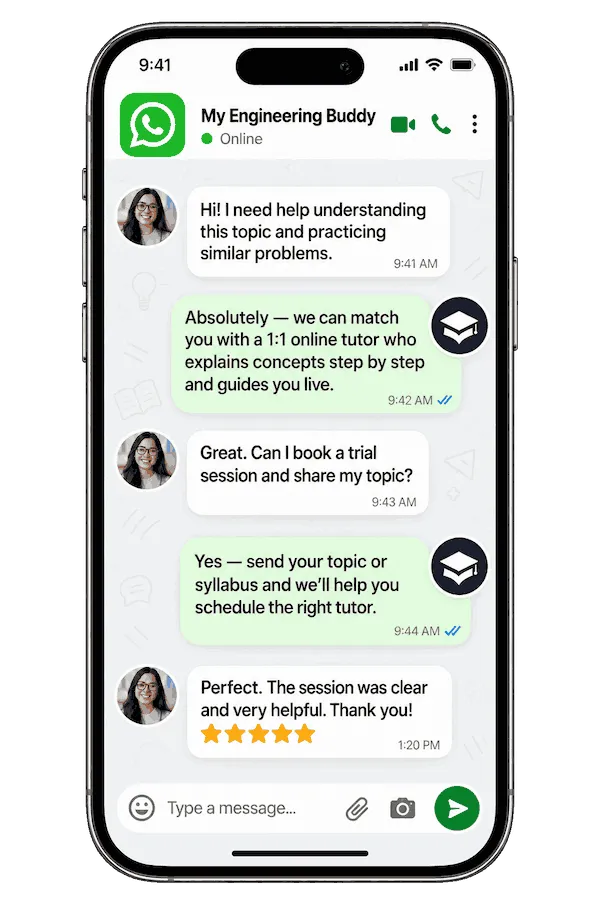
Try your first session for $1 — 30 minutes of live 1:1 tutoring or one homework question explained in full. No registration. No commitment. WhatsApp MEB now and get matched within the hour.
Tutor Match Criteria (How We Pick Your Tutor)
Not every bioscience tutor can cover Animal Biotechnology at postgraduate depth. Here’s what MEB checks before matching.
Subject depth: Tutors hold postgraduate qualifications in molecular biology, veterinary science, agricultural biotechnology, or a closely related field — and are vetted specifically on the topics the student needs.
Tools: All tutors work on Google Meet with a digital pen-pad or iPad and Apple Pencil — essential for drawing molecular diagrams and annotating protocols live.
Time zone: Matched to the student’s region. US, UK, Gulf, Canada, and Australia all covered without unsociable session times.
Goals: Whether the student needs exam score improvement, conceptual depth, Downstream Processing help, or research support for a thesis chapter, the match reflects that specific need.
Unlike platforms where you fill out a form and wait, MEB responds in under a minute, 24/7. Tutor match takes under an hour. The $1 trial means you test before you commit. Everything runs over WhatsApp — no logins, no intake forms.
Study Plans (Pick One That Matches Your Goal)
After the diagnostic, the tutor selects from three approaches depending on your timeline. Catch-up (1–3 weeks): tight focus on the highest-yield gaps before an upcoming assessment. Exam prep (4–8 weeks): structured topic-by-topic revision aligned to your paper dates, with past-paper practice built in. Weekly support: ongoing sessions timed to your semester schedule, keeping coursework and lab report submissions on track. The tutor builds the specific sequence after the first session — not before.
Pricing Guide
Animal Biotechnology tutoring starts at $20/hr for standard undergraduate work. Advanced topics — CRISPR therapeutics, transgenic livestock regulatory frameworks, xenotransplantation case studies — typically run $35–$70/hr. PhD-level or highly specialist research support can reach $100/hr.
Rate factors include academic level, topic complexity, how quickly you need to start, and tutor availability. Availability drops sharply in the four weeks before semester-end assessments — book before that window closes.
For students targeting top research universities or competitive graduate programmes in veterinary science, agricultural biotechnology, or biomedical research, tutors with active research or industry backgrounds are available at higher rates. Share your specific goal and MEB will match the tier to your ambition.
Start with the $1 trial — 30 minutes, no registration, no commitment. WhatsApp MEB for a quick quote.
FAQ
Is Animal Biotechnology hard?
It sits at the intersection of molecular biology, genetics, and applied animal science — so yes, the conceptual load is high. Most students find the jump from theory to application the hardest part. That gap is exactly where 1:1 tutoring is most effective.
How many sessions do I need?
Students with specific exam gaps typically see clear progress in 6–10 sessions. Those needing full-module support over a semester tend to book 15–25 sessions. The tutor maps a realistic plan after the first diagnostic session.
Can you help with practice exercises?
MEB tutoring is guided learning — you understand the work, then submit it yourself. The tutor explains mechanisms, works through examples, and checks your reasoning. See our Academic Integrity policy and Why MEB page for full details on what we help with and what we don’t.
Will the tutor match my exact syllabus or exam board?
Yes. Share your module outline, exam board, or university course code when you contact MEB. Tutors are matched to your specific content — not a generic Animal Biotechnology overview. This matters most for students on specialised or research-led programmes.
What happens in the first session?
The tutor runs a short diagnostic — asking targeted questions to identify your real gaps, not just the topics you think you’re weak on. From that point, every subsequent session follows a logical sequence rather than jumping between topics at random.
Is online tutoring as effective as in-person?
For a subject like Animal Biotechnology, yes. The digital pen-pad replicates whiteboard work fully. Students in the US, UK, and Gulf consistently report the same quality of explanation online as they’d expect face-to-face — often better, because the tutor can annotate diagrams in real time.
Can I get Animal Biotechnology help at midnight or on weekends?
Yes. MEB operates 24/7 across all major time zones. WhatsApp MEB at any hour — the average response time is under a minute. Session booking is typically confirmed within an hour, including outside standard business hours.
What if I don’t get along with my assigned tutor?
Request a replacement immediately. MEB matches a new tutor, usually within the same day. There’s no penalty and no awkward process — just WhatsApp MEB and state the issue. Getting the right fit matters more than any single session.
Do you cover the ethics and regulatory aspects of animal biotechnology?
Yes — and this section is frequently underrevised. Tutors cover EU, FDA, and USDA regulatory frameworks, the ethical debate around cloning and xenotransplantation, and how to write structured exam answers on these topics that actually score marks rather than just restating opinions.
What’s the difference between animal biotechnology and general molecular biology — and does it matter for tutoring?
Animal biotechnology applies molecular tools specifically to animal systems — reproductive technologies, transgenic production, pharming, disease models. A general molecular biology tutor may not know livestock IVF protocols or SCNT specifics. MEB matches tutors with subject-specific depth, not just broad biology coverage.
How do I get started with an Animal Biotechnology tutor?
Start with the $1 trial — 30 minutes of live 1:1 tutoring or one question explained in full. Step 1: WhatsApp MEB. Step 2: get matched within the hour. Step 3: begin your trial session. No registration required.
Can MEB help with Animal Biotechnology research projects and lab report write-ups?
Tutors can help you understand experimental design, interpret results, and structure your scientific argument clearly. The write-up and submission are yours — MEB explains the methodology and reasoning so you can complete the work with confidence.
Trust & Quality at My Engineering Buddy
Every MEB tutor is screened before their first session — degree verification, live demo evaluation, and subject-specific vetting. Tutors covering Animal Biotechnology hold postgraduate qualifications in relevant fields and are assessed on their ability to explain molecular mechanisms, not just recall them. Ongoing session feedback keeps standards in check. Rated 4.8/5 across 40,000+ verified reviews on Google.
MEB tutoring is guided learning — you understand the work, then submit it yourself. For full details on what we help with and what we don’t, read our Academic Integrity policy and Why MEB.
MEB has served 52,000+ students across the US, UK, Canada, Australia, Gulf, and Europe since 2008 — in 2,800+ subjects spanning Biochemical Engineering tutoring, Fermentation Technology tutoring, and Animal Biotechnology alongside them. Students at every level — undergraduate through PhD — have used MEB to close gaps, pass resits, and strengthen research foundations. See our tutoring methodology for how the learning loop works in practice.
Our experience across thousands of sessions shows that students who bring a specific past paper question or assignment problem to their first Animal Biotechnology session make faster progress than those who ask for a general topic review. Come with a problem. Leave with a method.
Source: MEB tutor observation, 2008–2025.
A common pattern our tutors observe is that students delay booking until the week before submission. At MEB, we’ve found that even two well-targeted sessions in that final week can shift the quality of a lab report or essay answer — but three weeks gives you room to actually understand the material.
Explore Related Subjects
Students studying Animal Biotechnology often also need support in:
Next Steps
When you contact MEB, have these ready:
- Your exam board, university module code, or course outline
- A recent past paper attempt or homework question you struggled with
- Your exam or submission deadline date and your available time zones
MEB matches you with a verified Animal Biotechnology tutor — usually within 24 hours. The first session starts with a diagnostic so every minute is used on what actually matters. Before your first session, your tutor handles the rest once you’ve shared the above.
Visit www.myengineeringbuddy.com for more on how MEB works.
WhatsApp to get started or email [email protected].
Reviewed by Subject Expert
This page has been carefully reviewed and validated by our subject expert to ensure accuracy and relevance.