

Hire Verified & Experienced
Architecture Tutors
Email: [email protected]
4.8/5 40K+ session ratings collected on the MEB platform



Hire The Best Architecture Tutor
Top Tutors, Top Grades. Without The Stress!



Your portfolio review is in three weeks and you still can’t explain your structural logic clearly. That needs fixing now.
Architecture Tutor Online
Architecture is the discipline of designing buildings and built environments — integrating structural systems, spatial planning, environmental performance, and design theory. An Architecture tutor helps students master studio projects, technical drawing, and theory coursework across undergraduate, graduate, and professional levels.
If you’ve searched for an Architecture tutor near me and found generic results, MEB is different. Our 1:1 online Architecture tutoring matches you with a subject-specialist — someone who knows the difference between a live-load calculation and a passive solar strategy. Whether you’re an undergraduate wrestling with building science or a master’s student finalising a thesis, you get structured sessions that move the needle.
- 1:1 online sessions tailored to your exact course, studio, or syllabus
- Expert verified tutors with Architecture-specific knowledge and practice experience
- Flexible time zones — US, UK, Canada, Australia, Gulf, Europe
- Structured learning plan built after a diagnostic session
- Ethical homework and assignment guidance — you understand the work before you submit it
52,000+ students across the US, UK, Canada, Australia, and the Gulf have used MEB since 2008 — across 2,800+ subjects, from AP Calculus to A Level Music Technology to Data Science.
Source: My Engineering Buddy, 2008–2025.
How Much Does an Architecture Tutor Cost?
Most Architecture tutoring sessions at MEB cost between $20 and $40 per hour. Graduate-level, thesis support, and highly specialised topics go up to $100/hr. You can start with a $1 trial — 30 minutes of live 1:1 tutoring or one assignment question explained in full.
| Level / Need | Typical Rate | What’s Included |
|---|---|---|
| Undergraduate (Year 1–3) | $20–$35/hr | 1:1 sessions, drawing and theory guidance |
| Graduate / Thesis / Advanced | $35–$100/hr | Expert tutor, research and portfolio depth |
| $1 Trial | $1 flat | 30 min live session or one full homework explanation |
Tutor availability tightens significantly around end-of-semester studio crits and submission deadlines. Book early if your deadline is within four weeks.
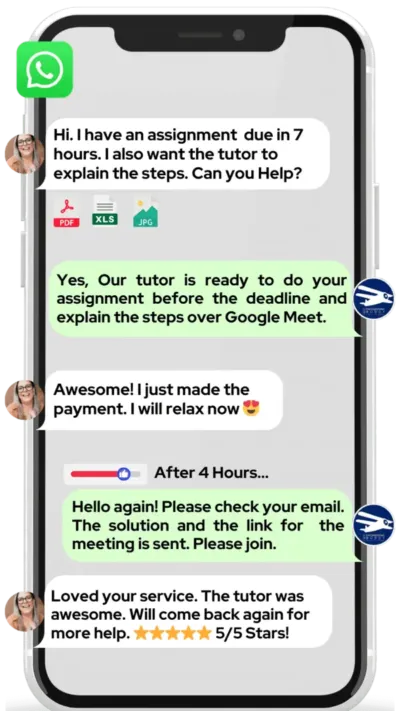
WhatsApp MEB for a quick quote — average response time under 1 minute.
Who This Architecture Tutoring Is For
Architecture students face a workload that combines technical precision, design creativity, and written theory — often simultaneously. Most students who come to MEB are not failing; they’re stuck on one component that’s dragging everything else down.
- Undergraduate students struggling with building science, structures, or environmental systems modules
- Students with a conditional university offer that depends on passing their current Architecture course
- Graduate students developing thesis proposals or design research methodologies
- Students preparing for portfolio reviews or final studio critiques at programmes including MIT, UCL, ETH Zurich, TU Delft, and the Bartlett
- Students who need help connecting architectural history and theory to live design projects
- Parents supporting a student through a demanding first or second year at architecture school
Supporting a student through Architecture? MEB works directly with parents to set up sessions, track progress, and keep coursework on schedule. WhatsApp MEB — average response time is under a minute, 24/7.
1:1 Tutoring vs Self-Study vs AI Tools
Self-study works if you have strong foundations and clear feedback — but most Architecture students repeat the same spatial reasoning or structural errors in every project because no one has ever pointed them out directly. AI tools can explain passive design principles or load paths in seconds, but they cannot look at your section drawing, identify why your structural grid contradicts your circulation logic, and correct it in real time. They also cannot replicate the live annotated critique that actually changes how you draw. MEB gives you an expert who reviews your actual work on screen, flags the gap, and shows you how to close it — calibrated to your specific studio brief and course requirements.
Outcomes: What You’ll Be Able To Do in Architecture
After consistent Architecture tutoring with MEB, students report clear, measurable changes in what they can actually produce. You will be able to solve structural loading problems in timber, steel, and concrete without relying on rules of thumb. You will be able to apply passive solar, thermal mass, and ventilation strategies to a design brief and justify the choices in writing. You will be able to analyse a precedent building — from Aalto to Zaha Hadid — using correct formal and spatial vocabulary. You will be able to present a design concept in a crit with a logical narrative that connects site analysis to form to programme. You will be able to write a theory essay that links architectural history to a contemporary design position.
Based on feedback from 40,000+ sessions collected by MEB from 2022 to 2025, 58% of students improved by one full grade after approximately 20 hours of 1:1 tutoring in a single subject. A further 23% achieved at least a half-grade improvement.
Source: MEB session feedback data, 2022–2025.
Try your first session for $1 — 30 minutes of live 1:1 tutoring or one homework question explained in full. No registration. No commitment. WhatsApp MEB now and get matched within the hour.
What We Cover in Architecture (Syllabus / Topics)
Design Studio and Representation
- Conceptual design development — brief analysis, parti, and iteration
- Technical drawing: plans, sections, elevations, and axonometrics
- Physical and digital model-making strategies
- Site analysis: topography, solar path, wind, context
- Portfolio layout, presentation boards, and crit preparation
- architectural design and drafting help — hand drawing and CAD-based workflows
Core texts include Francis Ching’s Architecture: Form, Space, and Order and Paul Laseau’s Graphic Thinking for Architects and Designers.
Building Technology and Environmental Systems
- Structural systems: columns, beams, trusses, shells, and load paths
- Building envelope: insulation, thermal bridging, and moisture control
- Passive and active environmental strategies — daylighting, natural ventilation, HVAC integration
- Materials science: concrete, timber, steel, glass, and composite assemblies
- Construction detailing and building science tutoring at component scale
- Accessibility standards and building codes — IBC, Eurocodes, and Australian NCC references
Key references: Allen and Iano’s Fundamentals of Building Construction and Grondzik and Kwok’s Mechanical and Electrical Equipment for Buildings.
Architectural History, Theory, and Research
- Western architectural history from antiquity through Modernism and post-war movements
- Critical theory: phenomenology, tectonics, typology, and post-structuralism
- Precedent analysis methods — formal, spatial, material, and contextual readings
- Thesis proposal structure: research question, methodology, and literature review
- Essay writing: argument construction, citation, and referencing (Chicago, Harvard)
- Support for architectural thesis development and research framing
Recommended reading: Kenneth Frampton’s Modern Architecture: A Critical History and Harry Francis Mallgrave’s Architectural Theory.

What a Typical Architecture Session Looks Like
The tutor opens by checking the previous session’s task — usually a revised section drawing or a written justification of a structural choice. From there, the student shares their screen and walks through their current studio work or the assignment they’re stuck on. The tutor uses a digital pen-pad to annotate directly over drawings — correcting a misaligned grid, showing how a roof detail resolves at parapet level, or marking up a theory paragraph for argument clarity. The student then redraws or rewrites a portion with the tutor present, getting immediate correction rather than waiting for a studio crit. The session closes with a specific task: finish the ground floor plan to 1:50, or write 200 words connecting the Smithsons to your own project concept. Next topic is agreed before logging off.
How MEB Tutors Help You with Architecture (The Learning Loop)
Diagnose: In the first session, the tutor reviews a recent piece of work — a drawing, a written critique, or a structural calculation — and identifies exactly where the breakdown is. Is it spatial reasoning? Structural logic? Essay argument structure? The gap is named before any teaching starts.
Explain: The tutor works through the concept live, using a digital pen-pad or shared screen to show annotated examples. For structural topics, this means tracing load paths through a real section. For theory, it means building an argument step by step in front of the student.
Practice: The student attempts the same type of problem while the tutor watches. No leaving it to homework and hoping for the best. The attempt happens in the session, where errors surface immediately.
Feedback: The tutor marks up the attempt — not just what’s wrong, but why it would lose marks in a crit or written assessment, and what a correct version looks like structurally.
Plan: Each session ends with a written task and a topic roadmap. The tutor tracks what’s been covered and what comes next, so no session is wasted on revision of already-solid material.
Sessions run over Google Meet with a digital pen-pad or iPad and Apple Pencil. Before the first session, share your course syllabus or studio brief, a drawing or assignment you’ve struggled with recently, and your submission or crit date. The first session will cover the diagnostic and at least one full worked topic. Start with the $1 trial — 30 minutes of live tutoring that also serves as your first diagnostic.
At MEB, we’ve found that Architecture students make the fastest progress when they stop treating studio and technology modules as separate problems. The tutor who understands your structural system also helps you articulate it in your design narrative — that connection is where the grade actually lives.
Tutor Match Criteria (How We Pick Your Tutor)
Every Architecture tutor at MEB is matched to you before the first session. Here is what determines that match.
Subject depth: Tutors are vetted on the specific area you need — studio design, building technology, history and theory, or thesis supervision. A tutor strong in environmental systems is not assigned to a thesis methodology problem.
Tools: All sessions use Google Meet with digital pen-pad or iPad and Apple Pencil for live drawing annotation. Tutors supporting Architectural AutoCAD tutoring or BIM work use screen sharing alongside annotation.
Time zone: Tutors cover New York, Los Angeles, Chicago, London, Dubai, Toronto, Sydney, Melbourne, and all major US, UK, Gulf, Canadian, Australian, and European time zones, including evenings and weekends.
Learning style: The diagnostic session in the first hour lets the tutor calibrate — some students need visual annotation first, others respond better to worked verbal explanation before drawing.
Communication: Tutors use clear English adapted to the student’s level and course context. A first-year undergraduate and a graduate thesis student get different registers.
Goals: Whether you need to pass a structures exam, tighten a portfolio for a grad school application, or finish a thesis literature review, the match accounts for the specific outcome.
Unlike platforms where you fill out a form and wait, MEB responds in under a minute, 24/7. Tutor match takes under an hour. The $1 trial means you test before you commit. Everything runs over WhatsApp — no logins, no intake forms.
Study Plans (Pick One That Matches Your Goal)
After the diagnostic, your tutor builds a session sequence matched to your deadline. A catch-up plan (1–3 weeks) targets a single failing component before a crit or submission. An exam or review prep plan (4–8 weeks) works through each assessed component systematically. Ongoing weekly support aligns with your semester schedule, keeping coursework and studio deliverables on track throughout the term. The tutor sets the sequence — you don’t need to plan it yourself.
Pricing Guide
Architecture tutoring at MEB starts at $20/hr for standard undergraduate levels. Advanced topics — graduate studio, structural engineering integration, thesis supervision — typically run $40–$100/hr depending on tutor specialisation and session complexity.
Rate factors include: level of study, topic complexity, how close the deadline is, and tutor availability. Rates are confirmed before your first session — no surprises.
Tutor slots fill up fast in the four weeks before end-of-semester crits and submission deadlines. If your crit is within a month, book now.
For students targeting admissions to top architecture programmes — the AA School, Harvard GSD, Columbia GSAPP, ETH Zurich, or the Bartlett — tutors with professional practice and academic research backgrounds are available at higher rates. Share your specific goal and MEB will match the right tier.
Start with the $1 trial — 30 minutes, no registration, no commitment. WhatsApp MEB for a quick quote.
MEB tutors have supported Architecture students at programmes across the US, UK, Canada, Australia, and the Gulf — from first-year foundations through graduate thesis defence, across 2,800+ subjects on one platform.
Source: My Engineering Buddy, 2008–2025.
FAQ
Is Architecture hard?
Architecture is demanding because it combines technical problem-solving with creative design and written theory — all assessed simultaneously. Most students find one of the three consistently harder. A tutor identifies which track is weakest and targets it directly, rather than re-covering what you already know.
How many sessions do I need?
Students with a specific gap to close before a crit often need 4–8 focused sessions. Students using MEB for ongoing semester support typically book weekly. Based on MEB data, around 20 hours of 1:1 tutoring in a single subject produces meaningful grade improvement for the majority of students.
Can you help with homework and assignments?
Yes — tutors explain concepts, walk through technical problems, and give feedback on drawings and written work so you understand the material before you submit. MEB tutoring is guided learning — you understand the work, then submit it yourself. For full details on what we help with and what we don’t, read our Academic Integrity policy and Why MEB.
Will the tutor match my exact syllabus or exam board?
Yes. Before the first session, you share your course outline or studio brief. The tutor is matched to your specific programme, year level, and school — not assigned generically. If you’re on an accredited programme with professional body requirements, that context is factored into the match.
What happens in the first session?
The tutor reviews a recent piece of work — a drawing, a structures problem, or a theory essay — and identifies the core gap. By the end of the first session, you have a diagnosis, at least one worked example, and a clear plan for the next two to four sessions.
Is online tutoring as effective as in-person?
For Architecture, live screen annotation over Google Meet with a digital pen-pad replicates the desk-crit experience closely. Students across the US, UK, and Gulf report the same quality of feedback they’d get in a studio setting — with the added advantage of a recorded session they can review before submission.
Can I get Architecture help at midnight?
Yes. MEB operates 24/7. Tutors cover multiple time zones, so a student in New York at midnight, London at 5am, or Dubai in the early morning can reach a tutor. WhatsApp response time averages under one minute regardless of when you message.
What if I don’t like my assigned tutor?
Tell MEB on WhatsApp immediately. A replacement is arranged without charge or delay. The $1 trial exists precisely so you can test the match before committing to a full schedule. No long intake process, no locked contracts.
How do I find an Architecture tutor in my city?
You don’t need to. MEB sessions run entirely online over Google Meet, so location is irrelevant. Students in Los Angeles, London, Dubai, Toronto, and Sydney all access the same tutor pool. Search for an online sustainable architecture tutor or any Architecture specialism and MEB can match you within the hour.
How do I get started?
Start with the $1 trial — 30 minutes of live tutoring or one full assignment explanation. Three steps: WhatsApp MEB, get matched within the hour, begin your trial session. No registration form, no waiting list, no commitment beyond the first dollar.
Trust & Quality at My Engineering Buddy
Every Architecture tutor on MEB is screened through a subject-specific vetting process that includes qualification checks, a live demo evaluation, and ongoing review based on student feedback. Tutors hold relevant degrees and, where applicable, professional practice experience in architecture or related building disciplines. Rated 4.8/5 across 40,000+ verified reviews on Google, MEB has been matching students with subject-specialists since 2008.
MEB tutoring is guided learning — you understand the work, then submit it yourself. For full details on what we help with and what we don’t, read our Academic Integrity policy and Why MEB. We guide — you submit your own work.
MEB serves 52,000+ students across the US, UK, Canada, Australia, the Gulf, and Europe in 2,800+ subjects since 2008. Whether you need BIM tutoring, support with urban design and planning, or help with construction technology and management, MEB has a verified tutor for the specialism. Learn more about how sessions are structured at MEB’s tutoring methodology page.
Students consistently tell us that the most useful thing about MEB isn’t the explanation — it’s the specific, annotated feedback on their own work. Knowing exactly what cost you marks in last week’s crit changes how you approach the next drawing far more than re-reading a textbook does.
Explore Related Subjects
Students studying Architecture often also need support in:
Next Steps
Getting started takes less than two minutes.
- Share your exam board or course outline, your hardest current component, and your crit or submission date
- Share your availability and time zone
- MEB matches you with a verified Architecture tutor — usually within 24 hours, often faster
Before your first session, have ready: your course syllabus or studio brief, a recent drawing or assignment you struggled with, and your deadline or crit date. The tutor handles the rest.
Visit www.myengineeringbuddy.com to learn more about how MEB sessions are structured and what to expect from the first hour.
WhatsApp to get started or email [email protected].
Architecture demands more than any single studio handout can cover. MEB tutors bring the desk-crit experience online — specific, annotated, and built around your actual work, not a generic curriculum.
Source: My Engineering Buddy, 2008–2025.
52,000+ Happy Students From Various Universities





How Much For Private 1:1 Tutoring & Hw Help?
Private 1:1 Tutoring and HW help Cost $20 – 35 per hour* on average.
Reviewed by Subject Expert
This page has been carefully reviewed and validated by our subject expert to ensure accuracy and relevance.
