

Hire Verified & Experienced
Electrohydraulics & Electropneumatics Tutors
4.8/5 40K+ session ratings collected on the MEB platform



Hire The Best Electrohydraulics & Electropneumatics Tutor
Top Tutors, Top Grades. Without The Stress!
52,000+ Happy Students From Various Universities






How Much For Private 1:1 Tutoring & Hw Help?
Private 1:1 Tutoring and HW help Cost $20 – 35 per hour* on average.
Fluid power circuits failing at the simulation stage. Valve sequencing wrong. Pressure drop calculations off by a factor you can’t explain.
Electrohydraulics & Electropneumatics Tutor Online
Electrohydraulics & electropneumatics combines electrically controlled hydraulic and pneumatic systems — used in industrial automation, motion control, and manufacturing. It equips students to design, simulate, and troubleshoot fluid power circuits with solenoid valves, PLCs, and sensor integration.
If you’re working through mechatronics and hitting a wall on hydraulic sequencing or electropneumatic ladder logic, an electrohydraulics & electropneumatics tutor near me — or more practically, an online one available across your time zone — makes the difference between passing the module and retaking it. MEB has matched 52,000+ engineering students with verified tutors since 2008. Sessions are 1:1, structured around your exact course, and built to get you unstuck fast.
- 1:1 online sessions matched to your university module or industrial training syllabus
- Expert-verified tutors with hands-on fluid power and automation engineering backgrounds
- Flexible scheduling across US, UK, Canada, Australia, and Gulf time zones
- Structured learning plan built after a diagnostic of your current circuit problems
- Ethical homework and assignment guidance — you understand the work, then submit it yourself
52,000+ students across the US, UK, Canada, Australia, and the Gulf have used MEB since 2008 — including students in mechatronics subjects like electrohydraulics & electropneumatics, PLC programming, and electromechanical systems.
Source: My Engineering Buddy, 2008–2025.
How Much Does an Electrohydraulics & Electropneumatics Tutor Cost?
Most sessions run $20–$40/hr depending on level and topic complexity. Graduate-level or highly specialised industrial automation support reaches up to $100/hr. Not sure it’s worth the spend yet? The $1 trial gets you 30 minutes of live 1:1 tutoring — real circuit problems, real feedback, no commitment.
| Level / Need | Typical Rate | What’s Included |
|---|---|---|
| Standard (undergraduate modules) | $20–$35/hr | 1:1 sessions, circuit troubleshooting, hw guidance |
| Advanced / Industrial Specialist | $35–$100/hr | Expert tutor, PLC integration, niche system design |
| $1 Trial | $1 flat | 30 min live session or one full homework question |
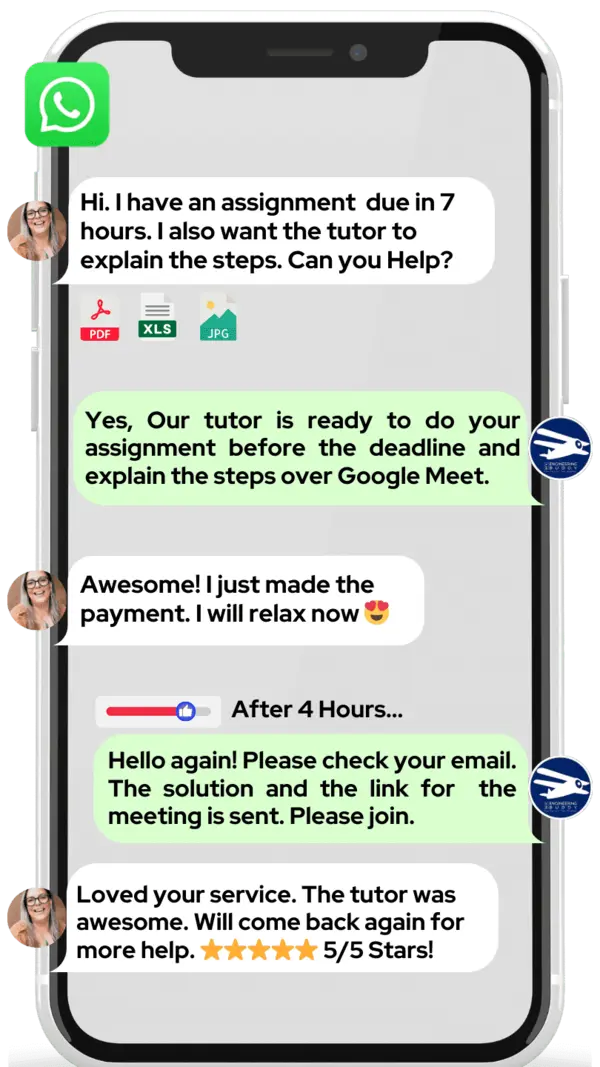
Tutor availability tightens at end-of-semester and during industrial placement assessment windows. WhatsApp MEB for a quick quote — average response time under 1 minute.
Who This Electrohydraulics & Electropneumatics Tutoring Is For
This subject sits at the crossroads of fluid mechanics, electrical control, and automation engineering. It demands precision at every layer — from reading circuit diagrams to building ladder logic in automation engineering contexts. Most students who come to MEB aren’t beginners — they’re stuck on something specific.
- Undergraduate mechanical, mechatronics, or electrical engineering students covering fluid power modules
- Students retaking after a failed first attempt at a hydraulics or pneumatics unit
- Students with a university conditional offer depending on passing this module
- Students 4–6 weeks from an exam with valve sequencing or PLC logic gaps still to close
- Graduate students tackling advanced motion control or industrial automation projects
- Parents watching a child’s confidence drop alongside their fluid power grades
Universities running mechatronics programmes — including institutions in the US, UK, Germany, Canada, and Australia — include electrohydraulics and electropneumatics as a core or elective module. Students progressing into automation, robotics, or aerospace engineering roles are especially well-served by deep, 1:1 grounding in this subject. You can also try the $1 trial if you’re not sure where your gaps actually are — the diagnostic session identifies them fast.
1:1 Tutoring vs Self-Study vs AI vs YouTube vs Online Courses
Self-study works if you’re disciplined — but fluid power circuit faults require someone who can catch your reasoning before it hardens into habit. AI tools explain concepts quickly but can’t watch you trace a hydraulic schematic and tell you where your logic breaks down. YouTube covers the basics of solenoid valve operation fine; it stops when you’re stuck on a specific double-acting cylinder sequencing problem. Online courses are structured but move at a fixed pace that rarely matches your exam timeline. 1:1 tutoring with MEB is live, calibrated to your exact module, and corrects errors in the moment — which matters a lot when the exam tests your ability to build and fault-find circuits under time pressure.
Outcomes: What You’ll Be Able To Do in Electrohydraulics & Electropneumatics
After consistent 1:1 sessions, students can solve multi-actuator hydraulic circuit problems using directional control valves and pressure relief components. They can analyze electropneumatic ladder diagrams and explain the logic of each rung to an examiner. They can model a sequencing circuit using Grafcet or SFC notation without losing track of step transitions. They apply PLC output mapping to solenoid coil activation correctly. They present fault-finding procedures for a jammed cylinder or erratic pressure drop in clear, examinable steps — the kind of answer that earns marks rather than just demonstrates confusion.
Based on feedback from 40,000+ sessions collected by MEB from 2022 to 2025, 58% of students improved by one full grade after approximately 20 hours of 1:1 tutoring in subjects like electrohydraulics & electropneumatics. A further 23% achieved at least a half-grade improvement.
Source: MEB session feedback data, 2022–2025.
At MEB, we’ve found that students who struggle with electrohydraulics most often have one specific gap — not a general weakness. It’s usually valve sequencing logic or misreading a schematic symbol. Fix that one thing clearly, and the rest of the module clicks into place faster than anyone expects.
What We Cover in Electrohydraulics & Electropneumatics (Syllabus / Topics)

Track 1: Hydraulic Systems & Circuit Design
- Pascal’s law, flow rate, and pressure calculations in closed-loop systems
- Directional control valves: 4/2, 4/3, and proportional valve operation
- Pressure relief, pressure reducing, and counterbalance valve functions
- Double-acting and single-acting cylinder sequencing
- Hydraulic motor selection and torque calculations
- Circuit diagram reading and drawing to ISO 1219 symbols
- Fault-finding in hydraulic circuits: pressure drop, leakage, response lag
Core texts: Hydraulics and Pneumatics by Andrew Parr (3rd ed.); Industrial Hydraulics Manual by Eaton Vickers; Fluid Power with Applications by Anthony Esposito.
Track 2: Electropneumatics & Ladder Logic
- Pneumatic cylinder types: single-acting, double-acting, rodless
- Solenoid valve control: direct and pilot-operated switching
- Electropneumatic ladder diagram construction and interpretation
- Limit switch, proximity sensor, and pressure switch integration
- Sequential circuit design using cascade and Grafcet/SFC methods
- Time-delay relay circuits and their pneumatic equivalents
- Troubleshooting erratic cylinder travel and missed sequence steps
Core texts: Pneumatic Control for Industrial Automation by Peter Rohner; Electropneumatics by Festo Didactic; Programmable Logic Controllers by Frank Petruzella.
Track 3: PLC Integration & Simulation
- PLC input/output mapping for solenoid valves and sensors
- Ladder logic programming for hydraulic and pneumatic actuator control
- Structured Text (ST) and Function Block Diagram (FBD) for fluid power sequences
- FluidSIM simulation: building and testing circuits before hardware deployment
- SCADA integration and data acquisition from pressure transducers
- Safety interlock design for hydraulic press and clamping systems
- Commissioning and parameter setting on proportional hydraulic valves
Core texts: Automation with Programmable Logic Controllers by Peter Rohner; FluidSIM User Guide by Festo Didactic; Control Systems Engineering by Norman Nise.
Platforms, Tools & Textbooks We Support
Electrohydraulics and electropneumatics courses regularly use specialist simulation and programming environments. MEB tutors support students working in FluidSIM for circuit simulation, Automation Studio by Famic Technologies for multi-domain fluid power modelling, and standard PLC programming environments including IEC 61131-3 compliant platforms. Tutors also support SCADA integration work where it connects to electrohydraulic system monitoring.
Supported platforms and tools:
- FluidSIM (Festo Didactic)
- Automation Studio (Famic Technologies)
- TIA Portal (Siemens S7 PLC)
- CoDeSys (IEC 61131-3)
- MATLAB/Simulink (hydraulic system modelling)
- AutoCAD (schematic drawing to ISO 1219)
What a Typical Electrohydraulics & Electropneumatics Session Looks Like
The tutor opens by checking the previous topic — usually whether the student correctly applied the cascade method to a three-cylinder sequencing problem or got the pressure relief valve sizing right. From there, the session moves to whatever the student flagged as the current sticking point: often ladder logic for a double-acting cylinder controlled by a 5/2 solenoid valve, or a FluidSIM circuit that won’t simulate correctly. The tutor works through the problem on a digital pen-pad in real time, annotating the schematic symbol by symbol. The student replicates the reasoning — either redrawing the circuit or explaining each rung of the ladder diagram aloud. The session closes with a specific fault-finding task set for independent practice, and the next topic (usually Grafcet sequencing or proportional valve control) is confirmed before the call ends.
How MEB Tutors Help You with Electrohydraulics & Electropneumatics (The Learning Loop)
Diagnose: In the first session, the tutor identifies whether the student’s gaps are conceptual (they don’t understand what a directional control valve actually does) or procedural (they understand but mis-sequence the logic in a cascade circuit). These are different problems and need different fixes.
Explain: The tutor works live problems on a digital pen-pad — drawing hydraulic schematics, annotating ISO 1219 symbols, stepping through ladder logic rungs one at a time. Nothing is assumed. Every symbol gets explained the first time it appears.
Practice: The student attempts the next problem while the tutor watches — building the electropneumatic circuit in FluidSIM or writing the PLC logic. Errors are caught before they become habits.
Feedback: The tutor goes through each mistake step by step. Not “that’s wrong” — but “here’s where the pressure sequence breaks down and why the examiner would deduct marks at this step.” That specificity is what changes grades.
Plan: After each session, the tutor sets the next topic and practice task. Students working toward an exam get a week-by-week progression through the remaining syllabus. Students with a lab report or assignment deadline get a targeted plan around that submission.
Sessions run on Google Meet with a digital pen-pad or iPad and Apple Pencil for live annotation. Before your first session, share your module outline or assignment brief, a recent attempt at a circuit problem, and your exam or submission date. Start with the $1 trial — 30 minutes of live tutoring that also serves as your first diagnostic.
Students consistently tell us that the moment electrohydraulics clicks is when they stop memorising circuit symbols and start thinking in terms of what each valve actually does to the fluid. That shift — from symbol recall to system logic — usually happens in the third or fourth session.
Tutor Match Criteria (How We Pick Your Tutor)
Not every automation tutor knows hydraulic sequencing. MEB matches you based on specifics, not general engineering backgrounds.
Subject depth: Tutor must have verifiable experience in fluid power — either from an engineering degree with a fluid power module, professional automation work, or industrial training with Festo, Bosch Rexroth, or equivalent. General mechatronics is not enough for hydraulic circuit design.
Tools: All sessions run on Google Meet with a digital pen-pad or iPad and Apple Pencil. Tutors working with FluidSIM or Automation Studio demonstrate competency in the specific software version the student uses.
Time zone: Matched to your region — US, UK, Gulf, Canada, or Australia. No guesswork on scheduling.
Goals: Whether you need exam preparation, lab report guidance, or research-level support on proportional valve control systems, the tutor match reflects that specific goal.
Unlike platforms where you fill out a form and wait, MEB responds in under a minute, 24/7. Tutor match takes under an hour. The $1 trial means you test before you commit. Everything runs over WhatsApp — no logins, no intake forms.
Study Plans (Pick One That Matches Your Goal)
After the first diagnostic session, the tutor builds a plan specific to your timeline. Catch-up plans (1–3 weeks) close the most critical gaps fast — usually valve logic and sequencing — before an imminent exam or submission. Exam prep plans (4–8 weeks) work through the full syllabus systematically, with past paper practice built into the final two weeks. Weekly support runs alongside your semester, keeping you current with lectures and assignments rather than playing catch-up. The tutor sets the specific topic sequence after the diagnostic — not before, because the gaps vary too much between students.
Pricing Guide
Standard undergraduate electrohydraulics and electropneumatics tutoring runs $20–$40/hr. Graduate-level support — research projects, advanced proportional control systems, industrial PLC commissioning — reaches up to $100/hr. Rate factors include level, topic complexity, your timeline urgency, and tutor availability at your preferred hours.
For students targeting roles at automation-focused engineering firms or pursuing graduate study in fluid power and control systems, tutors with industrial backgrounds in hydraulic system design and PLC commissioning are available at higher rates — share your specific goal and MEB will match the tier to your ambition.
Availability tightens at end-of-semester and during industrial placement assessment periods. Start with the $1 trial — 30 minutes, no registration, no commitment. WhatsApp MEB for a quick quote.
A common pattern our tutors observe is that students who wait until the week before submission get one session’s worth of value. Students who start four weeks out get a different result entirely — the same number of hours, used when there’s still time to practise. Timing matters more than total hours.
FAQ
Is electrohydraulics & electropneumatics hard?
Yes — it demands simultaneous fluency in fluid mechanics, electrical control, and circuit logic. Most students find valve sequencing and ladder diagram construction the steepest sections. With a tutor who isolates your specific gap early, the learning curve shortens considerably.
How many sessions are needed?
Students with targeted gaps — one topic, one assignment — often see clear progress in 3–5 sessions. Those preparing across a full module typically work through 10–20 sessions over 4–8 weeks. The diagnostic session in your $1 trial gives a more accurate estimate for your situation.
Can you help with homework and assignments?
Yes. MEB tutoring is guided learning — you understand the work, then submit it yourself. Tutors work through circuit design problems and ladder logic tasks with you, explaining each step. See our Academic Integrity policy and Why MEB page for full details on what we help with and what we don’t.
Will the tutor match my exact syllabus or exam board?
Yes. Before matching, MEB asks for your module outline, university, and assessment format. Tutors experienced with Festo Didactic course structures, university mechatronics modules, and industrial certification syllabuses are available. Share your course details when you WhatsApp.
What happens in the first session?
The tutor runs a diagnostic — reviewing a circuit you’ve attempted or a past paper question — to identify where your reasoning breaks down. From there, the session addresses the most urgent gap and sets a clear plan for subsequent sessions. No time is wasted on topics you already have.
Is online tutoring as effective as in-person?
For circuit-based subjects like this, yes. The tutor annotates schematics live on a digital pen-pad, visible in real time over Google Meet. Students consistently find the visual, step-by-step annotation more useful than a whiteboard viewed from an angle across a room.
Can I get electrohydraulics & electropneumatics help at midnight or on weekends?
Yes. MEB operates across multiple time zones and tutors are available 24/7 — including late nights and weekends. If you’re in the US, UK, Gulf, Canada, or Australia and need help outside standard hours, WhatsApp MEB and a tutor is usually matched within the hour.
What if I don’t like my assigned tutor?
Request a change. MEB matches a replacement tutor, typically within 24 hours. The $1 trial exists specifically so you evaluate fit before committing to ongoing sessions. There’s no lock-in and no paperwork — just WhatsApp MEB with your feedback.
Do you offer group electrohydraulics & electropneumatics sessions?
No — all MEB sessions are 1:1. Fluid power circuit troubleshooting is too specific to individual gaps for group formats to work well. Every session is paced around you, not a cohort moving at average speed.
What’s the difference between FluidSIM and Automation Studio for this subject?
FluidSIM (Festo Didactic) is the standard for circuit simulation in university fluid power courses — strong on pneumatic and hydraulic schematic drawing with built-in component libraries. Automation Studio (Famic Technologies) handles multi-domain systems and is used more often in industrial and graduate-level projects. MEB tutors support both. Tell us which your course uses when you get in touch.
Can MEB tutors help with Grafcet and SFC sequencing for electropneumatic systems?
Yes. Grafcet and Sequential Function Chart notation are covered in the electropneumatics track. Tutors work through step-transition logic, divergence handling, and conversion from Grafcet to ladder logic or structured text for PLC implementation — a common exam and assignment requirement.
How do I get started?
WhatsApp MEB, share your subject and timeline, and get matched with a verified tutor — usually within the hour. Your first session is the $1 trial: 30 minutes of live tutoring or one full homework question explained. Three steps: WhatsApp → matched → start trial.
Trust & Quality at My Engineering Buddy
Every MEB tutor goes through subject-specific screening — not a general engineering test. For electrohydraulics and electropneumatics, that means demonstrating circuit design competency, familiarity with fluid power simulation tools, and the ability to explain IEC 61131-3 PLC logic clearly. Tutors complete a live demo evaluation and receive ongoing feedback review based on student session reports. Rated 4.8/5 across 40,000+ verified reviews on Google. That rating reflects 18 years of matching students to tutors who know the subject specifically — not just broadly.
MEB tutoring is guided learning — you understand the work, then submit it yourself. For full details on what we help with and what we don’t, read our Academic Integrity policy and Why MEB.
MEB has served 52,000+ students across the US, UK, Canada, Australia, Gulf, and Europe in 2,800+ subjects since 2008. Within mechatronics and automation, that includes robotics engineering tutoring, help with electromechanical systems, and support for students working through real-time systems (RTOS). Read more about how sessions are structured at MEB’s tutoring methodology.
Explore Related Subjects
Students studying electrohydraulics & electropneumatics often also need support in:
- 3D Printing & Additive Manufacturing
- Arduino Uno
- Autonomous Systems
- Microelectromechanical Systems (MEMS)
- System Dynamics
- PIC Microcontroller
- Avionics
Next Steps
Before your first session, have ready: your module outline or course syllabus, a recent circuit problem or assignment you struggled with, and your exam or submission date. The tutor handles the rest.
- Share your exam board or university module code, the hardest topic, and your current timeline
- Share your availability and time zone
- MEB matches you with a verified electrohydraulics & electropneumatics tutor — usually within 24 hours
The first session starts with a diagnostic so every minute is used well. Visit www.myengineeringbuddy.com for more on how MEB works.
WhatsApp to get started or email meb@myengineeringbuddy.com.
Reviewed by Subject Expert
This page has been carefully reviewed and validated by our subject expert to ensure accuracy and relevance.
