




Hire The Best Hydrology Tutor
Top Tutors, Top Grades. Without The Stress!





52,000+ Happy Students From Various Universities





How Much For Private 1:1 Tutoring & Hw Help?
Private 1:1 Tutoring and HW help Cost $20 – 35 per hour* on average.
Most students who struggle with Hydrology hit the same wall: the equations make sense in lectures, but flood routing or unit hydrograph problems fall apart on paper.
Hydrology Tutor Online
Hydrology is the study of the movement, distribution, and quality of water through the Earth’s hydrological cycle — covering precipitation, runoff, infiltration, and groundwater flow — equipping students to model and manage water systems.
MEB offers 1:1 online tutoring and homework help in 2,800+ advanced subjects, including Hydrology. If you’ve searched for a Hydrology tutor near me, MEB connects you with verified experts who know the rainfall-runoff models, flood frequency analysis, and groundwater equations your course actually tests — matched to your syllabus, your schedule, and your time zone. Find a civil engineering tutor across every sub-discipline, or go straight to Hydrology.
- 1:1 online sessions tailored to your exact course and syllabus
- Expert-verified tutors with civil and environmental engineering backgrounds
- Flexible time zones — US, UK, Canada, Australia, Gulf
- Structured learning plan built after a diagnostic session
- Ethical homework and assignment guidance — you understand before you submit
52,000+ students across the US, UK, Canada, Australia, and the Gulf have used MEB since 2008 — including students in Civil Engineering subjects like Hydrology, Groundwater Engineering, and Water Resources Engineering.
Source: My Engineering Buddy, 2008–2025.
How Much Does a Hydrology Tutor Cost?
Most Hydrology sessions run $20–$40/hr. Graduate-level topics — stochastic hydrology, regional flood frequency analysis, hydrological modelling software — can reach $70–$100/hr depending on tutor specialisation. Start with the $1 trial: 30 minutes of live 1:1 tutoring or one full homework question explained.
| Level / Need | Typical Rate | What’s Included |
|---|---|---|
| Undergraduate (most levels) | $20–$40/hr | 1:1 sessions, homework guidance |
| Advanced / Graduate / Specialist | $40–$100/hr | Expert tutor, niche depth, research support |
| $1 Trial | $1 flat | 30 min live session or 1 homework question |
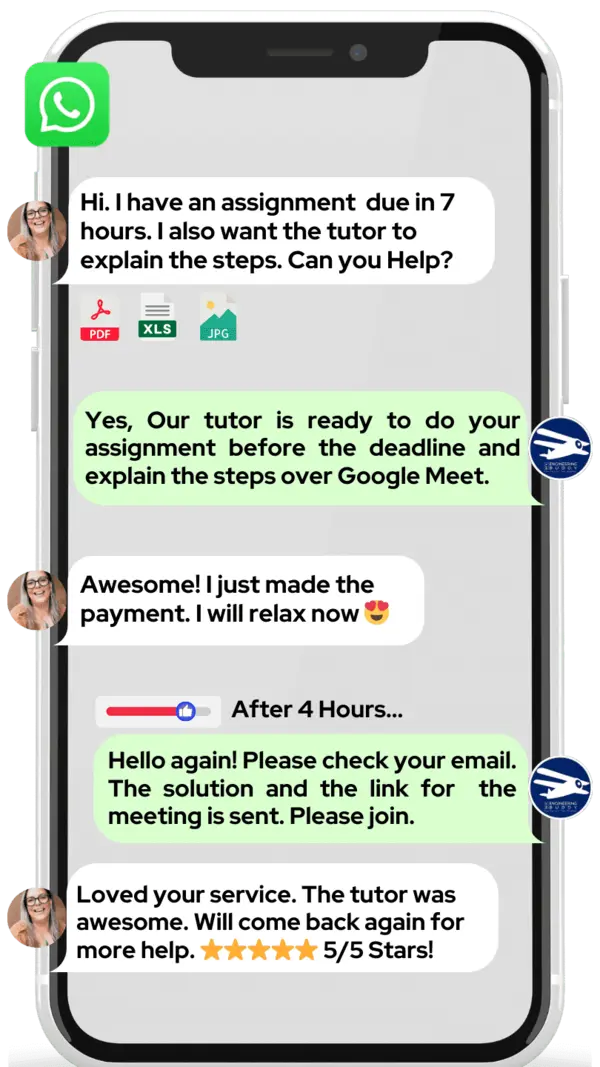
Tutor availability tightens around semester finals and project submission windows. WhatsApp MEB for a quick quote — average response time under 1 minute.
Who This Hydrology Tutoring Is For
Hydrology sits at the crossroads of mathematics, physics, and environmental science. Students often underestimate how quickly the calculus-heavy sections — unit hydrograph convolution, groundwater flow equations — compound on each other.
- Undergraduate civil or environmental engineering students mid-module
- Students retaking after a failed first attempt at Hydrology exams
- Students with a university conditional offer depending on this grade
- Graduate students working through stochastic hydrology or catchment modelling assignments
- Students 4–6 weeks from finals with flood routing or mass balance gaps still open
- Parents watching a student’s confidence drop as water budget problems pile up
Students from universities including MIT, UC Davis, Imperial College London, University of Waterloo, University of New South Wales, ETH Zurich, and Delft University of Technology have used MEB for environmental engineering tutoring and Hydrology support.
1:1 Tutoring vs Self-Study vs AI vs YouTube vs Online Courses
Self-study works if you’re disciplined, but Hydrology problem sets need live feedback — a sign error in the rational method propagates through six steps silently. AI tools explain concepts fast but can’t catch the specific mistake in your IDF curve derivation. YouTube covers rainfall-runoff theory well, then stops the moment you’re stuck on a specific catchment problem. Online courses move at a fixed pace regardless of whether you’ve actually understood storage routing. With a 1:1 Hydrology tutor online, every session is calibrated to where you actually are — not where the syllabus assumes you should be.
Outcomes: What You’ll Be Able To Do in Hydrology
After working with an MEB Hydrology tutor, you’ll be able to apply the rational method and SCS curve number approach to real catchment data, analyze flood frequency distributions using log-Pearson Type III and Gumbel methods, model groundwater flow using Darcy’s Law and well hydraulics equations, solve unit hydrograph problems including S-curve and synthetic hydrograph derivation, and explain the full hydrological cycle — interception, infiltration, evapotranspiration, and baseflow separation — with enough confidence to write it under exam conditions.
Based on feedback from 40,000+ sessions collected by MEB from 2022 to 2025, 58% of students improved by one full grade after approximately 20 hours of 1:1 tutoring in subjects like Hydrology. A further 23% achieved at least a half-grade improvement.
Source: MEB session feedback data, 2022–2025.
Try your first session for $1 — 30 minutes of live 1:1 tutoring or one homework question explained in full. No registration. No commitment. WhatsApp MEB now and get matched within the hour.
What We Cover in Hydrology (Syllabus / Topics)

Surface Water Hydrology
- Hydrological cycle: precipitation types, interception, and depression storage
- Rainfall analysis: IDF curves, design storms, and Thiessen polygon method
- Runoff estimation: rational method, SCS curve number, and abstraction losses
- Unit hydrograph theory: derivation, S-curve, and synthetic hydrograph methods
- Flood routing: Muskingum method, reservoir routing, and storage-indication technique
- Streamflow measurement: stage-discharge relationships, current meters, and flow gauging
- Evapotranspiration: Penman-Monteith equation and potential vs actual ET
Core texts: Chow, Maidment & Mays Applied Hydrology; Shaw et al. Hydrology in Practice; Singh Elementary Hydrology.
Groundwater Hydrology
- Aquifer types: confined, unconfined, perched, and artesian systems
- Darcy’s Law: hydraulic conductivity, gradient, and flow velocity calculations
- Well hydraulics: Theis equation, Cooper-Jacob approximation, and pumping test analysis
- Groundwater flow nets and potential mapping
- Saltwater intrusion and contaminant transport fundamentals
- Recharge estimation methods and baseflow separation techniques
Core texts: Freeze & Cherry Groundwater; Todd & Mays Groundwater Hydrology.
Flood Frequency Analysis and Hydrological Statistics
- Probability distributions: normal, log-normal, Gumbel, and log-Pearson Type III
- Return period and exceedance probability concepts
- Fitting distributions to annual maximum series and partial duration series
- Regional flood frequency analysis and index-flood method
- Monte Carlo simulation in hydrological risk assessment
- Design flood estimation for dam spillways and culverts
Core texts: Stedinger et al. in Handbook of Hydrology; Kite Frequency and Risk Analyses in Hydrology.
What a Typical Hydrology Session Looks Like
The tutor opens by checking the previous topic — usually wherever the student stalled, whether that was the Muskingum routing coefficients or the Cooper-Jacob semi-log plot. From there, student and tutor work through problems together on screen: the tutor sketches the catchment diagram with a digital pen-pad, walks through each step of the unit hydrograph derivation, then hands control back to the student to replicate the method on a new dataset. If a step goes wrong — a wrong value of phi index, a misread of the time-to-peak — the tutor catches it before it cascades. The session closes with one timed practice problem set for the student to attempt solo before the next meeting, and the next topic — usually flood frequency or well hydraulics — is confirmed.
How MEB Tutors Help You with Hydrology (The Learning Loop)
Diagnose: In the first session, the tutor asks you to talk through a problem you’ve already attempted. This isn’t a quiz — it’s to pinpoint exactly where reasoning breaks down, whether that’s setting up the continuity equation, reading a flood frequency graph, or handling unit conversions in SI vs imperial.
Explain: The tutor works live problems using a digital pen-pad — drawing hydrographs, labelling aquifer cross-sections, stepping through the Theis equation term by term. You watch, then you narrate the next step yourself.
Practice: You attempt a parallel problem while the tutor is present. This is where most learning actually happens — not watching, but doing, with immediate correction available.
At MEB, we’ve found that students who attempt a problem during the session — even badly — retain the method far better than those who only watch. Hydrology is particularly unforgiving of passive revision: the calculations chain together, and one shaky step costs marks five lines later.
Feedback: Every error gets a specific explanation: why that step was wrong, which formula applies, and how marks would be awarded in an exam context. Not just “that’s incorrect” — but where the logic split from the method.
Plan: Before the session ends, the tutor maps the next topic and estimates how many sessions sit between you and exam readiness — so you know exactly what’s left to cover.
Sessions run over Google Meet with a digital pen-pad or iPad and Apple Pencil for worked diagrams. Before your first session, share your course outline or past exam paper, any problem sets you’ve struggled with, and your exam date. Start with the $1 trial — 30 minutes of live tutoring that also serves as your first diagnostic.
Tutor Match Criteria (How We Pick Your Tutor)
Not every civil engineer knows Hydrology well enough to tutor it. MEB matches on four specific criteria.
Subject depth: Tutors hold degrees in civil, environmental, or water resources engineering and have worked with the specific topics your syllabus covers — whether that’s US-based rational method applications, UK Flood Estimation Handbook methods, or graduate-level stochastic modelling.
Tools: Every tutor uses Google Meet plus a digital pen-pad or iPad with Apple Pencil — essential for sketching hydrograph shapes and flow nets clearly.
Time zone: Tutors are matched to your region — US, UK, Canada, Australia, Gulf — so sessions don’t require 5 AM starts.
Goals: Whether you need exam-score improvement, conceptual depth for a project, or support for water resources engineering homework, the tutor is matched to your specific objective, not assigned by availability alone.
Unlike platforms where you fill out a form and wait, MEB responds in under a minute, 24/7. Tutor match takes under an hour. The $1 trial means you test before you commit. Everything runs over WhatsApp — no logins, no intake forms.
Study Plans (Pick One That Matches Your Goal)
After the diagnostic, your tutor builds a session sequence from one of three structures. Catch-up (1–3 weeks): targeted at students with specific gaps — a failed flood routing section, a blank groundwater module — who need rapid topic closure before submission. Exam prep (4–8 weeks): full syllabus revision with timed problem practice and past-paper walkthroughs. Weekly support: ongoing sessions aligned to your lecture schedule, covering each new topic before it appears on assessments.
Pricing Guide
Standard Hydrology tutoring runs $20–$40/hr for most undergraduate levels. Graduate-level work — stochastic hydrology, catchment modelling, thesis support — reaches $70–$100/hr depending on the tutor’s specialisation and timeline.
Rate factors: course level, topic complexity, how much notice the tutor has before your exam or deadline, and tutor availability. For students targeting top graduate programmes in water engineering or environmental policy, tutors with research and consultancy backgrounds are available at higher rates — share your specific goal and MEB will match the tier to your ambition.
Availability tightens significantly around semester finals. Book early. Start with the $1 trial — 30 minutes, no registration, no commitment. WhatsApp MEB for a quick quote.
Students consistently tell us that the first session reframes how they read a Hydrology problem. Instead of hunting for a formula, they start by sketching the physical system — catchment boundaries, flow direction, storage zones. That shift alone tends to halve the errors on a typical problem set.
FAQ
Is Hydrology hard?
It depends on your calculus and statistics foundation. The physical concepts are intuitive. The difficulty is in applying probability distributions to flood data, setting up routing equations correctly, and converting between unit systems without error. Most students find it manageable with structured practice.
How many sessions are needed?
For targeted exam prep with specific gaps, 8–12 sessions over four to six weeks is a typical range. Students starting a full module from scratch usually need 15–20 sessions. The diagnostic in session one gives a clearer estimate based on your actual starting point.
Can you help with homework and assignments?
Yes — MEB tutoring is guided learning. The tutor explains the method, works through the logic with you, and you produce and submit the work yourself. See our Academic Integrity policy and Why MEB page for full details on what we help with and what we don’t.
Will the tutor match my exact syllabus or exam board?
Yes. Before matching, MEB asks for your course outline or exam board. Tutors familiar with US university curricula, UK civil engineering programmes, and international variants are available. Sharing your syllabus or a past paper in the first session sharpens the match further.
What happens in the first session?
The tutor reviews a problem or topic you’ve attempted and asks you to walk through your reasoning. This identifies exactly where gaps sit — not just the wrong answer but the step where the logic broke. From there, the tutor builds a session plan specific to your course.
Is online tutoring as effective as in-person?
For Hydrology, yes. The digital pen-pad replicates whiteboard working precisely — the tutor can sketch hydrograph shapes, annotate cross-sections, and step through calculations in real time. Most students find the recorded session replay a significant advantage over in-person sessions.
Can I get Hydrology help at midnight or over the weekend?
Yes. MEB operates 24/7 across time zones. WhatsApp is the primary contact — average response time is under a minute regardless of the hour. Tutors are available across US, UK, Gulf, and Australian time zones for late-night or weekend sessions.
What if I don’t connect well with my assigned tutor?
Tell MEB over WhatsApp. A replacement tutor is arranged without delay — typically within the same day. The $1 trial is specifically designed to let you assess fit before committing to a full session package.
Do you offer group Hydrology sessions?
No. MEB provides 1:1 sessions only. Group sessions dilute the diagnostic precision that makes the method work — a tutor who is teaching three students simultaneously cannot calibrate explanation depth to each individual’s gaps in real time.
What is the difference between Hydrology and Hydraulics — do I need both?
Hydrology focuses on water quantity and movement through the natural environment — rainfall, runoff, groundwater. Hydraulics covers the behaviour of water in engineered systems — pipes, channels, structures. Most civil engineering programmes require both. MEB tutors cover open channel flow tutoring and related hydraulics topics alongside Hydrology if you need both covered.
How do I get started?
Start with the $1 trial — 30 minutes of live 1:1 tutoring or one Hydrology question explained in full. WhatsApp MEB, get matched within the hour, then start your trial session. Three steps: message → matched → begin.
Trust & Quality at My Engineering Buddy
Every MEB tutor goes through subject-specific vetting: degree verification, a live demo session evaluated by senior staff, and ongoing review based on student feedback after each session. MEB tutors in Hydrology hold civil, environmental, or water resources engineering degrees — several have industry backgrounds in flood risk consultancy and catchment management. Rated 4.8/5 across 40,000+ verified reviews on Google.
MEB tutoring is guided learning — you understand the work, then submit it yourself. For full details on what we help with and what we don’t, read our Academic Integrity policy and Why MEB.
MEB has served 52,000+ students across the US, UK, Canada, Australia, the Gulf, and Europe since 2008, covering 2,800+ subjects. In Civil Engineering — including Hydrology, geotechnical engineering tutoring, and structural engineering help — MEB tutors work across undergraduate, graduate, and professional levels. See our tutoring methodology for how sessions are structured.
Our experience across thousands of Hydrology sessions shows that the students who improve fastest are the ones who bring a specific problem they’ve already attempted — not a blank page. The tutor can identify exactly where the reasoning broke, which is worth more than a generic revision lecture.
Explore Related Subjects
Students studying Hydrology often also need support in:
- Dam Engineering
- Irrigation Engineering
- Coastal Engineering
- Soil Mechanics
- Water Supply Engineering
- Water and Wastewater Treatment
- EPANET
- HEC-RAS
Next Steps
Before your first session, have ready: your course syllabus or exam board details, a recent past paper attempt or problem set you’ve struggled with, and your exam or submission deadline. The tutor handles the rest.
- Share your syllabus, hardest topic, and current timeline
- Share your availability and time zone
- MEB matches you with a verified Hydrology tutor — usually within 24 hours
Visit www.myengineeringbuddy.com for more on how MEB works. To get started now: WhatsApp to get started or email meb@myengineeringbuddy.com.
Reviewed by Subject Expert
This page has been carefully reviewed and validated by our subject expert to ensure accuracy and relevance.
