




~1 min
Average Reply Time
~1 hour
To Be Matched With A Tutor
1 Trial
75% Find Their Tutor On The 1st Trial
$1
Your First 30 Minutes
Hire The Best Strength of Materials Tutor
Top Tutors, Top Grades. Without The Stress!




Related Subjects
Statics passed. Now Strength of Materials is the course that ends engineering degrees — 40% failure rates in some programs.
Strength of Materials Tutor Online
Strength of Materials is an undergraduate engineering course covering stress, strain, shear, bending, torsion, and deflection in structural and mechanical components. It equips students to predict how materials deform and fail under real loading conditions.
If you’re searching for a Strength of Materials tutor near me, MEB connects you with a 1:1 online Strength of Materials tutor who knows your exact syllabus — whether that’s Beer & Johnston, Hibbeler, or a custom university course pack. MEB has delivered mechanical engineering tutoring since 2008, and Strength of Materials is one of the most-requested subjects on the platform. You won’t just get an answer — you’ll understand the method before you submit anything.
- 1:1 online sessions tailored to your course, university, and exam structure
- Expert-verified tutors with graduate-level structural and mechanical backgrounds
- Flexible scheduling across US, UK, Canada, Australia, and Gulf time zones
- Structured learning plan built after a diagnostic session
- Ethical homework and assignment guidance — you understand the work, then submit it yourself
52,000+ students across the US, UK, Canada, Australia, and the Gulf have used MEB since 2008 — including students in Mechanical Engineering subjects like Strength of Materials, Engineering Statics, and Mechanics of Materials.
Source: My Engineering Buddy, 2008–2025.
How Much Does a Strength of Materials Tutor Cost?
Most Strength of Materials tutoring sessions run $20–$40/hr. Graduate-level or highly specialised topics — nonlinear analysis, composite materials, FEA-integrated coursework — may reach $60–$100/hr. New students can start with the $1 trial: 30 minutes of live tutoring or one full homework question explained in detail.
| Level / Need | Typical Rate | What’s Included |
|---|---|---|
| Standard (most undergrad levels) | $20–$35/hr | 1:1 sessions, homework guidance, exam prep |
| Advanced / Graduate / FEA-linked | $35–$100/hr | Expert tutor, niche depth, research support |
| $1 Trial | $1 flat | 30 min live session or 1 full homework question |
Tutor availability tightens sharply in the weeks before finals and mid-semester exams. Book early to secure your preferred time slot.
WhatsApp MEB for a quick quote — average response time under 1 minute.
Who This Strength of Materials Tutoring Is For
Strength of Materials trips up students who sailed through Statics. The moment loading diagrams, Mohr’s circle, and multi-axial stress states arrive together, the subject stops feeling manageable. This tutoring is for students who need that fixed — fast.
- Second and third-year undergraduate engineering students (civil, mechanical, aerospace, structural)
- Students retaking after a failed first attempt — gaps closed systematically, not patched
- Students with a university conditional offer depending on this grade
- Graduate students revisiting fundamentals for FEA, Continuum Mechanics, or advanced design courses
- Students 4–6 weeks from finals with shear flow, column buckling, or deflection still unresolved
- Parents watching a child’s confidence drop week after week as problem sets pile up
Students at universities including MIT, Georgia Tech, University of Michigan, University of Toronto, Imperial College London, and UNSW Sydney regularly use MEB for Strength of Materials support.
At MEB, we’ve found that most students who struggle with Strength of Materials don’t have a maths problem — they have a sign convention problem. Once a tutor locks that in during the first session, bending moment diagrams stop being guesswork and start making sense.
1:1 Tutoring vs Self-Study vs AI vs YouTube vs Online Courses
Self-study works if you’re disciplined, but Strength of Materials problems punish sign errors and wrong free-body diagrams with no feedback. AI tools give fast formula lookups but can’t catch why your shear diagram is wrong at step 3. YouTube covers beam bending theory well — then leaves you alone when the distributed load problem doesn’t match. Online courses move at a fixed pace regardless of whether you’ve understood torsion yet. 1:1 tutoring with MEB is live, calibrated to your exact course, and corrects the error the moment it appears — not after you’ve submitted.
Outcomes: What You’ll Be Able To Do in Strength of Materials
After consistent 1:1 work with an MEB tutor, you’ll solve statically determinate and indeterminate beam problems from free-body diagram to final deflection value. You’ll analyze stress transformation using Mohr’s circle and apply principal stress theory to real component failure scenarios. You’ll model torsion in circular and non-circular sections, apply the flexure formula to unsymmetric bending, and explain why a column buckles at its Euler critical load. You’ll write out shear and moment diagrams for complex loading without guessing sign conventions, and apply combined loading theory to problems your exam board repeats year after year.
Based on feedback from 40,000+ sessions collected by MEB from 2022 to 2025, 58% of students improved by one full grade after approximately 20 hours of 1:1 tutoring in subjects like Strength of Materials. A further 23% achieved at least a half-grade improvement.
Source: MEB session feedback data, 2022–2025.
Supporting a student through Strength of Materials? MEB works directly with parents to set up sessions, track progress, and keep coursework on schedule. WhatsApp MEB — average response time is under a minute, 24/7.
What We Cover in Strength of Materials (Syllabus / Topics)
Track 1: Stress, Strain, and Axial Loading
- Normal stress and shear stress — definitions and sign conventions
- Stress-strain diagrams: elastic region, yield point, ultimate strength, fracture
- Hooke’s Law, Young’s Modulus, and Poisson’s ratio
- Thermal stresses and statically indeterminate axial members
- Factor of safety and allowable stress design
- Saint-Venant’s principle and stress concentrations
Core texts: Beer & Johnston Mechanics of Materials (7th ed.), Hibbeler Mechanics of Materials (10th ed.).
Track 2: Torsion, Bending, and Shear
- Torsion of circular shafts — shear stress distribution and angle of twist
- Pure bending and the flexure formula
- Shear force and bending moment diagrams for various loading conditions
- Shear stresses in beams — horizontal and vertical shear flow
- Unsymmetric bending and bending of curved beams
- Built-up beams and shear connectors
Core texts: Gere & Goodno Mechanics of Materials (9th ed.), Philpot Mechanics of Materials.
Track 3: Stress Transformation, Deflection, and Stability
- Plane stress transformation and Mohr’s circle for stress and strain
- Principal stresses and maximum shear stress — 3D state
- Beam deflection by integration, Macaulay’s method, and superposition
- Statically indeterminate beams — three-moment equation and compatibility
- Euler column buckling and effective length factors
- Combined loading: axial + bending + torsion interactions
- Energy methods: strain energy, Castigliano’s theorem
Core texts: Boresi & Schmidt Advanced Mechanics of Materials, Craig Mechanics of Materials.

What a Typical Strength of Materials Session Looks Like
The tutor opens by checking the previous topic — say, shear flow in thin-walled sections — and asking you to reconstruct one step of last session’s problem without notes. From there, the session moves into the current topic: often a multi-step beam problem involving distributed loads, a point moment, and a required deflection at a specific point. The tutor works through the free-body diagram on a digital pen-pad in real time, narrating each sign decision, then hands the problem back to you. You replicate the method while the tutor watches for the exact moment your approach diverges — catching it before it compounds. The session closes with a specific practice problem set and a note on what the next session will cover: combined loading or column buckling, depending on your syllabus sequence.
How MEB Tutors Help You with Strength of Materials (The Learning Loop)
Diagnose: In the first session, the tutor identifies whether your difficulty sits in free-body diagram construction, equation setup, integration errors, or sign convention confusion. These four failure points account for the majority of lost marks in Strength of Materials exams. Knowing which one applies to you changes everything about how the sessions run.
Explain: The tutor works through fully solved problems live — on a digital pen-pad or iPad with Apple Pencil — showing every step rather than jumping to answers. Torsion derivations, Mohr’s circle construction, and deflection integrals are worked from scratch so you see the logic, not just the result.
Practice: You attempt problems with the tutor present. Not after the session. Not at home alone. The tutor observes your process in real time, which is the only way to catch errors in reasoning before they become habits.
Feedback: Every error gets a specific correction — not “that’s wrong” but “your moment equation is missing the reaction at B because your FBD cut is in the wrong place.” That level of precision is what separates 1:1 sessions from every other format.
Plan: After each session, the tutor notes what’s been resolved and what comes next. Students who move from shear diagrams to combined loading without that handoff often repeat earlier mistakes. The plan prevents backsliding.
Sessions run on Google Meet. The tutor uses a digital pen-pad or iPad + Apple Pencil. Before your first session, share your course syllabus or university course outline, a recent problem set or exam you struggled with, and your exam or submission deadline. The first session doubles as your diagnostic. Start with the $1 trial — 30 minutes of live tutoring that also serves as that first diagnostic.
Try your first session for $1 — 30 minutes of live 1:1 tutoring or one homework question explained in full. No registration. No commitment. WhatsApp MEB now and get matched within the hour.
Tutor Match Criteria (How We Pick Your Tutor)
Not every engineer can teach Strength of Materials well. MEB matches on four criteria:
Subject depth: Tutors hold graduate degrees in mechanical, civil, aerospace, or structural engineering and have taught or worked with the specific content — not just passed it. For Finite Element Analysis-linked courses, tutors with FEA professional backgrounds are available separately.
Tools: Every tutor uses Google Meet with a digital pen-pad or iPad + Apple Pencil. No static PDFs, no screen-sharing static notes.
Time zone: Matched to your region — US Eastern through Pacific, UK, Gulf (GST), Canada, Australia AEST.
Goals: Whether you need exam score improvement, homework completion support, conceptual depth for a research course, or a crash course before finals — the match reflects that.
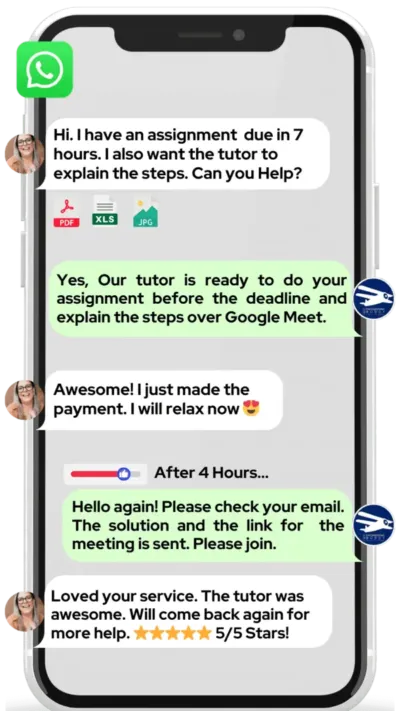
Unlike platforms where you fill out a form and wait, MEB responds in under a minute, 24/7. Tutor match takes under an hour. The $1 trial means you test before you commit. Everything runs over WhatsApp — no logins, no intake forms.
Students consistently tell us that the first session with their MEB tutor felt different — not because the tutor was more qualified on paper, but because they stopped explaining and started asking the student to reason out loud. That shift is where progress begins.
Study Plans (Pick One That Matches Your Goal)
After the diagnostic session, the tutor builds a specific sequence. Three common structures: Catch-up (1–3 weeks) — targeted at students who are behind and need to close a defined gap before a mid-term or assignment deadline; Exam prep (4–8 weeks) — structured revision across all major Strength of Materials topics aligned to your specific exam date and past paper format; Weekly support — ongoing sessions aligned to lecture pace and coursework submission schedule. The tutor determines which sequence fits after session one.
Pricing Guide
Strength of Materials tutoring starts at $20/hr for standard undergraduate levels. Topics like composite material stress analysis, curved beam theory, or energy methods at the graduate level push rates to $60–$100/hr. Factors that affect your rate: course level, topic complexity, how close your exam is, and tutor availability.
For students targeting roles at aerospace firms, structural consultancies, or graduate programmes where Strength of Materials grades matter, tutors with professional structural analysis or research backgrounds are available at higher rates — share your specific goal and MEB will match the tier to your ambition.
Start with the $1 trial — 30 minutes, no registration, no commitment. WhatsApp MEB for a quick quote.
MEB has served 52,000+ engineering students since 2008 — with tutors covering the full mechanical engineering stack, from Engineering Mechanics and Strength of Materials through to advanced Computational Mechanics and simulation-based courses.
Source: My Engineering Buddy, 2008–2025.
FAQ
Is Strength of Materials hard?
Yes — it has one of the highest failure rates of any second-year engineering course. Students who passed Statics comfortably often struggle here because the subject demands both physical intuition and precise mathematical execution simultaneously. A good tutor separates those two demands and builds each one deliberately.
How many sessions are needed?
Most students see measurable improvement within 4–6 sessions. Closing larger gaps — covering shear, bending, torsion, and deflection from scratch — typically takes 12–20 hours over 4–8 weeks. The tutor scopes this after the first diagnostic session.
Can you help with homework and assignments?
Yes. MEB tutoring is guided learning — you understand the work, then submit it yourself. The tutor explains the method and reasoning; you apply it. See our Academic Integrity policy and Why MEB page for full details on what we help with and what we don’t.
Will the tutor match my exact syllabus or exam board?
Yes. Share your university, course code, and textbook during matching. Tutors are selected based on familiarity with your specific syllabus — Beer & Johnston, Hibbeler, Gere, or a custom course pack. No generic coverage.
What happens in the first session?
The tutor runs a short diagnostic — usually one or two problems across different topics — to identify where your understanding breaks down. The rest of the session starts on the most urgent gap. You leave with a clear plan for subsequent sessions.
Is online tutoring as effective as in-person?
For Strength of Materials, yes — arguably more so. The tutor’s digital pen-pad makes worked solutions clearer than a physical whiteboard, and recorded sessions mean you can replay any derivation before your exam. Most MEB students prefer it after the first session.
What’s the difference between Strength of Materials and Mechanics of Materials?
They are the same subject under different names. US universities typically use “Mechanics of Materials”; many European and Commonwealth universities use “Strength of Materials.” The content — stress, strain, bending, torsion, deflection — is identical. MEB tutors cover both naming conventions and all standard textbooks for either course. You can also find dedicated Mechanics of Materials tutoring on the MEB platform.
Do I need to have passed Statics before starting?
Statics is the assumed prerequisite for Strength of Materials at every university that teaches it. If your Statics is weak — especially free-body diagrams and equilibrium equations — your tutor will address those gaps in early sessions before advancing. You don’t need to retake Statics; you need those specific tools shored up. MEB also offers dedicated Engineering Statics help if you want to tackle that separately.
Can I get Strength of Materials help at midnight?
Yes. MEB operates 24/7 across time zones. WhatsApp a message at any hour and a response typically comes within a minute. Tutors are available in late-night slots for US, UK, Gulf, and Australian students — useful when a problem set is due at 8am.
What if I don’t like my assigned tutor?
Say so over WhatsApp and MEB replaces them — usually within the same day. The $1 trial exists precisely for this: you test the tutor before committing to a full session plan. No awkward process. No forms to fill out.
How do I get started?
Three steps: WhatsApp MEB, get matched with a verified Strength of Materials tutor within the hour, then start your $1 trial — 30 minutes of live tutoring or one full problem explained from start to finish. No registration required.
Can you help with Mohr’s circle and stress transformation problems specifically?
Yes — these are among the most-requested topics on MEB’s Strength of Materials sessions. Tutors work through the graphical and analytical methods side by side, explain where students typically mis-plot points or confuse the angle convention, and set targeted practice until the method is automatic.
Trust & Quality at My Engineering Buddy
Every MEB tutor goes through a subject-specific screening process: verified engineering degree and postgraduate credentials, a live demo session evaluated by MEB’s academic team, and ongoing review based on student feedback. Tutors covering Strength of Materials hold graduate qualifications in mechanical, civil, or structural engineering and have demonstrated ability to teach — not just solve — at the level your course demands. Rated 4.8/5 across 40,000+ verified reviews on Google.
MEB tutoring is guided learning — you understand the work, then submit it yourself. For full details on what we help with and what we don’t, read our Academic Integrity policy and Why MEB.
MEB has been operating since 2008, serving 52,000+ students across the US, UK, Canada, Australia, the Gulf, and Europe in 2,800+ subjects. Within Mechanical Engineering, the platform covers everything from Solid Mechanics tutoring and Engineering Dynamics help through to simulation and design courses — with Strength of Materials sitting at the centre of that stack. See our tutoring methodology for how sessions are structured and what MEB holds tutors accountable to.
Our experience across thousands of Strength of Materials sessions shows that the students who improve fastest are not necessarily the ones who study more — they’re the ones who get corrective feedback earlier. One targeted session can reset a month of mislearned habits.
Explore Related Subjects
Students studying Strength of Materials often also need support in:
- Mechanical Vibrations
- Finite Element Method (FEM)
- Design of Machine Elements
- Engineering Thermodynamics
- Fluid Mechanics
- Theory of Machines
- Heat Transfer
Next Steps
Getting started takes under two minutes.
- Share your university, course name, current topic, and exam or deadline date
- Share your availability and time zone
- MEB matches you with a verified Strength of Materials tutor — usually within an hour
- First session starts with a diagnostic so every minute is used on what actually matters
Before your first session, have ready: your syllabus or course outline, a recent problem set or exam you struggled with, and your exam or deadline date. The tutor handles the rest.
Visit www.myengineeringbuddy.com for more on how MEB works.
WhatsApp to get started or email [email protected].
52,000+ Happy Students From Various Universities






Reviewed by Subject Expert
This page has been carefully reviewed and validated by our subject expert to ensure accuracy and relevance.
