~1 min
Average Reply Time
~1 hour
To Be Matched With A Tutor
30 Min Trial
75% Find Their Tutor On The 1st Trial
$20-35+/hr
Premium Yet Affordable Learning
Most students who struggle with GCSE Geography don’t lack effort — they lack someone who can explain why a river meanders or how to structure a 9-mark answer under exam conditions.
GCSE Geography Tutor Online
GCSE Geography is a UK secondary school qualification covering physical and human geography topics — including rivers, coasts, urbanisation, climate change, and development — assessed by exam boards such as AQA, Edexcel, and OCR at grades 9–1.
If you’ve searched for a GCSE Geography tutor near me, MEB delivers the same quality online — live, 1:1, matched to your exact exam board and syllabus. Our GCSE tutoring covers the full range of subjects at this level, and Geography is one of the most in-demand. Students working with an online GCSE Geography tutor from MEB go into the exam knowing how to construct extended answers, apply case studies accurately, and manage their time across Paper 1, Paper 2, and Paper 3. No guarantees — but a clear plan from session one.
- 1:1 online sessions tailored to your specific exam board (AQA, Edexcel, OCR, WJEC)
- Expert-verified tutors with subject-specific Geography knowledge
- Flexible time zones — US, UK, Canada, Australia, Gulf
- Structured learning plan built after a diagnostic session
- Ethical homework and assignment guidance — you understand the work before you submit it
52,000+ students across the US, UK, Canada, Australia, and the Gulf have used MEB since 2008 — including students in GCSE subjects like GCSE History, GCSE Biology, and GCSE Geography.
Source: My Engineering Buddy, 2008–2025.
How Much Does a GCSE Geography Tutor Cost?
GCSE Geography tutoring at MEB starts at $20–$40/hr for most levels. Your first session costs $1 — 30 minutes of live 1:1 tutoring or one homework question fully explained. That’s not a discount code. That’s the actual price of your trial.
Availability tightens significantly in the six weeks before GCSE exam season. If you’re booking in April or May, don’t wait.
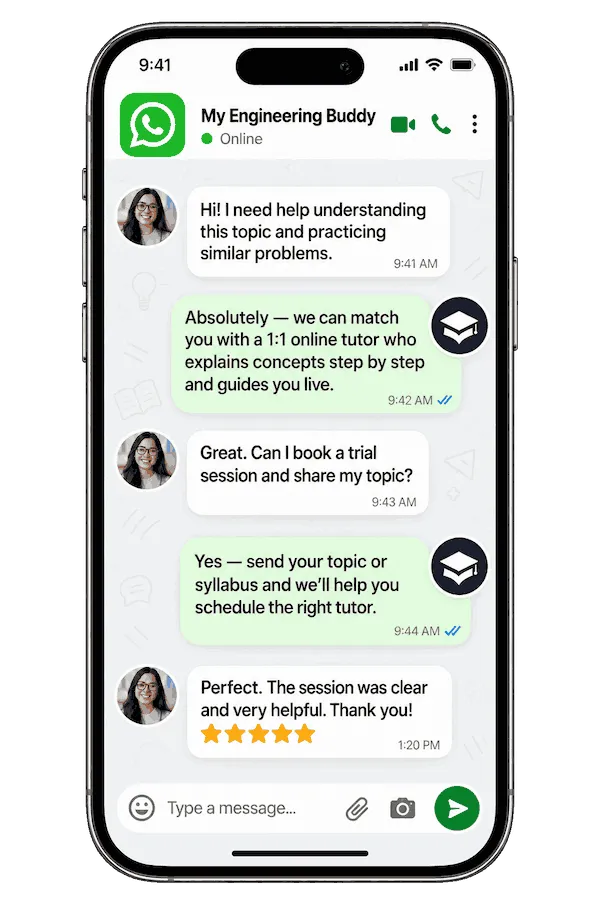
WhatsApp MEB for a quick quote — average response time under 1 minute.
Who This GCSE Geography Tutoring Is For
GCSE Geography sits at an awkward intersection — part memorisation, part application, part extended writing. Students who are mid-grade but not getting better usually have a specific weak point that a textbook can’t diagnose for them.
- Students retaking after a failed first attempt who need targeted gap-filling, not a full restart
- Students 4–6 weeks from their GCSE exam with Paper 3 fieldwork questions still unaddressed
- Students with a university conditional offer depending on this grade
- Parents watching a child’s confidence drop alongside their grades — especially on the extended 9-mark questions
- Students who understand the content but lose marks through poor answer structure
- International students sitting GCSE Geography through UK-curriculum schools in the Gulf or abroad
Students at schools preparing for A Level Geography, Environmental Science, or related subjects at institutions such as Oxford, Cambridge, Durham, Edinburgh, or University College London benefit from GCSE Geography as a foundation. The $1 trial is a low-risk way to find out exactly where you stand.
1:1 Tutoring vs Self-Study vs AI vs YouTube vs Online Courses
Self-study works if you’re disciplined — but GCSE Geography mark schemes are specific, and self-marking is unreliable. AI tools explain concepts quickly but can’t tell you why you lost 3 marks on a specific answer. YouTube is good for introductory overviews of river processes or urban models, but it stops when your question gets specific. Online courses give you structure but move at a fixed pace regardless of what you actually need. A 1:1 GCSE Geography tutor from MEB works through your exact paper, your exact exam board, and your actual answers — correcting errors in the moment, not a week later.
Outcomes: What You’ll Be Able To Do in GCSE Geography
After consistent 1:1 GCSE Geography tutoring, you’ll be able to apply case studies accurately under timed conditions — naming specific locations, dates, and statistics without confusing them under pressure. You’ll analyse data from OS maps, graphs, and photographs in the way AQA and Edexcel mark schemes actually reward. You’ll write structured responses to 9-mark and 12-mark questions using command word logic — “assess,” “evaluate,” and “to what extent” answered with a clear argument, not a list. You’ll explain coastal landform formation processes without mixing up erosion types. And you’ll present fieldwork methodology and data analysis in Paper 3 with confidence.
Supporting a student through GCSE Geography? MEB works directly with parents to set up sessions, track progress, and keep coursework on schedule. WhatsApp MEB — average response time is under a minute, 24/7.
Based on feedback from 40,000+ sessions collected by MEB from 2022 to 2025, 58% of students improved by one full grade after approximately 20 hours of 1:1 tutoring in subjects like GCSE Geography. A further 23% achieved at least a half-grade improvement.
Source: MEB session feedback data, 2022–2025.
At MEB, we’ve found that GCSE Geography students who bring a past paper attempt to the first session make faster progress than those who start cold. The examiner’s mark scheme and your actual response — side by side — tells a tutor more in ten minutes than a full topic review can.
What We Cover in GCSE Geography (Syllabus / Topics)
Coverage is aligned to AQA, Edexcel B, OCR B, and WJEC. The three core tracks reflect how most exam boards structure the content. Your tutor works from your specific board’s specification — not a generic summary.
Physical Geography
- River landscapes: processes (erosion, transportation, deposition), landforms (meanders, oxbow lakes, floodplains), flood management strategies
- Coastal landscapes: wave types, erosion and deposition landforms, managed retreat vs hard engineering
- Glacial landscapes: glacial processes, U-shaped valleys, moraines, human use of glaciated areas
- Weather, climate, and climate change: atmospheric circulation, extreme weather events, causes and consequences of climate change
- Ecosystems: global biomes, tropical rainforest and hot desert ecosystems, human impact and sustainability
- Tectonic hazards: plate boundaries, earthquake and volcanic activity, responses and management
Key textbooks: AQA GCSE Geography (Widdowson et al., Hodder), Edexcel GCSE Geography B (Waugh & Bushell), Complete Geography for GCSE (RGS/Heinemann).
Human Geography
- Urban issues and urbanisation: global patterns, UK urban change, regeneration projects, sustainable cities
- Development and inequality: development indicators (HDI, GNI), causes of unequal development, strategies including aid, trade, and debt relief
- Resource management: global demand for food, water, and energy; sustainable supply strategies
- Population: demographic transition model, migration causes and effects, ageing populations
- Economic change: industrial sectors, UK deindustrialisation, newly industrialising countries (NICs), global supply chains
Key textbooks: GCSE Geography AQA Revision Guide (CGP Books), OCR GCSE Geography B: Geography for Enquiring Minds (OUP).
Geographical Skills and Fieldwork (Paper 3 / Issue Evaluation)
- OS map reading: grid references, contour interpretation, cross-sections, distance calculation
- Statistical skills: mean, median, mode, range, Spearman’s rank correlation
- Graphical skills: climate graphs, scatter graphs, choropleth maps, flow diagrams
- Fieldwork methodology: hypothesis setting, data collection methods, presentation and analysis of primary data
- Issue evaluation (AQA): pre-release resource booklet analysis, extended writing under timed conditions
- Decision-making exercises (Edexcel/OCR): applying evidence to reach a supported conclusion
Key textbooks: GCSE Geography Fieldwork Skills (Collins), AQA GCSE Geography: Skills and Fieldwork (Hodder Education).
| Paper | Content | Weighting (AQA) |
|---|---|---|
| Paper 1 — Living with the Physical Environment | Tectonic hazards, coasts, rivers, glaciers, ecosystems, climate change | 35% |
| Paper 2 — Challenges in the Human Environment | Urban issues, development, resources, economic change, population | 35% |
| Paper 3 — Geographical Perspectives / Issue Evaluation | Skills, fieldwork, pre-release resource booklet, decision-making | 30% |
For authoritative information on GCSE Geography assessment structures and climate-related content, the IPCC is a primary source used in course case studies across all major exam boards.

What a Typical GCSE Geography Session Looks Like
The tutor opens by checking the previous topic — say, coastal landforms — asking you to explain how a stack forms without prompting. From there, the session moves to whatever the diagnostic flagged as the next priority: extended writing structure for “assess” questions, or Spearman’s rank interpretation for Paper 3. The tutor uses a digital pen-pad to annotate diagrams live — drawing a meander sequence, labelling erosion types, showing what a 9-mark answer plan looks like before writing begins. You replicate the process on screen or talk through your reasoning. The session closes with a specific task: one past paper question to attempt independently before the next session, and a note on which case study facts to consolidate.
How MEB Tutors Help You with GCSE Geography (The Learning Loop)
Diagnose: In the first session, your tutor reviews a past paper attempt or a piece of recent work. They identify whether the gap is conceptual (you don’t understand what happens at a destructive plate boundary) or applied (you understand it but can’t write it in the way the mark scheme rewards).
Explain: The tutor works through problems live — annotating OS maps, walking through the demographic transition model stage by stage, showing how to structure a “to what extent” argument. Everything happens on screen using a digital pen-pad, so you see the thinking, not just the answer.
Practice: You attempt the next question or diagram while the tutor watches. Not after — during. Errors get caught before they become habits.
Feedback: The tutor explains exactly where marks were lost and why — not just “needs more development” but “you named the process but didn’t link it to the landform, which the mark scheme requires at this level.”
Plan: At the end of each session, the tutor sets the next topic and one concrete task. Progress is tracked across sessions. If you’re eight weeks from your exam, there’s a sequence. If you’re three weeks out, the sequence is tighter.
Sessions run over Google Meet. The tutor uses a digital pen-pad or iPad with Apple Pencil. Before your first session, share your exam board, your syllabus unit, and any past paper attempt you’ve made — even a rough one. The first session starts with that material. Start with the $1 trial — 30 minutes of live tutoring that also serves as your first diagnostic.
Try your first session for $1 — 30 minutes of live 1:1 tutoring or one homework question explained in full. No registration. No commitment. WhatsApp MEB now and get matched within the hour.
Tutor Match Criteria (How We Pick Your Tutor)
Not every Geography graduate can teach GCSE Geography well. MEB matches on four criteria.
Subject depth: The tutor holds a degree in Geography, Environmental Science, or a closely related field — and has specific experience with your exam board’s specification, whether that’s AQA, Edexcel, OCR, or WJEC.
Tools: Every GCSE Geography tutor at MEB uses Google Meet with a digital pen-pad or iPad and Apple Pencil. Diagram annotation and map work require this — a webcam-only session doesn’t cut it for Paper 3 skills.
Time zone: Tutors are matched to your region — UK, US, Gulf, Canada, or Australia — so sessions happen at hours that don’t require a 6am alarm.
Goals: Whether you need to close a specific topic gap, improve extended answer scores, or build Paper 3 fieldwork confidence, the match reflects that — not a generic tutor assignment.
Unlike platforms where you fill out a form and wait, MEB responds in under a minute, 24/7. Tutor match takes under an hour. The $1 trial means you test before you commit. Everything runs over WhatsApp — no logins, no intake forms.
MEB tutors are matched by exam board, syllabus section, and student goal — not just subject name. A student retaking AQA Paper 1 gets a different tutor profile than one building Paper 3 fieldwork skills for the first time.
Source: My Engineering Buddy, 2008–2025.
Study Plans (Pick One That Matches Your Goal)
Catch-up (1–3 weeks): focused on the highest-weighted topics you haven’t consolidated, with daily past-paper exposure. Exam prep (4–8 weeks): structured revision across all three papers, case study consolidation, and timed extended writing practice. Weekly support: aligned to your school’s scheme of work, with homework guidance built in. The tutor maps the exact sequence after the first diagnostic session — not before, because what you think you need and what the mark scheme reveals are often different things.
Pricing Guide
GCSE Geography tutoring starts at $20–$40/hr. Specialist tutors with exam-board assessment experience or fieldwork expertise may be available at higher rates — share your specific target grade and exam board, and MEB will match the tier accordingly.
Rate factors include: topic complexity (Paper 3 skills vs content recall), proximity to exam date, and tutor availability in your time zone.
For students targeting Grammar School sixth forms, Russell Group universities, or competitive A Level Geography programmes, tutors with stronger academic backgrounds are available — ask MEB directly.
Availability tightens in April and May. Book before the rush. Start with the $1 trial — 30 minutes, no registration, no commitment. WhatsApp MEB for a quick quote.
Students consistently tell us that the biggest gap in GCSE Geography isn’t content — it’s knowing how to write answers that match the mark scheme. A tutor who has marked papers or taught exam technique specifically changes how students approach every question, not just the ones they’ve practised.
FAQ
Is GCSE Geography hard?
It depends on which part. Content knowledge is manageable with consistent revision. The harder challenge is translating that knowledge into extended answers that match the mark scheme’s specific demands — especially “assess” and “evaluate” questions worth 9–12 marks.
How many sessions are needed?
Students with 4–6 weeks before their exam and one or two specific weak areas typically need 8–12 sessions. Students starting from a broader knowledge gap, or targeting a grade jump from 5 to 7+, usually benefit from 15–20 sessions spread across a term.
Can you help with homework and assignments?
MEB tutoring is guided learning — you understand the work, then submit it yourself. The tutor explains concepts, works through examples, and helps you see where your reasoning breaks down. See our Academic Integrity policy and Why MEB page for full details on what we help with and what we don’t.
Will the tutor match my exact syllabus or exam board?
Yes. AQA, Edexcel B, OCR B, and WJEC are all covered. When you WhatsApp MEB, share your exam board and the specific paper or unit causing problems. The tutor assigned will have direct experience with that specification — case studies, paper structure, and mark scheme language included.
What happens in the first session?
The tutor reviews something you’ve already done — a past paper question, a homework piece, or a topic you’ve been revising. This shows where the real gap is. From that, a session plan is built. You won’t spend 30 minutes on a topic you already understand just to fill time.
Is online tutoring as effective as in-person?
For GCSE Geography, yes — and in some ways better. Map annotation, diagram building, and mark scheme review all work well on screen with a pen-pad. There’s no travel time, sessions are easy to record for review, and tutors from the right time zone are available globally.
What’s the difference between AQA and Edexcel GCSE Geography?
AQA covers three papers with a pre-release resource booklet for Paper 3 (Issue Evaluation). Edexcel B organises content differently — more emphasis on global development and geographical investigation coursework. Case studies differ significantly between boards. Your tutor works from your board’s exact specification, not a generic version.
Does GCSE Geography include coursework or fieldwork?
Most GCSE Geography specifications include a fieldwork component assessed through Paper 3 rather than a separate coursework submission — but this varies by board. Tutors help students prepare fieldwork write-ups, understand what evaluators look for in methodology sections, and practise the data analysis questions that appear in the exam.
Can I get GCSE Geography help at short notice — even the night before an exam?
MEB operates 24/7 across time zones. Last-minute sessions are available, though tutor availability decreases during peak exam windows in May–June. WhatsApp MEB immediately — a tutor is typically matched within the hour, even for urgent requests.
Do you offer group GCSE Geography sessions?
No. MEB is 1:1 only. Group sessions dilute the diagnostic focus that makes the difference between a grade 5 and a grade 7. Every session is calibrated to your specific gaps, your exam board, and your timeline — not a class average.
How do I get started?
Three steps: WhatsApp MEB with your exam board and the topic or paper you’re struggling with. MEB matches you with a verified GCSE Geography tutor — usually within an hour. Your first session costs $1 — 30 minutes live or one question fully explained. That’s it.
Trust & Quality at My Engineering Buddy
MEB tutors are screened by subject, not just degree level. Every GCSE Geography tutor completes a live demo evaluation before being matched with students. Ongoing session feedback is reviewed — tutors with consistently low satisfaction scores are removed from the pool. Tutors hold Geography or Environmental Science degrees and have demonstrable experience with at least one major GCSE exam board specification. Rated 4.8/5 across 40,000+ verified reviews on Google.
MEB tutoring is guided learning — you understand the work, then submit it yourself. For full details on what we help with and what we don’t, read our Academic Integrity policy and Why MEB.
MEB has served 52,000+ students across the US, UK, Canada, Australia, the Gulf, and Europe in 2,800+ subjects since 2008. GCSE subjects are among the most accessed on the platform — including GCSE Mathematics tutoring, GCSE Chemistry help, and GCSE Physics tutoring. Our tutoring methodology is built on diagnostic-first sessions — you don’t pay for a generic lesson plan.
MEB has operated since 2008 — before most tutoring platforms existed. 18 years of session data, tutor vetting, and student outcomes inform how Geography tutors are selected and how sessions are structured.
Source: My Engineering Buddy, 2008–2025.
A common pattern our tutors observe is that GCSE Geography students improve their case study recall quickly — but extended writing takes longer. Four to six sessions focused on argument structure, command word interpretation, and timed practice under realistic conditions usually produces a noticeable shift in written answer quality.
Explore Related Subjects
Students studying GCSE Geography often also need support in:
- GCSE Geology
- GCSE Economics
- GCSE Sociology
- GCSE Citizenship Studies
- GCSE Statistics
- GCSE Combined Science
- GCSE Astronomy
Next Steps
You know what’s not working. The next step is straightforward.
- Share your exam board (AQA, Edexcel, OCR, WJEC), the paper or topic causing the most difficulty, and how many weeks you have until your exam
- Share your availability and time zone — UK, US, Gulf, Canada, Australia
- MEB matches you with a verified GCSE Geography tutor, usually within 24 hours
- Your first session starts with a diagnostic — no generic overview, no wasted time
Before your first session, have ready:
- Your exam board and a copy of your specification or course outline
- A recent past paper attempt or a homework question you struggled with
- Your exam date or coursework deadline
The tutor handles the rest. Visit www.myengineeringbuddy.com for more on how MEB works.
WhatsApp to get started or email [email protected].
Reviewed by Subject Expert
This page has been carefully reviewed and validated by our subject expert to ensure accuracy and relevance.