




~1 min
Average Reply Time
~1 hour
To Be Matched With A Tutor
1 Trial
75% Find Their Tutor On The 1st Trial
$1
Your First 30 Minutes
Hire The Best Operating Systems Tutor
Top Tutors, Top Grades. Without The Stress!



Related Subjects
Most students hit a wall at process scheduling or memory management — and a YouTube video doesn’t stop to ask where you got confused.
Operating Systems Tutor Online
Operating Systems is a core computer science subject covering process management, memory allocation, file systems, concurrency, and CPU scheduling. It equips students to understand how software interacts with hardware at the system level.
If you’re searching for an Operating Systems tutor near me, MEB connects you with a verified 1:1 computer science specialist who knows your exact syllabus — whether that’s an undergraduate OS module, a graduate systems course, or a technical exam unit. Sessions run live on Google Meet. Most students see measurable improvement within three to four sessions.
- 1:1 online sessions tailored to your exact course or syllabus
- Expert-verified tutors with subject-specific systems knowledge
- Flexible time zones — US, UK, Canada, Australia, Gulf
- Structured learning plan built after a diagnostic session
- Ethical homework and assignment guidance — you understand before you submit
52,000+ students across the US, UK, Canada, Australia, and the Gulf have used MEB since 2008 — including students in Computer Science subjects like Operating Systems, Computer Organisation & Architecture tutoring, and Concurrent Programming help.
Source: My Engineering Buddy, 2008–2025.
How Much Does an Operating Systems Tutor Cost?
Rates run $20–$40/hr for most undergraduate and taught-postgraduate levels. Advanced graduate or systems-research topics go up to $100/hr. The $1 trial gets you 30 minutes of live 1:1 tutoring or a full explanation of one homework question — no registration needed.
| Level / Need | Typical Rate | What’s Included |
|---|---|---|
| Standard (most undergrad levels) | $20–$35/hr | 1:1 sessions, homework guidance |
| Advanced / Graduate / Research | $35–$100/hr | Expert tutor, deep systems depth |
| $1 Trial | $1 flat | 30 min live session or 1 homework question |
Tutor availability tightens significantly during finals periods and end-of-semester deadlines. Book early if your exam is within four weeks.
WhatsApp MEB for a quick quote — average response time under 1 minute.
Who This Operating Systems Tutoring Is For
Operating Systems trips up students who were fine in introductory programming but find systems-level thinking a different beast. If you can write code but can’t explain what happens when a process calls fork(), this is the gap a tutor closes fast.
- Undergraduates in their second or third year hitting OS for the first time
- Students retaking after a failed first attempt at an OS module
- Graduate students needing OS depth for systems programming or research coursework
- Students with a conditional university offer that depends on passing this module
- Parents watching a student’s confidence drop alongside their grades in a systems course
- Students 4–6 weeks from an exam with real gaps in scheduling algorithms or virtual memory
MEB tutors have worked with students at MIT, Carnegie Mellon, Georgia Tech, University of Toronto, Imperial College London, ETH Zürich, University of Melbourne, and New York University, among others.
Students consistently tell us that Operating Systems feels abstract right up until the moment it doesn’t. That moment usually comes mid-session, when the tutor draws out the page table or traces through a scheduling round — and the student says “oh, that’s what’s actually happening.” That click is what we’re after from session one.
1:1 Tutoring vs Self-Study vs AI vs YouTube vs Online Courses
Self-study: works if you’re disciplined, but OS has too many interdependencies for linear reading alone. AI tools: fast at definitions, can’t diagnose why your page replacement answer keeps losing marks. YouTube: solid for overviews of scheduling algorithms, stops dead when you’re stuck on a specific exam question. Online courses: structured but fixed pace, no one checks your reasoning on a semaphore problem. 1:1 tutoring with MEB: live, calibrated to your exact OS module, corrects errors in the moment — including the subtle ones that cost you points on concurrency questions.
Outcomes: What You’ll Be Able To Do in Operating Systems
After working with an MEB tutor, you’ll be able to solve CPU scheduling problems using First Come First Served, Round Robin, and Shortest Job First, and explain the trade-offs between them. You’ll analyze deadlock conditions using the Banker’s Algorithm and apply Coffman’s four conditions with precision. You’ll model virtual memory systems — including page tables, TLB hits and misses, and page fault handling — without guessing at the steps. You’ll write and explain concurrent programs using semaphores and monitors without introducing race conditions. You’ll present file system structures, inode layouts, and disk scheduling policies clearly in written exam answers.
Based on feedback from 40,000+ sessions collected by MEB from 2022 to 2025, 58% of students improved by one full grade after approximately 20 hours of 1:1 tutoring in subjects like Operating Systems. A further 23% achieved at least a half-grade improvement.
Source: MEB session feedback data, 2022–2025.
Supporting a student through Operating Systems? MEB works directly with parents to set up sessions, track progress, and keep coursework on schedule. WhatsApp MEB — average response time is under a minute, 24/7.
Try your first session for $1 — 30 minutes of live 1:1 tutoring or one homework question explained in full. No registration. No commitment.
WhatsApp MEB now
and get matched within the hour.
What We Cover in Operating Systems (Syllabus / Topics)

Track 1: Process & Thread Management
- Process lifecycle: creation, states, context switching, termination
- Threads vs processes — user-level vs kernel-level threads
- CPU scheduling algorithms: FCFS, SJF, Round Robin, Priority, MLFQ
- Inter-process communication: pipes, message queues, shared memory
- Synchronisation: semaphores, mutexes, monitors, condition variables
- Deadlock: Coffman conditions, detection, prevention, avoidance, Banker’s Algorithm
Core texts for this track: Operating System Concepts by Silberschatz, Galvin & Gagne (the “Dinosaur Book”); Modern Operating Systems by Tanenbaum.
Track 2: Memory & Storage Management
- Memory allocation: contiguous, paging, segmentation
- Virtual memory: demand paging, page tables, TLB, page fault handling
- Page replacement algorithms: FIFO, LRU, Optimal, Clock
- Thrashing — detection and working-set model
- File systems: FAT, ext4, inode structures, directory management
- Disk scheduling: FCFS, SSTF, SCAN, C-SCAN
- I/O management and device drivers — interrupt handling
Core texts: Operating Systems: Three Easy Pieces (Arpaci-Dusseau, free online); Computer Organization and Architecture by Stallings for hardware context — pair with memory management tutoring for deeper coverage.
Track 3: Concurrency, Security & Distributed Concepts
- Race conditions, critical sections, Peterson’s solution
- Classic synchronisation problems: Dining Philosophers, Readers-Writers, Bounded Buffer
- Kernel architecture: monolithic, microkernel, hybrid
- OS security: access control, privilege separation, system call interfaces
- Introduction to distributed OS concepts — network OS vs distributed OS
- Virtualisation basics: hypervisors, containers, namespaces
Supporting texts: The Linux Programming Interface by Kerrisk; Operating Systems: Principles and Practice by Anderson & Dahlin. Students interested in the security angle can also explore systems programming help alongside OS work.
What a Typical Operating Systems Session Looks Like
The tutor opens by checking the previous topic — usually where the student got stuck on a scheduling problem or a page replacement walkthrough from last time. From there, the session moves to the current weak point: maybe it’s tracing through a Round Robin CPU schedule with a given time quantum, or working out the number of page faults under LRU versus FIFO for a specific reference string. The tutor writes everything out on a digital pen-pad, step by step, while the student watches and then attempts the next example. If the reasoning is wrong — say, the student misapplies the Banker’s Algorithm on a safety check — the tutor catches it in the moment, not in feedback three days later. The session closes with a specific practice problem set: three scheduling questions, one deadlock scenario, or a virtual memory walkthrough to complete before next time.
How MEB Tutors Help You with Operating Systems (The Learning Loop)
Diagnose: In the first session, the tutor identifies exactly which OS concepts are causing marks to drop. That’s usually one of three things — scheduling algorithm confusion, virtual memory misapplication, or concurrency errors that the student can’t see. The tutor doesn’t guess; they ask the student to work through a problem live.
Explain: The tutor works through solved examples on a digital pen-pad — tracing a Round Robin schedule, drawing a page table lookup, or stepping through a semaphore wait-signal sequence. You watch, then you try. You don’t just read the answer.
Practice: You attempt the next problem with the tutor present. No looking things up, no skipping steps. If you get stuck on which process gets CPU next in a preemptive priority schedule, the tutor doesn’t jump in immediately — they let you reason out loud first.
Feedback: Every error gets a “why” attached. Not just “that’s wrong” — but “you’re calculating the burst time remaining incorrectly because you’re not accounting for the preemption point.” That kind of correction sticks.
Plan: At the end of each session, the tutor maps the next topic sequence. If deadlock is solid, the next session moves to virtual memory. If there’s an assignment on concurrent programming due in a week, that jumps the queue.
Sessions run on Google Meet with a digital pen-pad or iPad and Apple Pencil. Before your first session, have your course syllabus or module guide ready, plus any past papers or assignments you’ve struggled with. The first session doubles as a diagnostic. Start with the $1 trial — 30 minutes of live tutoring that also serves as your first diagnostic.
A tutor who knows Operating Systems doesn’t just re-explain the textbook. They know which exam questions consistently trip students up — and they build sessions backwards from those specific failure points.
Source: My Engineering Buddy, 2008–2025.
At MEB, we’ve found that Operating Systems students often know more than they think — they can describe what a page fault is, but they can’t trace through one under exam conditions. The gap isn’t knowledge. It’s practice under time pressure, with someone who catches the small errors before they become habits.
Tutor Match Criteria (How We Pick Your Tutor)
Not every systems expert is the right fit for every student. Here’s how MEB makes the match.
Subject depth: Tutors are vetted specifically on OS — process scheduling, memory management, file systems, and concurrency. A tutor covering an advanced graduate module has deeper research-systems background than one covering a second-year undergraduate course. The match is level-specific. Students needing distributed systems tutoring or computer networking help can be cross-matched where syllabi overlap.
Tools: Every tutor works on Google Meet with a digital pen-pad or iPad and Apple Pencil. Visual explanation is non-negotiable for OS — you can’t debug a scheduling trace in a chat window.
Time zone: Matched to your region — US East/West Coast, UK, Gulf, Canada, Australia. No awkward scheduling across 10 time zones.
Goals: Exam score, conceptual depth, assignment support, or research-level systems work. The tutor’s background is aligned to your actual target, not a general CS profile.
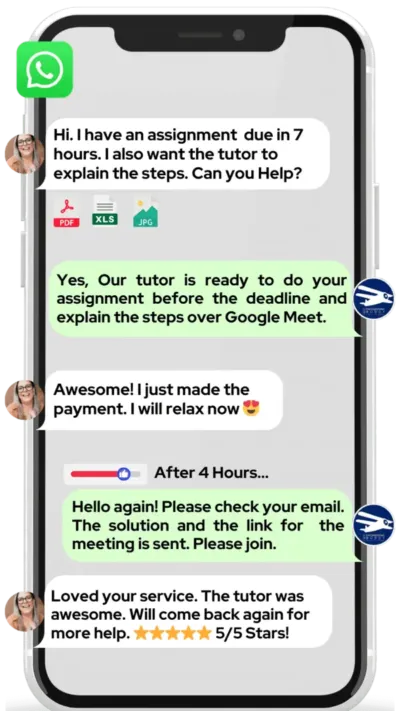
Unlike platforms where you fill out a form and wait, MEB responds in under a minute, 24/7. Tutor match takes under an hour. The $1 trial means you test before you commit. Everything runs over WhatsApp — no logins, no intake forms.
Study Plans (Pick One That Matches Your Goal)
After the diagnostic, your tutor builds the session sequence around one of these frames. Catch-up (1–3 weeks): student is behind on multiple OS topics with an exam approaching — tutor prioritises highest-yield areas first. Exam prep (4–8 weeks): structured revision through scheduling, memory, concurrency, and file systems with timed past-paper practice built in. Weekly support: ongoing sessions aligned to lecture schedule and assignment deadlines, covering each topic as it lands in the course. The tutor adjusts the plan after every session based on what’s improving and what isn’t.
Pricing Guide
Standard Operating Systems tutoring runs $20–$40/hr. Graduate-level systems courses, research-adjacent OS topics, or highly specialised scheduling theory can go up to $100/hr depending on tutor background and session complexity.
Rate factors include course level, topic difficulty, how quickly you need sessions, and tutor availability. Rates at the higher end apply to advanced topics like kernel development, virtualisation internals, or distributed OS research support.
For students targeting research programmes at top institutions — CMU, MIT, Stanford, or ETH Zürich — tutors with active systems research backgrounds are available at higher rates. Share your specific goal and MEB will match the tier to your ambition.
Availability shrinks fast during finals periods. If your exam is within six weeks, don’t wait. Start with the $1 trial — 30 minutes, no registration, no commitment. WhatsApp MEB for a quick quote.
FAQ
Is Operating Systems hard?
Yes, for most students. The difficulty isn’t syntax — it’s systems thinking. Scheduling, virtual memory, and concurrency require reasoning about what hardware and software are doing simultaneously. That’s a different skill from writing application code, and it takes deliberate practice to build.
How many sessions are needed?
Students with specific exam gaps typically need 6–12 sessions. Those starting from scratch on a full OS module work better with 15–20 hours spread across the semester. The first diagnostic session gives the tutor enough to estimate a realistic timeline for your situation.
Can you help with homework and assignments?
MEB tutoring is guided learning — you understand the work, then submit it yourself. If you’re stuck on a scheduling assignment or a concurrency problem set, the tutor explains the concept and works through a similar example with you. See our Academic Integrity policy and Why MEB page for full details on what we help with and what we don’t.
Will the tutor match my exact syllabus or exam board?
Yes. Before matching, MEB asks for your course name, institution, module code if available, and any exam board details. Tutors are selected based on familiarity with that specific content — not just general OS knowledge. Coverage varies by board and institution; share your syllabus and the tutor confirms fit upfront.
What happens in the first session?
The tutor asks you to work through a problem live — a scheduling question or a virtual memory trace — while they observe. This surfaces where your reasoning breaks down. From there, the session covers the highest-priority gap and closes with a practice task. No time is spent on content you already know.
Is online tutoring as effective as in-person?
For Operating Systems, yes. The digital pen-pad on Google Meet is often clearer than a physical whiteboard — the tutor can annotate diagrams, trace process states, and colour-code page tables in real time. Students in the US, UK, and Australia consistently report the same quality as face-to-face sessions.
Can you help if I’m stuck on a specific OS topic — like the Banker’s Algorithm or LRU page replacement?
That’s exactly how most sessions start. You don’t need to be lost across the whole subject. If one algorithm or concept is costing you marks, the tutor isolates it, explains it from scratch, and runs you through enough examples that you can answer exam questions on it reliably.
Do you cover Linux-specific OS content — kernel internals, system calls, and process management on Linux?
Yes. Many OS courses use Linux as the implementation environment. MEB tutors cover Linux process management, fork() and exec() behaviour, system call interfaces, and kernel-level concepts where your course requires it. Pair with systems programming tutoring if your module includes C-level kernel work.
Can I get Operating Systems help at midnight or on weekends?
Yes. MEB operates 24/7 across time zones. Students in the US, Gulf, and Australia regularly book late-night or early-morning sessions. WhatsApp MEB at any hour — average response time is under a minute, and tutor matching usually completes within the hour.
What if I don’t like my assigned tutor?
Tell MEB via WhatsApp. A replacement is arranged, typically within 24 hours. The $1 trial exists precisely so you test the match before committing to a full session block. No long onboarding process to undo.
How do I get started?
Three steps: WhatsApp MEB with your course name and the topic you’re struggling with. Get matched with a verified OS tutor — usually within the hour. Start your $1 trial: 30 minutes of live tutoring or one homework question explained in full. No registration, no commitment.
Trust & Quality at My Engineering Buddy
Every MEB tutor goes through subject-specific screening — not just a CV review. For Operating Systems, that means a live demo evaluation covering scheduling algorithms, memory management, and concurrency problems. Tutors are assessed on explanation clarity, not just subject knowledge. Rated 4.8/5 across 40,000+ verified reviews on Google, MEB’s tutor quality is maintained through ongoing session feedback reviewed after every booking. Tutors hold degrees in Computer Science, Electrical Engineering, or related systems fields, and many have industry or research backgrounds in OS-adjacent work.
MEB tutoring is guided learning — you understand the work, then submit it yourself. For full details on what we help with and what we don’t, read our Academic Integrity policy and Why MEB.
MEB has served 52,000+ students across the US, UK, Canada, Australia, the Gulf, and Europe in 2,800+ subjects since 2008. Within Computer Science, that includes students working on Operating Systems alongside algorithms tutoring, data structures and algorithms help, and compiler design tutoring. See our tutoring methodology for how sessions are structured across all subjects.
Operating Systems sits at the core of the Computer Science curriculum — students who get it right have a significant advantage in systems programming, cloud infrastructure, and graduate-level research. The concepts compound: every hour spent on process scheduling pays off in virtualisation and distributed systems later.
Source: My Engineering Buddy, 2008–2025.
A common pattern our tutors observe is that students who struggle with Operating Systems have never had anyone slow down and draw it. The OS isn’t abstract — it’s a sequence of decisions the hardware and kernel make every millisecond. Once you see that sequence drawn out, step by step, the subject stops feeling like magic and starts feeling mechanical.
Explore Related Subjects
Students studying Operating Systems often also need support in:
- Automata Theory
- Digital Logic Design
- Parallel Computing
- Cloud Computing
- Cybersecurity
- High Performance Computing
- Computer Organisation & Architecture
Next Steps
Getting started takes less than two minutes.
- Share your exam board or course name, the hardest topic you’re stuck on, and your exam or assignment deadline
- Share your availability and time zone — MEB covers US, UK, Canada, Australia, Gulf, and Europe
- MEB matches you with a verified Operating Systems tutor — usually within 24 hours
- First session starts with a diagnostic so every minute is used on what actually matters
Before your first session, have ready:
- Your module guide, course outline, or syllabus
- A recent assignment or past paper question you struggled with
- Your exam date or coursework deadline
The tutor handles the rest. Visit www.myengineeringbuddy.com for more on how MEB works.
WhatsApp to get started or email [email protected].
52,000+ Happy Students From Various Universities





Reviewed by Subject Expert
This page has been carefully reviewed and validated by our subject expert to ensure accuracy and relevance.
