

Hire Verified & Experienced
PLC (Programmable Logic Controller) Tutors
4.8/5 40K+ session ratings collected on the MEB platform



Hire The Best PLC (Programmable Logic Controller) Tutor
Top Tutors, Top Grades. Without The Stress!
52,000+ Happy Students From Various Universities






How Much For Private 1:1 Tutoring & Hw Help?
Private 1:1 Tutoring and HW help Cost $20 – 35 per hour* on average.
Ladder logic errors at 2 a.m. before a lab submission? Most PLC students hit that wall at least once.
PLC (Programmable Logic Controller) Tutor Online
A Programmable Logic Controller (PLC) is an industrial digital computer used to automate electromechanical processes. PLC programming covers ladder logic, function block diagrams, structured text, and sequential function charts, equipping engineers to design and troubleshoot automated control systems.
If you’re searching for a PLC tutor near me, MEB connects you with verified mechatronics and automation specialists for 1:1 online PLC tutoring and homework help. Sessions run on Google Meet with a digital pen-pad — live, structured, and matched to your exact course. No generic explanations. No waiting days for a reply.
- 1:1 online sessions tailored to your PLC course, lab, or industrial project
- Expert-verified tutors with hands-on automation and controls experience
- Flexible time zones — US, UK, Canada, Australia, Gulf
- Structured learning plan built after a diagnostic session
- Ethical homework and assignment guidance — you understand before you submit
52,000+ students across the US, UK, Canada, Australia, and the Gulf have used MEB since 2008 — including students in Mechatronics subjects like PLC programming, SCADA, and Automation Engineering.
Source: My Engineering Buddy, 2008–2025.
How Much Does a PLC Tutor Cost?
Most PLC tutoring sessions run $20–$40/hr depending on level and topic complexity. Graduate-level or industrial-specialist sessions can reach $100/hr. The $1 trial gets you 30 minutes of live 1:1 tutoring or one homework question explained in full — no registration needed.
| Level / Need | Typical Rate | What’s Included |
|---|---|---|
| Standard (undergraduate) | $20–$35/hr | 1:1 sessions, homework guidance |
| Advanced / Industrial specialist | $35–$70/hr | Expert tutor, niche system depth |
| $1 Trial | $1 flat | 30 min live session or 1 homework question |
Tutor availability tightens during end-of-semester lab assessment periods. Book early if you’re within 4 weeks of a deadline.
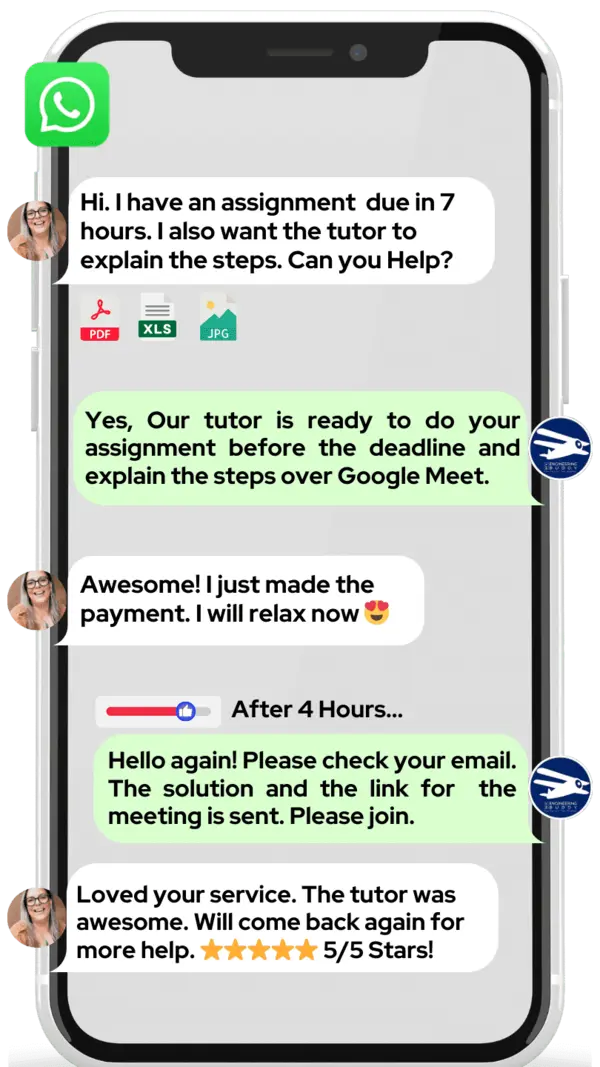
WhatsApp MEB for a quick quote — average response time under 1 minute.
Who This PLC Tutoring Is For
PLC courses sit at the intersection of electrical engineering, software logic, and industrial systems. That combination trips up students who are strong in one area but not all three. MEB tutors work with students at every point in that gap.
- Undergraduate and graduate students in electrical, mechatronics, or automation engineering programmes
- Students whose lab reports involve Siemens TIA Portal, Allen-Bradley RSLogix, or Mitsubishi GX Works
- Students retaking after a failed first attempt in a controls or automation module
- Students with a university conditional offer depending on this grade
- Engineers in industry upskilling for IEC 61131-3 programming standards
- Parents watching a child’s confidence drop alongside their grades in an engineering programme
Students at universities including MIT, Georgia Tech, Purdue, TU Delft, Imperial College London, the University of Queensland, and Khalifa University have come to MEB for PLC support. If your programme covers ladder logic, FBD, or SCADA integration, this is the right fit.
At MEB, we’ve found that PLC students struggle most not with the logic itself — but with translating a written process description into a working ladder rung. That translation step is where most lab marks are lost, and it’s exactly what we drill in early sessions.
1:1 Tutoring vs Self-Study vs AI vs YouTube vs Online Courses
Self-study works if you have strong discipline and no lab deadline pressure. AI tools explain ladder logic concepts quickly but can’t step through your specific TIA Portal error in real time. YouTube covers PLC basics well — Siemens wiring diagrams, timer logic — but stops short when your structured text isn’t compiling. Online courses are structured but move at a fixed pace with no one catching your specific mistakes. With 1:1 PLC tutoring through MEB, the session adjusts live to the exact rung of ladder logic or FBD block you’re stuck on.
Outcomes: What You’ll Be Able To Do in PLC
After working with an MEB PLC tutor, students can write and debug ladder logic programs for real industrial process scenarios, not just textbook exercises. You’ll be able to analyze timer and counter logic faults in Allen-Bradley or Siemens systems, apply IEC 61131-3 programming languages correctly across all five types, explain the scan cycle and how it affects output timing in safety-critical applications, and present a working SCADA-integrated PLC program as part of a final-year or capstone project.
Based on feedback from 40,000+ sessions collected by MEB from 2022 to 2025, 58% of students improved by one full grade after approximately 20 hours of 1:1 tutoring in subjects like PLC (Programmable Logic Controller). A further 23% achieved at least a half-grade improvement.
Source: MEB session feedback data, 2022–2025.
Try your first session for $1 — 30 minutes of live 1:1 tutoring or one homework question explained in full. No registration. No commitment.
WhatsApp MEB now
and get matched within the hour.
What We Cover in PLC (Syllabus / Topics)

PLC Programming Languages and Logic
- Ladder Diagram (LD): contacts, coils, rungs, branching logic
- Function Block Diagram (FBD): block interconnections, data flow
- Structured Text (ST): syntax, loops, conditionals, IEC 61131-3 compliance
- Sequential Function Chart (SFC): steps, transitions, action qualifiers
- Instruction List (IL): low-level PLC syntax and mnemonic codes
- Timer and counter instructions: TON, TOF, CTU, CTD across platforms
- Analogue I/O scaling and PID loop configuration
Core references include Programmable Logic Controllers by Frank Petruzella (McGraw-Hill) and PLC Programming for Industrial Automation by Kevin Collins.
Hardware, Wiring, and I/O Configuration
- CPU modules, power supplies, and I/O rack architecture
- Digital and analogue input/output wiring schematics
- Siemens S7-1200/S7-1500 hardware configuration in TIA Portal
- Allen-Bradley MicroLogix and CompactLogix with RSLogix 5000
- Mitsubishi MELSEC and GX Works 2/3 environment setup
- Safety PLCs: SIL levels, redundancy, and fail-safe outputs
Supported by Automating Manufacturing Systems with PLCs by Hugh Jack and platform-specific Siemens and Rockwell Automation manuals.
SCADA Integration and Industrial Networks
- HMI design and PLC-HMI communication via Profibus, Profinet, Modbus
- SCADA system architecture: data acquisition, alarming, trending
- OPC-UA server configuration and tag mapping
- Industrial Ethernet: EtherNet/IP and device-level ring topology
- Data logging, historian setup, and remote monitoring
- Cybersecurity fundamentals for industrial control systems
Relevant texts include Industrial Automation and Control by Siemens AG and SCADA: Supervisory Control and Data Acquisition by Stuart Boyer.
Platforms, Tools & Textbooks We Support
PLC tutoring at MEB is built around the software environments students actually use in their programmes and labs. Tutors work directly inside these platforms during sessions — not just explaining concepts but walking through real configuration, code, and fault-finding on screen.
- Siemens TIA Portal (S7-1200, S7-1500, S7-300/400)
- Rockwell Automation RSLogix 5000 / Studio 5000 and RSLogix 500
- Mitsubishi GX Works 2 and GX Works 3
- Automation Studio by FAMIC Technologies (fluid power and PLC simulation)
- FluidSIM for pneumatic and hydraulic circuit design alongside PLC logic
- CODESYS (IEC 61131-3 compliant multi-brand runtime environment)
- Factory I/O (3D simulation for PLC programming practice)
What a Typical PLC Session Looks Like
The tutor opens by reviewing the previous session — usually a timer-controlled conveyor sequence or a fault-detection ladder rung the student was left to complete. On Google Meet with screen share, the student pulls up their TIA Portal or RSLogix project and walks through what they tried. The tutor uses a digital pen-pad to annotate the ladder diagram directly, marking exactly where the scan cycle logic breaks down. Then the student reworks the rung in real time — the tutor prompts, doesn’t type for them. By the end, a new task is set: typically a small PLC program integrating analogue I/O scaling or a basic SFC sequence, due before the next session.
How MEB Tutors Help You with PLC (The Learning Loop)
Diagnose: In the first session, the tutor identifies where the student’s logic model breaks — whether that’s the PLC scan cycle, I/O addressing, or the jump from ladder to structured text. Most students have one or two core misconceptions that ripple through every assignment.
Explain: The tutor works through a live example — wiring a Siemens S7-1200 input to a TON timer rung, for instance — using a digital pen-pad to annotate each step. The explanation connects the physical hardware behaviour to what appears on the programming screen.
Practice: The student builds the next rung or FBD block with the tutor present. Not watching — present. The student narrates their reasoning. The tutor catches the mistake before it compiles into a broken program.
Feedback: Every error gets a why. Why did the output coil latch when it shouldn’t? Why is the CTU resetting on the wrong condition? Step-by-step correction with the mark-loss reason stated plainly.
Plan: The session closes with a clear next topic — SCADA tag mapping, SIL-rated safety logic, or PID tuning — and a specific task to attempt before the next session. Progress is tracked across sessions.
Sessions run on Google Meet. The tutor uses a digital pen-pad or iPad with Apple Pencil for live annotation. Before the first session, share your course outline, the PLC platform your lab uses, and any assignment brief or past test you’ve struggled with. The first session is your diagnostic — and if you start with the $1 trial, that 30 minutes serves as exactly that.
Students consistently tell us that the biggest shift in PLC understanding comes when someone finally explains why the scan cycle matters — not just what it is. One session on that concept alone has changed how students approach every subsequent rung they write.
Tutor Match Criteria (How We Pick Your Tutor)
Every PLC tutor at MEB goes through subject-specific screening before taking a session. Here’s what the match is based on.
Subject depth: Tutors are matched to your specific platform — Siemens TIA Portal vs. Allen-Bradley RSLogix vs. CODESYS — not just “PLC” in general. Level matters too: undergraduate lab work differs from graduate-level safety PLC design.
Tools: All tutors use Google Meet with screen share and a digital pen-pad or iPad with Apple Pencil. They can work inside your simulation environment directly.
Time zone: Matched to your region — US, UK, Gulf, Canada, or Australia. No scheduling across 12 time zones.
Goals: Whether you need to pass a specific module assessment, finish a lab report on electrohydraulics and electropneumatics integration, or build a full SCADA-linked capstone project, the tutor is matched to that scope.
Unlike platforms where you fill out a form and wait, MEB responds in under a minute, 24/7. Tutor match takes under an hour. The $1 trial means you test before you commit. Everything runs over WhatsApp — no logins, no intake forms.
Study Plans (Pick One That Matches Your Goal)
After the diagnostic session, the tutor maps a specific sequence. A typical catch-up plan over 1–3 weeks targets the student’s two or three critical ladder logic gaps before a lab submission. An exam prep plan over 4–8 weeks moves through all five IEC 61131-3 languages, hardware configuration, and SCADA integration with weekly past-problem sets. Ongoing weekly support aligns to your semester schedule — one or two sessions per week tied to upcoming lab deadlines and module assessments. The tutor decides the sequence; you bring the course outline and your current weak points.
Pricing Guide
PLC tutoring starts at $20/hr for standard undergraduate-level work. Advanced industrial topics — safety PLC design, SCADA architecture, graduate-level control systems — typically run $35–$70/hr. Highly specialised tutors with professional automation industry backgrounds are available at higher rates for students targeting roles at companies like Siemens, Rockwell Automation, or ABB, or pursuing advanced research in industrial control systems. Share your specific goal and MEB will match the tier.
Rate factors include topic complexity, your timeline, and tutor availability during peak exam periods. Availability drops significantly in the final 2–3 weeks of semester.
Start with the $1 trial — 30 minutes, no registration, no commitment. WhatsApp MEB for a quick quote.
MEB has served 52,000+ students across 2,800+ subjects since 2008. In Mechatronics and industrial automation — covering Real-Time Systems (RTOS) and Robotics Engineering alongside PLC — MEB tutors bring both academic and industry-facing depth to every session.
Source: My Engineering Buddy, 2008–2025.
A common pattern our tutors observe is that students who struggle with structured text have usually skipped understanding the scan cycle first. Fix that one concept, and ST, FBD, and SFC all become easier to reason about. We go back to that foundation every time.
FAQ
Is PLC programming hard?
PLC programming has a manageable learning curve if you understand the scan cycle and basic digital logic first. Ladder logic is intentionally readable. The difficulty comes when combining multiple languages — structured text, SFC, and FBD — or integrating with SCADA systems and real hardware I/O.
How many sessions will I need?
Most students close a single module gap in 4–8 sessions. If you’re building from near-zero understanding of ladder logic through to a working SCADA-integrated program, 15–20 hours is a realistic target. The diagnostic session maps this more precisely for your specific course.
Can you help with PLC homework and assignments?
MEB tutoring is guided learning — you understand the work, then submit it yourself. The tutor explains the logic, walks through similar examples, and checks your reasoning. See our Academic Integrity policy and Why MEB page for full details on what we help with and what we don’t.
Will the tutor match my exact syllabus or exam board?
Yes. MEB tutors are matched to your specific platform (TIA Portal, RSLogix 5000, CODESYS), your institution’s lab environment, and your module’s assessment structure. Share your course outline when you first message MEB and the match will reflect it.
What happens in the first session?
The first session is a diagnostic. The tutor asks you to walk through a recent lab task or assignment you struggled with, identifies where the logic breaks down, and covers the most urgent gap. By the end, you have a clear picture of what to fix and in what order.
Is online PLC tutoring as effective as in-person?
For PLC work, yes — often more so. Screen sharing lets the tutor see your exact TIA Portal or RSLogix project. Digital pen-pad annotation on ladder rungs is clearer than drawing on a whiteboard. The sessions are recorded if you want to replay them. Physical proximity adds nothing that the tools don’t cover.
Can I get help at midnight if I’m stuck before a lab submission?
MEB operates 24/7 across time zones. WhatsApp response times average under a minute. Tutor availability at off-hours varies, but for urgent homework questions a written solution with full explanation can be delivered the same night.
What’s the difference between Allen-Bradley and Siemens PLC programming?
Both follow IEC 61131-3, but the software environments, tag addressing conventions, and instruction sets differ significantly. RSLogix 5000 uses tag-based addressing; Siemens uses memory byte/bit addressing. MEB tutors are matched to your specific platform — not trained generically across both.
Do you offer group PLC sessions?
MEB specialises in 1:1 sessions. Group sessions are not offered — the entire session structure is built around diagnosing and correcting one student’s specific gaps, which isn’t possible in a group format.
How do I find a PLC tutor in my city?
MEB tutors are online — you don’t need one in your city. Sessions run on Google Meet from anywhere. Students in New York, London, Dubai, Melbourne, and Toronto all access the same tutor pool. Time zone matching is handled automatically.
What’s the difference between a PLC and a microcontroller like Arduino or Raspberry Pi?
PLCs are designed for industrial environments — deterministic scan cycles, high noise immunity, modular I/O, and safety certifications. Microcontrollers like Arduino or Raspberry Pi are more flexible but not built for harsh factory conditions or safety-critical applications. MEB tutors can help you understand when to use which and how to program both.
How do I get started?
Start with the $1 trial — 30 minutes of live 1:1 tutoring or one homework question explained in full. Three steps: WhatsApp MEB, get matched within the hour, start your trial session. No forms, no registration, no waiting.
Trust & Quality at My Engineering Buddy
Every MEB tutor goes through subject-specific screening before their first session — including a live demo session evaluated by MEB staff. For PLC, that means verifying platform fluency in TIA Portal or RSLogix, not just general automation knowledge. Tutors hold relevant engineering degrees and many carry industry experience in manufacturing or process control. Ongoing feedback from every session is reviewed. Rated 4.8/5 across 40,000+ verified reviews on Google.
MEB tutoring is guided learning — you understand the work, then submit it yourself. For full details on what we help with and what we don’t, read our Academic Integrity policy and Why MEB.
MEB has operated since 2008, serving 52,000+ students across the US, UK, Canada, Australia, Gulf, and Europe in 2,800+ subjects. In Mechatronics and embedded systems — including PIC Microcontroller tutoring and System Dynamics help — the platform maintains the same tutor quality standards across every subject. See how our sessions are structured at MEB’s tutoring methodology.
Explore Related Subjects
Students studying PLC (Programmable Logic Controller) often also need support in:
- Autonomous Systems
- Avionics
- Electromechanical Systems
- FluidSIM
- Microelectromechanical Systems (MEMS)
- Proteus Simulation
- STM32
- 3D Printing & Additive Manufacturing
Next Steps
Ready to move forward? Here’s what to do.
- Share your PLC platform (TIA Portal, RSLogix, CODESYS), your module or lab brief, and your current timeline
- Share your availability and time zone — MEB covers US, UK, Gulf, Canada, and Australia
- MEB matches you with a verified PLC tutor, usually within 24 hours
- Your first session starts with a diagnostic so every minute is used on what actually matters
Before your first session, have ready:
- Your course outline or lab manual, and the PLC software platform your programme uses
- A recent assignment, lab report, or test you struggled with
- Your submission deadline or exam date
Visit www.myengineeringbuddy.com for more on how MEB works.
WhatsApp to get started or email meb@myengineeringbuddy.com.
Reviewed by Subject Expert
This page has been carefully reviewed and validated by our subject expert to ensure accuracy and relevance.
