




~1 min
Average Reply Time
~1 hour
To Be Matched With A Tutor
30 Min Trial
75% Find Their Tutor On The 1st Trial
$20-35+/hr
Premium Yet Affordable Learning
Hire The Best Painting Tutor


Most painting students don’t struggle with talent. They struggle because nobody shows them where the brushwork actually breaks down.
Painting Tutor Online
Painting is the practice of applying pigment to a surface — canvas, paper, wood, or other supports — using oils, acrylics, watercolour, or gouache, equipping students with technical control, compositional judgment, and visual communication skills.
If you’re searching for a painting tutor near me and finding only local options with limited availability, MEB works differently. Our 1:1 online painting lessons connect you with tutors who have real studio and teaching backgrounds — covering oils, acrylics, watercolour, mixed media, and academic drawing fundamentals. Sessions run over Google Meet with a digital pen-pad. You develop real technique, not just theoretical knowledge. Browse our fine arts tutoring page to see the full range of disciplines MEB covers.
- 1:1 online sessions tailored to your medium, style, and current skill level
- Expert tutors with verified studio practice and teaching experience
- Flexible time zones — US, UK, Canada, Australia, Gulf
- Structured lesson plan built after an initial diagnostic session
- Structured practice plans and progress tracking between sessions
52,000+ students across the US, UK, Canada, Australia, and the Gulf have used MEB since 2008 — including students in Fine Arts subjects like painting, drawing, and illustration.
Source: My Engineering Buddy, 2008–2025.
How Much Does a Painting Tutor Cost?
Most painting sessions at MEB cost between $20 and $40 per hour. Specialist tutors with professional exhibition backgrounds or advanced academic credentials are available at higher rates. Start with the $1 trial — 30 minutes of live instruction or a single technique question worked through in full.
| Level / Need | Typical Rate | What’s Included |
|---|---|---|
| Beginner / Hobbyist | $20–$30/hr | 1:1 sessions, technique walkthroughs, practice plans |
| Intermediate / Portfolio Prep | $30–$50/hr | Critique sessions, composition feedback, medium focus |
| Advanced / Fine Art Degree | $50–$100/hr | Conceptual development, exhibition prep, crit support |
| $1 Trial | $1 flat | 30 min live session or one technique question explained |
Tutor availability tightens around portfolio submission deadlines and end-of-year assessments. Book early if your timeline is fixed.
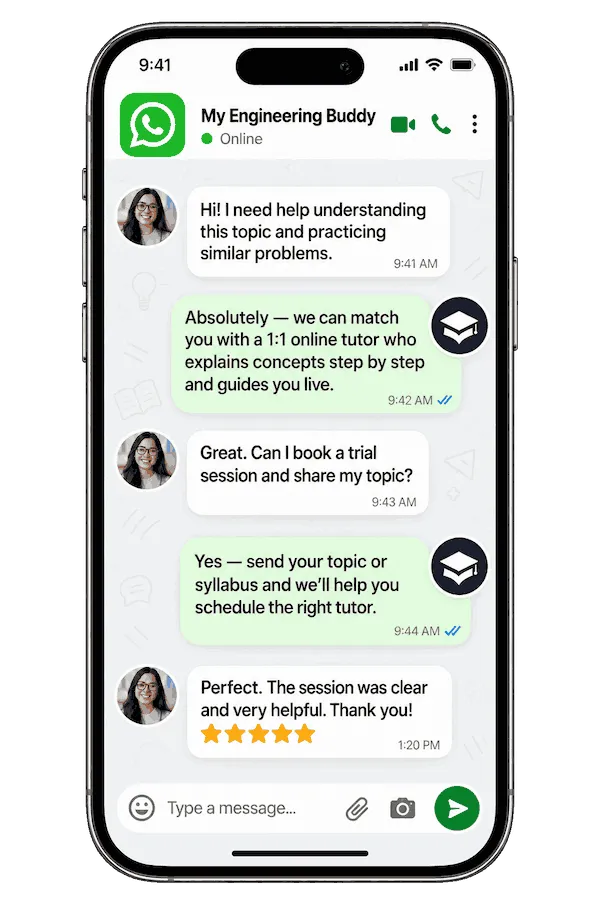
WhatsApp MEB for a quick quote — average response time under 1 minute.
Who This Painting Tutoring Is For
This is not a beginner-only service. MEB works with students across the full range — from hobbyists who have hit a plateau to fine arts undergraduates preparing for degree shows.
- Hobbyists who’ve watched hundreds of YouTube tutorials but still can’t get consistent results
- Students building a portfolio for art school or university admissions
- Fine arts undergraduates needing structured critique and conceptual feedback
- Students whose confidence has dropped after a harsh studio crit or failed assessment
- Adults returning to painting after years away, needing structure not just inspiration
- Students with a portfolio submission deadline in the next four to six weeks
Students from institutions including RISD, Central Saint Martins, the Glasgow School of Art, RMIT, Emily Carr University, and Pratt Institute have used MEB for critique support and technique development. The service is also used by students preparing applications to these schools.
1:1 Tutoring vs Self-Study vs AI vs YouTube vs Online Courses
Self-study works if you’re disciplined, but painting is a feedback-dependent skill — you can’t see your own errors clearly. AI tools explain concepts but can’t watch you mix a glaze and tell you why the transparency is off. YouTube covers techniques at a surface level and stops the moment your specific problem doesn’t match the video. Online courses are structured but move at a fixed pace with no personalisation. With MEB, a tutor watches your actual work in real time, names exactly what’s breaking down in your brushwork or composition, and corrects it in the moment — calibrated to where you actually are in painting, not where the course assumes you should be.
Outcomes: What You’ll Be Able To Do in Painting
Students who work 1:1 with an MEB painting tutor develop measurable, specific capabilities — not vague improvement. You’ll be able to apply tonal control across a full value range in oils or acrylics without muddying the palette. You’ll analyse a composition and identify why it reads as flat, then correct it using spatial relationships and edge variation. You’ll present a cohesive body of work with a defined conceptual thread — the kind of coherence that degree show panels and portfolio reviewers notice. You’ll explain your material choices in a crit setting without freezing. Progress comes from repeated practice with real-time feedback, not from watching more demonstrations.
Based on feedback from 40,000+ sessions collected by MEB from 2022 to 2025, students working 1:1 on painting consistently report noticeably stronger technique and greater confidence in critique settings, with faster progress than self-directed practice alone. Progress varies by starting level and practice frequency.
Source: MEB session feedback data, 2022–2025.
Try your first session for $1 — 30 minutes of live 1:1 tutoring or one technique question explained in full. No registration. No commitment. WhatsApp MEB now and get matched within the hour.
What We Cover in Painting (Syllabus / Topics)
Painting Techniques and Materials
- Oil painting: alla prima, glazing, impasto, and underpainting methods
- Acrylic painting: wet-on-wet, layering, and texture-building approaches
- Watercolour: wet-on-wet, wet-on-dry, lifting, and granulation control
- Gouache and mixed media surface preparation and layering
- Brush selection, palette organisation, and medium additives
- Canvas stretching, priming, and surface preparation for different supports
- Varnishing, fixatives, and archival finishing
Recommended references: The Oil Painting Course You’ve Always Wanted by Kathleen Staiger; Watercolor Painting: A Comprehensive Approach by Tom Hoffmann; Alla Prima II by Richard Schmid.
Composition, Colour, and Tonal Values
- Rule of thirds, dynamic symmetry, and compositional balance
- Value mapping and the full tonal scale from light to dark
- Colour theory applied to painting: temperature, simultaneous contrast, and limited palettes
- Edge control — lost, found, soft, and hard edges and when to use each
- Still life, figure, landscape, and interior compositional conventions
- Using reference photography without becoming dependent on it
Recommended references: Color and Light by James Gurney; The Art of Painting by Harold Speed; Creative Illustration by Andrew Loomis.
Portfolio Development and Conceptual Work
- Building a body of work with a unified visual and conceptual thread
- Artist statement writing and contextual research for degree submissions
- Responding to a brief — art school foundation and undergraduate-level projects
- Preparing for studio crits: articulating intent and defending decisions
- Selecting and sequencing work for portfolio review or exhibition
- Connecting painting practice to art history influences and contemporary contexts
Recommended references: Art School: A Complete Painter’s Course by Hazel Harrison; The Artist’s Way by Julia Cameron; your institution’s own brief and assessment criteria.

What a Typical Painting Session Looks Like
The tutor opens by checking the previous session’s practice task — usually a tonal study or a specific technique exercise like wet-on-wet blending or glazing layers. The student shares their work on screen and the tutor walks through it directly: naming what’s working, identifying where the value structure collapsed, or explaining why the colour mix turned chalky. From there, the tutor demonstrates the corrected approach using a digital pen-pad, annotating directly on the student’s image. The student then attempts the technique live, with the tutor watching and responding in real time. The session closes with a concrete practice task — for example, completing a 30-minute tonal study of a single object in natural light — and the next topic is noted for the following week. Get drawing tutoring alongside painting sessions if foundational mark-making is part of the gap.
How MEB Tutors Help You with Painting (The Learning Loop)
Diagnose: In the first session, the tutor asks you to share recent work or attempt a short task live. They identify specific gaps — weak value range, muddy colour, flat composition — not general feedback like “keep practising.”
Explain: The tutor works through the problem on screen using a digital pen-pad. For colour issues, they show the palette decision live. For composition, they annotate your image directly to show what shifts the read.
Practice: You attempt the technique while the tutor watches. This is not a demonstration you watch and then try alone — correction happens in the moment, while the work is in front of both of you.
Feedback: The tutor explains exactly where the error happened and why it produced the result it did. For a painting student, knowing that your midtones are too close in value to your lights — and why that flattens form — is more useful than being told the painting “needs more contrast.”
Plan: Each session ends with a specific practice task and a clear next topic. If you’re four weeks from a portfolio submission, the tutor sequences the remaining sessions around that deadline.
Sessions run on Google Meet. The tutor uses a digital pen-pad or iPad with Apple Pencil to annotate and demonstrate. Before your first session, have a photo of a recent painting and your current project brief or goal ready. The first session also serves as your diagnostic — start with the $1 trial and use that 30 minutes to surface exactly what to work on first.
At MEB, we’ve found that the single biggest reason painting students plateau is that they keep working in isolation. The gap between what they think they’re doing and what’s actually on the canvas only closes when someone qualified points to it directly — in real time, on their actual work.
Tutor Match Criteria (How We Pick Your Tutor)
Not every tutor is matched to every student. MEB uses four criteria to make the fit specific.
Subject depth: The tutor’s background must match your medium and level. A watercolour-focused tutor is not automatically the right fit for a student working in oils at degree level.
Tools: Every tutor uses Google Meet and a digital pen-pad or iPad with Apple Pencil — this is non-negotiable for visual subjects. Annotation and live demonstration are central to how painting is taught online.
Time zone: Matched to your region. US, UK, Gulf, Canada, and Australia sessions are all available without unsociable hours on either side.
Goals: Technique development, portfolio preparation, conceptual depth, crit preparation, or adult learner progression — the tutor match reflects your actual goal, not a generic one. Students seeking help with abstract art tutoring or printmaking help can be matched across disciplines if the work overlaps.
Unlike platforms where you fill out a form and wait, MEB responds in under a minute, 24/7. Tutor match takes under an hour. The $1 trial means you test before you commit. Everything runs over WhatsApp — no logins, no intake forms.
Students consistently tell us that the tutor match matters more than the platform. A technically strong painter who can also explain why something isn’t working — in plain terms, during the session — is the difference between a frustrating hour and a lesson that changes how you see your own work.
Pricing Guide
Painting tutoring at MEB starts at $20/hr for most levels. Advanced or niche specialist sessions — professional artists, degree-level conceptual work, exhibition and portfolio preparation at conservatoire level — reach up to $100/hr. Rate factors include your medium, the complexity of your goal, how close your deadline is, and tutor availability.
For students targeting fine arts programmes at institutions like RISD, Central Saint Martins, or the Slade School of Fine Art, tutors with professional exhibition and academic backgrounds are available at higher rates. Share your specific goal and MEB will match the tier to your ambition.
Availability tightens in March through May and October through November when portfolio deadlines cluster. Book sessions before the crunch if your timeline allows.
Start with the $1 trial — 30 minutes, no registration, no commitment. WhatsApp MEB for a quick quote.
MEB has covered Fine Arts, painting, sculpture tutoring, and photography lessons since 2008 — 18 years of matching students to tutors who know the subject and the standard.
Source: My Engineering Buddy, 2008–2025.
FAQ
Is painting hard to learn?
Painting has a steep early curve — particularly getting consistent tonal values and clean colour mixing. Most students can see real improvement in control and confidence within 8 to 12 focused hours of structured practice with feedback.
How many sessions will I need?
For foundational technique — say, achieving consistent wet-on-wet blending or a clean value range — most students need 6 to 10 sessions. Portfolio preparation for art school admission typically takes 12 to 20 hours depending on starting point.
How do you structure practice between sessions?
The tutor sets a specific task at the end of each session — a timed study, a technique repetition, or a compositional exercise. You bring the result to the next session for review. Practice is structured and purposeful, not open-ended.
Will the tutor match my current level and goals?
Yes. MEB matches by medium, level, and goal — not by a generic “art tutor” category. A hobbyist working in watercolour and a fine arts undergraduate preparing for a degree show need different tutors, and MEB treats them differently.
What happens in the first session?
The tutor reviews a piece of your current work, asks about your goal and timeline, and runs a short live exercise. By the end, you’ll have a clear picture of your three biggest technical gaps and a plan for the next two to four sessions.
Are online painting lessons as effective as in-person?
For technique analysis, composition feedback, and conceptual development — yes. The tutor annotates your work directly on screen. The one genuine limitation is hands-on material handling, which students manage by working in their own studio space during the session.
What’s the difference between oils and acrylics, and does it affect which tutor I get?
Oils dry slowly, allowing longer blending windows; acrylics dry fast, requiring different layering strategies. These are genuinely different skill sets. MEB matches you to a tutor with specific experience in your chosen medium — not a generalist.
Can MEB help me prepare a portfolio for art school applications?
Yes. Tutors help you select and develop work, build a coherent body of pieces, and prepare an artist statement. This is one of the most common goals for painting students at MEB, particularly those applying to foundation courses or undergraduate fine arts programmes.
Can I get painting help at short notice — say, the night before a crit?
MEB operates 24/7. If a tutor is available in your time zone for a late booking, the session runs. WhatsApp MEB with your timeline and they’ll confirm availability within minutes.
Do you offer group painting sessions?
No. Every MEB session is 1:1. Group classes exist elsewhere — MEB’s value is in individual attention calibrated to your specific work, which is not possible in a group format.
How do I find a painting tutor in my city?
MEB tutors work online, so location is not a filter. Students in New York, London, Dubai, Sydney, and Toronto all access the same pool of verified painting tutors — matched by skill and availability, not geography.
How do I get started?
Start with the $1 trial — 30 minutes of live 1:1 painting instruction or one specific question worked through in full. Step one: WhatsApp MEB. Step two: get matched to a tutor within the hour. Step three: start your trial session.
Trust & Quality at My Engineering Buddy
Every MEB painting tutor goes through a structured screening process — subject-specific vetting, a live demo evaluation, and ongoing review based on student feedback. Tutors are practising or formally trained artists with teaching experience in their specific medium. Rated 4.8/5 across 40,000+ verified reviews on Google. That rating holds across 2,800+ subjects, including visual arts disciplines where the standard for what “good feedback” means is higher than most academic subjects.
MEB tutoring is guided learning — you develop your own work, you submit it yourself. For full details on what we help with and what we don’t, read our Academic Integrity policy and Why MEB.
MEB has been running since 2008, serving 52,000+ students across the US, UK, Canada, Australia, the Gulf, and Europe. The Fine Arts category covers painting and closely related subjects including digital art tutoring and art tutoring. For the methodology behind how sessions are structured, see our tutoring methodology page.
Explore Related Subjects
Students studying painting often also need support in:
Next Steps
When you contact MEB, have the following ready:
- Your medium (oils, acrylics, watercolour, or mixed media) and your current level
- A photo of recent work and your specific goal — portfolio, technique, crit prep
- Your deadline or timeline and your available session times and time zone
Before your first session, have ready: a photo of a recent piece or work in progress, your course outline or brief if you’re enrolled in a programme, and your submission or exhibition date. The tutor handles the rest.
MEB matches you with a verified painting tutor — usually within 24 hours. The first session starts with a diagnostic so every minute is used on what actually needs work.
Visit www.myengineeringbuddy.com for more on how MEB works.
WhatsApp to get started or email [email protected].
Reviewed by Subject Expert
This page has been carefully reviewed and validated by our subject expert to ensure accuracy and relevance.




