




~1 min
Average Reply Time
~1 hour
To Be Matched With A Tutor
30 Min Trial
75% Find Their Tutor On The 1st Trial
$20-35+/hr
Premium Yet Affordable Learning
Most students don’t fail GCSE Art and Design because they lack talent — they fail because nobody told them what the examiner actually wants from their portfolio.
GCSE Art and Design Tutor Online
GCSE Art and Design is a UK qualification assessed by boards including AQA, OCR, and Eduqas, covering practical artmaking, critical analysis, and written annotation across a portfolio component and a timed exam.
MEB offers 1:1 online tutoring and homework help in 2,800+ advanced subjects, including the full GCSE suite. If you’ve been searching for a GCSE Art and Design tutor near me, working online is faster, more flexible, and — with the right tutor — just as effective as sitting across a table. Our tutors know the specific marking criteria for AQA, OCR, and Eduqas, and they’ll work through your portfolio, annotation technique, and exam preparation with you directly.
- 1:1 online sessions tailored to your exact exam board and syllabus
- Expert-verified tutors with subject-specific knowledge in art, design, and visual culture
- Flexible time zones — US, UK, Canada, Australia, Gulf
- Structured learning plan built after a diagnostic session
- Ethical homework and assignment guidance — you understand the work, then submit it yourself
52,000+ students across the US, UK, Canada, Australia, and the Gulf have used MEB since 2008 — including students in GCSE subjects like GCSE Art and Design, GCSE Drama, and GCSE Design and Technology.
Source: My Engineering Buddy, 2008–2025.
How Much Does a GCSE Art and Design Tutor Cost?
GCSE Art and Design tutoring starts at $20–$35/hr for standard syllabus support. Specialist tutors with portfolio or fine art examination backgrounds may be priced higher. You can try your first session for the $1 trial before committing to anything further.
| Level / Need | Typical Rate | What’s Included |
|---|---|---|
| Standard (most GCSE levels) | $20–$35/hr | 1:1 sessions, portfolio and annotation guidance |
| Advanced / Specialist | $35–$70/hr | Expert tutor, NEA strategy, fine art depth |
| $1 Trial | $1 flat | 30 min live session or 1 homework question explained |
Tutor availability tightens significantly in the weeks before NEA deadlines and the May exam window. Book early if you’re working to a fixed submission date.
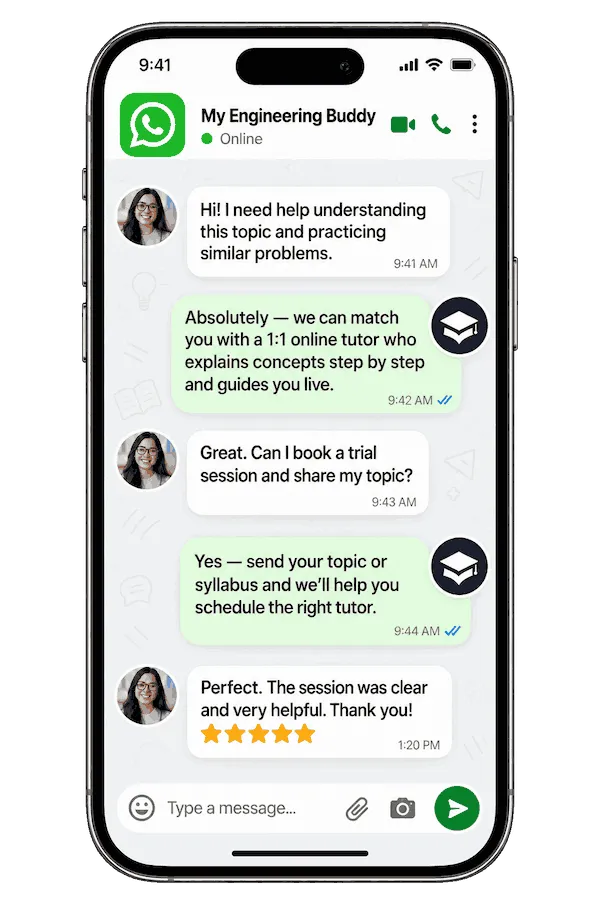
WhatsApp MEB for a quick quote — average response time under 1 minute.
Who This GCSE Art and Design Tutoring Is For
GCSE Art and Design rewards students who can connect ideas, develop a visual theme, and explain their process clearly in writing. That combination trips up a lot of students who are genuinely capable artists. This tutoring is for anyone who’s strong in one area but struggling in another.
- Students whose portfolio is behind schedule with a NEA submission deadline approaching
- Students retaking after a failed or lower-than-expected first attempt
- Students with a university conditional offer depending on this grade
- Students whose annotation and written commentary is weak even though their practical work is strong
- Parents watching a child’s confidence drop as their sketchbook falls further behind
- Students 4–6 weeks from their timed exam with gaps in artist analysis or critical writing
Students preparing to go on to A Level Art, foundation art courses, or design programmes at institutions like UAL, Edinburgh College of Art, Manchester Metropolitan, Falmouth, Goldsmiths, and Loughborough School of Art benefit from building strong habits at GCSE level. You can also get help with GCSE Design and Technology tutoring if your interests cross into that area.
1:1 Tutoring vs Self-Study vs AI vs YouTube vs Online Courses
Self-study works if you’re disciplined, but there’s no one to tell you your annotations are too thin or your artist references aren’t landing. AI tools can suggest ideas but can’t look at your actual sketchbook and say what the examiner will mark down. YouTube covers technique well but stops when you need someone to review your specific portfolio page. Online courses move at a fixed pace with no personalisation. With a 1:1 GCSE Art and Design tutor from MEB, the feedback is live, calibrated to your exact board and theme, and corrects the specific gaps the examiner would penalise.
Outcomes: What You’ll Be Able To Do in GCSE Art and Design
After working with a GCSE Art and Design tutor at MEB, you’ll be able to apply the formal elements of art — line, tone, texture, colour — deliberately and with visible intention rather than instinct. You’ll write annotations that explain your creative decisions clearly enough to earn marks in the written commentary component. You’ll analyse artist references in a structured way that connects directly to your own theme. You’ll present a portfolio with a coherent developmental sequence, not just a collection of unconnected pieces. And you’ll approach the 10-hour timed exam with a plan, not a blank page.
Supporting a student through GCSE Art and Design? MEB works directly with parents to set up sessions, track progress, and keep coursework on schedule. WhatsApp MEB — average response time is under a minute, 24/7.
Based on feedback from 40,000+ sessions collected by MEB from 2022 to 2025, 58% of students improved by one full grade after approximately 20 hours of 1:1 tutoring in subjects like GCSE Art and Design. A further 23% achieved at least a half-grade improvement.
Source: MEB session feedback data, 2022–2025.
What We Cover in GCSE Art and Design (Syllabus / Topics)
GCSE Art and Design is assessed mainly through the Non-Examined Assessment (NEA) portfolio — worth 60% — and a 10-hour Externally Set Assignment (ESA) worth 40%. The marking criteria across AQA, OCR, and Eduqas share four assessment objectives: developing ideas (AO1), refining work (AO2), recording observations (AO3), and presenting a personal response (AO4). Tutoring is built around whichever of these is weakest for you.
Portfolio Development and the NEA
- Choosing and developing a personal theme or starting point
- Building a sketchbook with clear developmental sequence
- Selecting and applying media: pencil, paint, collage, digital, mixed media
- Meeting AO3 — recording from observation, primary sources, life drawing
- Connecting practical work to a coherent visual narrative
- Presentation and selection for final submission
Recommended texts: The Art and Design Teacher’s Handbook by Susie Hodge; AQA GCSE Art and Design Student Book (Hodder Education).
Annotation, Critical Writing, and Artist Analysis
- Writing annotations that explain creative decision-making — not just describe what you did
- Analysing artists using formal elements: line, shape, tone, colour, texture, form, space
- Referencing contextual sources: art history, cultural context, artist intentions
- AO1 — developing ideas through sustained investigation and contextual reference
- Avoiding the most common annotation mistake: description without analysis
- Using artist influence visibly in your own work, not just cited in text
Recommended texts: Ways of Seeing by John Berger; The Story of Art by E.H. Gombrich; Eduqas GCSE Art and Design specification guidance.
Externally Set Assignment (ESA) and Timed Exam Preparation
- Interpreting the ESA theme or starting point effectively
- Planning and preparing materials for the 10-hour supervised session
- Building a preparatory study that demonstrates AO1–AO4 under exam conditions
- Managing time across the timed exam — a skill most students underestimate
- Selecting which medium to work in for maximum AO4 personal response marks
Recommended texts: OCR GCSE Art and Design specification; GCSE Art and Design: Revision and Exam Practice guides from various exam board publishers.

At MEB, we’ve found that annotation is where most GCSE Art and Design marks are lost — not in the practical work itself. Students who can articulate why they made each creative decision consistently outscore those who produce stronger work but can’t explain it in writing.
What a Typical GCSE Art and Design Session Looks Like
The tutor opens by checking what you worked on since the last session — usually a specific sketchbook page, an artist analysis, or a section of your portfolio. From there, you share your screen or send photos of your current work before the session. The tutor reviews it directly and identifies the most pressing gap: maybe your AO1 investigation lacks a secondary source, or your annotation explains what you did but not why. You work through a model annotation together, then attempt one yourself while the tutor watches. For the timed exam component, you’ll practice rapid theme interpretation and planning under realistic conditions. The session closes with one concrete task — finish the annotation for page three, or complete a tone study using your chosen artist’s palette — and the tutor notes what to cover next time.
How MEB Tutors Help You with GCSE Art and Design (The Learning Loop)
Diagnose: In the first session, the tutor reviews your current portfolio or sketchbook and identifies which assessment objective is costing you the most marks. Most students come in thinking their practical work is the problem. Often, it’s AO1 or their written commentary.
Explain: The tutor works through a model example live — walking through how to write an annotation that earns marks, or how to document a developmental sequence that demonstrates AO2. Nothing is assumed. Everything is shown.
Practice: You attempt the task with the tutor present. This is where most of the learning happens — not in watching, but in doing it while someone who knows the mark scheme is watching you.
Feedback: The tutor gives specific, mark-scheme-referenced corrections. Not “this could be better” — but “this annotation is missing a formal element analysis, which costs you marks under AO1 criterion 3.”
Plan: Before the session ends, the tutor sets the next topic and practice task. If you’re four weeks from submission, the tutor maps the remaining sessions against your deadline so nothing is left to the last minute.
Sessions run on Google Meet. The tutor uses a digital pen-pad to annotate your work in real time. Before your first session, share a photo of your current sketchbook or portfolio and tell the tutor your exam board and submission date. The first session is always diagnostic — every minute counts. Start with the $1 trial — 30 minutes of live tutoring that also serves as your first diagnostic session.
Students consistently tell us that the biggest unlock in GCSE Art and Design isn’t learning a new technique — it’s understanding that examiners are marking a process, not a finished product. Once that clicks, sketchbook development becomes intentional rather than accidental.
Tutor Match Criteria (How We Pick Your Tutor)
Not every art tutor knows GCSE mark schemes. MEB matches on specifics.
Subject depth: tutors are matched by exam board (AQA, OCR, Eduqas), assessment component (portfolio vs ESA), and medium where relevant — painting, photography, graphic communication, textile design, or three-dimensional design.
Tools: all tutors work on Google Meet with a digital pen-pad or iPad and Apple Pencil — essential for annotating your artwork live.
Time zone: matched to your region — UK, US, Canada, Australia, or Gulf — so sessions happen at times that don’t wreck your schedule.
Goals: whether you need to pull up a grade, finish a portfolio before deadline, or build skills for A Level, the tutor is briefed on your specific situation before session one.
Unlike platforms where you fill out a form and wait, MEB responds in under a minute, 24/7. Tutor match takes under an hour. The $1 trial means you test before you commit. Everything runs over WhatsApp — no logins, no intake forms.
Study Plans (Pick One That Matches Your Goal)
If you’re behind on your portfolio with three weeks to deadline, the tutor focuses entirely on the highest-mark-per-hour tasks: completing AO1 investigation pages and tightening annotation. If you have 4–8 weeks before the ESA, sessions follow a structured sequence — theme analysis, preparatory studies, medium decisions, timed practice. For ongoing weekly support through Year 10 or Year 11, the tutor aligns sessions to your school’s coursework schedule. The specific sequence is built after the first diagnostic session, not before.
Pricing Guide
Most GCSE Art and Design tutoring sessions run $20–$40/hr. Tutors with specialist backgrounds in fine art examination, portfolio assessment, or specific media (photography, textiles, graphic design) may be priced toward the higher end. Rate factors include your exam board, how close you are to a deadline, and tutor availability.
For students targeting foundation art courses at institutions like UAL or competitive A Level programmes at selective sixth forms, tutors with professional studio or gallery backgrounds are available at higher rates — share your specific goal and MEB will match the tier to your ambition.
Availability narrows fast in the six weeks before NEA deadlines and May exam sessions. Start with the $1 trial — 30 minutes, no registration, no commitment. WhatsApp MEB for a quick quote.
MEB has been running since 2008. Tutors are screened by subject, tested through live demo sessions, and reviewed after every student engagement. You’re not matched to whoever is available — you’re matched to whoever is right for your specific board and component.
Source: My Engineering Buddy internal tutor vetting process, 2008–2025.
FAQ
Is GCSE Art and Design hard?
It’s demanding in a specific way. The practical work is only half the picture — examiners also mark annotation, artist analysis, and developmental process. Students who treat it as purely a making subject often drop marks in the written components without realising why.
How many sessions are needed?
Students with a portfolio deadline 4–6 weeks out typically need 8–12 sessions. Those doing ongoing support through Year 10–11 meet weekly. The tutor gives a clearer estimate after reviewing your current work in the first diagnostic session.
Can you help with homework and assignments?
MEB tutoring is guided learning — you understand the work, then submit it yourself. Tutors help you plan sketchbook pages, structure annotations, and analyse artist references. See our Academic Integrity policy and Why MEB page for full details on what we help with and what we don’t.
Will the tutor match my exact syllabus or exam board?
Yes. Tell MEB your exam board — AQA, OCR, or Eduqas — and your component (portfolio or ESA). The tutor is matched specifically to that specification. Marking criteria and weighting differ across boards, so this matters.
What happens in the first session?
The tutor reviews your current sketchbook or portfolio, identifies which assessment objective is weakest, and builds a session plan from there. Share your work before the session so the tutor arrives prepared. Nothing is generic — it’s based on your actual submission.
Is online tutoring as effective as in-person?
For GCSE Art and Design, yes — because the work is visual and shareable. Students send photos of sketchbook pages before sessions. The tutor annotates them live using a digital pen-pad. Feedback is immediate, specific, and recorded so you can refer back to it.
What’s the difference between the portfolio and the ESA?
The portfolio (NEA) is developed over the course and submitted at the end — it’s worth 60% of the final grade. The ESA is a 10-hour supervised timed exam set by the board, worth 40%. Both require preparation; most students underestimate the ESA until it’s close.
Can a tutor help with a specific medium — photography, textiles, or graphic design?
Yes. GCSE Art and Design covers several endorsed titles including Fine Art, Photography, Graphic Communication, Textile Design, and Three-Dimensional Design. Tell MEB which endorsement you’re following and the tutor is matched accordingly.
How do I improve my annotation marks without rewriting everything?
Most annotation can be improved by adding one thing: an explanation of why you made each creative decision, referencing a formal element. The tutor shows you the exact phrasing that earns marks under AO1 without needing to redo your practical work.
Can you help with GCSE Art and Design at midnight?
Yes. MEB operates 24/7 across time zones. Students in the UK, US, Gulf, and Australia all get matched to tutors within their available hours. WhatsApp MEB at any time — the average response is under a minute.
What if I don’t like my assigned tutor?
Switch. Tell MEB over WhatsApp and a different tutor is matched within hours. The $1 trial exists precisely so you can test the fit before spending money on a full package. No paperwork, no delay.
How do I get started?
Start with the $1 trial — 30 minutes of live tutoring or one homework question explained in full. WhatsApp MEB, get matched to a GCSE Art and Design tutor within the hour, and begin your first session. Three steps: WhatsApp → matched → trial starts.
A common pattern our tutors observe is that GCSE Art and Design students spend 80% of their time on making and almost none on documentation. By the time submission arrives, the sketchbook doesn’t show the examiner how the work evolved. That’s a fixable problem — if caught early enough.
Trust & Quality at My Engineering Buddy
Every MEB tutor goes through subject-specific screening before working with students. That means a live demo session evaluated by the MEB team, degree-level or professional background verification in the relevant discipline, and ongoing review based on student feedback after every engagement. Rated 4.8/5 across 40,000+ verified reviews on Google. For GCSE Art and Design, tutors are assessed on their knowledge of exam board specifications, marking criteria, and their ability to give portfolio feedback that’s actionable — not just encouraging.
MEB tutoring is guided learning — you understand the work, then submit it yourself. For full details on what we help with and what we don’t, read our Academic Integrity policy and Why MEB.
MEB has served 52,000+ students across the US, UK, Canada, Australia, Gulf, and Europe in 2,800+ subjects since 2008. The GCSE range covers the full subject suite — from GCSE Music tutoring to GCSE Media Studies help — with the same vetting process applied across every subject. Visit our tutoring methodology for a full breakdown of how sessions are structured and how tutors are held to account.
GCSE Art and Design sits alongside subjects like GCSE English Literature and GCSE History in requiring both practical output and written analytical skill. MEB tutors cover both sides of that equation — not just one.
Source: My Engineering Buddy, 2008–2025.
Explore Related Subjects
Students studying GCSE Art and Design often also need support in:
- GCSE Drama
- GCSE Food Preparation and Nutrition
- GCSE Home Economics
- GCSE Sociology
- GCSE Psychology
- GCSE Religious Studies
- GCSE Classical Greek
Next Steps
Before your first session, have ready: your exam board and syllabus (AQA, OCR, or Eduqas), a recent sketchbook page or portfolio section you’re not happy with, and your NEA submission date or ESA exam date. The tutor handles the rest.
- Share your exam board, weakest component, and current timeline
- Share your availability and time zone
- MEB matches you with a verified GCSE Art and Design tutor — usually within 24 hours
First session starts with a diagnostic so every minute is used well. Visit www.myengineeringbuddy.com for more on how MEB works.
Try your first session for $1 — 30 minutes of live 1:1 tutoring or one homework question explained in full. No registration. No commitment. WhatsApp MEB now and get matched within the hour.
WhatsApp to get started or email [email protected].
Reviewed by Subject Expert
This page has been carefully reviewed and validated by our subject expert to ensure accuracy and relevance.




