




~1 min
Average Reply Time
~1 hour
To Be Matched With A Tutor
30 Min Trial
75% Find Their Tutor On The 1st Trial
$20-35+/hr
Premium Yet Affordable Learning
Most students don’t fail GCSE Drama because they can’t perform — they fail because nobody showed them how the mark scheme actually works.
GCSE Drama Tutor Online
GCSE Drama is a qualification offered by UK exam boards — including AQA, Edexcel, and OCR — assessing students in performance, devising, and written theatre analysis. It equips students with practical stagecraft, critical thinking, and theatrical literacy.
If you’ve searched for a GCSE Drama tutor near me, MEB connects you with a verified 1:1 online GCSE Drama tutor matched to your exact exam board — whether AQA, Edexcel, or OCR. Our tutors cover devised theatre, set text performance, and the written exam. Part of MEB’s broader GCSE tutoring provision across all major subjects, Drama is one of the most misunderstood qualifications in terms of what actually earns marks. One clear session can shift that.
- 1:1 online sessions tailored to your specific exam board and component
- Expert-verified tutors with practical and academic Drama knowledge
- Flexible time zones — US, UK, Canada, Australia, Gulf
- Structured learning plan built after a diagnostic session
- Ethical homework and assignment guidance — you understand the work before you submit it
52,000+ students across the US, UK, Canada, Australia, and the Gulf have used MEB since 2008 — including students in GCSE subjects like GCSE Drama, GCSE Music tutoring, and GCSE English Literature help.
Source: My Engineering Buddy, 2008–2025.
How Much Does a GCSE Drama Tutor Cost?
Most GCSE Drama tutoring sessions run $20–$40/hr. Specialist tutors with performance or directing backgrounds sit at the higher end. Start with the $1 trial — 30 minutes of live 1:1 tutoring or one question explained in full, no registration required.
| Level / Need | Typical Rate | What’s Included |
|---|---|---|
| Standard (most GCSE levels) | $20–$35/hr | 1:1 sessions, homework guidance, written exam prep |
| Advanced / Specialist | $35–$70/hr | Expert tutor with performance/directing background |
| $1 Trial | $1 flat | 30 min live session or one homework question explained |
Tutor availability tightens significantly in the 4–6 weeks before exam season. Book early if your performance or written exam date is approaching.
WhatsApp MEB for a quick quote — average response time under 1 minute.
Who This GCSE Drama Tutoring Is For
GCSE Drama students often hit a wall in the written component. They can perform — but translating that instinct into mark-scheme language is a different skill entirely. MEB tutors work with students at every stage of that gap.
- Students struggling to structure Theatre Makers analysis in their written exam
- Students with a coursework or NEA devising log submission deadline approaching
- Students retaking after a failed first attempt who need a clearer exam strategy
- Parents watching a child’s confidence drop alongside their grades
- Students with a university conditional offer depending on this grade
- Students preparing for performance assessments and needing feedback on technique and character work
Students who go on to study Drama, Theatre Studies, or Performance at universities including the University of Leeds, Royal Holloway University of London, the University of Exeter, the University of Birmingham, and the University of Bristol frequently use GCSE Drama as a foundation. Getting the grade right now matters for what comes next.
At MEB, we’ve found that GCSE Drama students most often need help with one specific thing: learning to write about theatre using the right vocabulary at the right level of critical depth — not more performance time, but more analytical clarity.
1:1 Tutoring vs Self-Study vs AI vs YouTube vs Online Courses
Self-study works if you’re disciplined — but Drama mark schemes reward specific critical language that’s hard to self-correct. AI tools can explain Brecht or Stanislavski quickly, but they can’t watch your devising log draft and tell you why it’ll lose marks. YouTube gives solid overviews of practitioners, but stops short when you need to apply them to your specific set text. Online courses move at a fixed pace with no adjustment for your weak components. 1:1 tutoring with MEB is live, tied to your exact AQA, Edexcel, or OCR syllabus, and corrects your written and performance errors in the moment — the gap between a grade 4 and a grade 7 in GCSE Drama is often just knowing what the examiner is actually looking for.
Outcomes: What You’ll Be Able To Do in GCSE Drama
After working with a GCSE Drama tutor online, students consistently report clearer thinking across all three components. You’ll be able to analyze a Theatre Maker’s design choices using subject-specific vocabulary your examiner will recognise. You’ll be able to write a Section B response on your set text that connects practitioner theory to specific performance moments. You’ll be able to present a devised performance with a clear artistic concept and a log that accurately documents your creative process. You’ll be able to apply performance conventions — from Brechtian alienation to naturalistic ensemble work — in a way that reads as intentional rather than accidental. And you’ll be able to explain your own acting choices in the vocabulary AQA, Edexcel, or OCR markers are trained to reward.
Supporting a student through GCSE Drama? MEB works directly with parents to set up sessions, track progress, and keep coursework on schedule. WhatsApp MEB — average response time is under a minute, 24/7.
Based on feedback from 40,000+ sessions collected by MEB from 2022 to 2025, 58% of students improved by one full grade after approximately 20 hours of 1:1 tutoring in subjects like GCSE Drama. A further 23% achieved at least a half-grade improvement.
Source: MEB session feedback data, 2022–2025.
What We Cover in GCSE Drama (Syllabus / Topics)

Component 1: Devising Theatre
- Selecting and applying a practitioner or genre as a stimulus for devised work
- Collaborative creation process — roles, intentions, and artistic decisions
- Devising log / portfolio: structure, critical reflection, and mark-scheme requirements
- Performance conventions: Brechtian, physical theatre, verbatim, documentary
- Evaluating your own devised work against original intentions
- Exam board differences: AQA devising log vs Edexcel process portfolio vs OCR documentation
Key references: The Methuen Drama Handbook of Theatre History and Historiography; AQA GCSE Drama specification; Neelands & Goode, Structuring Drama Work.
Component 2: Performing from a Text
- Script selection and character analysis for live performance
- Physicality, voice, and spatial awareness in scripted performance
- Ensemble work and director-actor communication
- Theatre design roles: set, costume, lighting, sound as performance choices
- Performing for an examiner: what live assessment actually rewards
- Monologue vs duologue vs group piece — strategic choice for your strengths
Key references: Stanislavski, An Actor Prepares; Brecht, Brecht on Theatre; Edexcel GCSE Drama specification.
Component 3: Theatre Makers in Practice (Written Exam)
- Section A: responding to live or recorded theatre — how to write a critical review
- Section B: set text analysis — practitioner choices, design elements, performance decisions
- Key practitioners: Stanislavski, Brecht, Artaud, Frantic Assembly, DV8
- Connecting practitioner theory to specific moments in a text
- Exam technique: question breakdown, time allocation, vocabulary precision
- Common mark-scheme errors and how to avoid them
- Practising timed written responses under exam conditions
Key references: OCR GCSE Drama specification; Drama and Theatre Studies by Paul Ranger; Edexcel GCSE Drama Student Book by Anna Herrmann.
Students consistently tell us that the written exam in GCSE Drama is the component they feel least prepared for — even when their practical work is strong. Knowing how to write about theatre is a separate skill from knowing how to make it.
What a Typical GCSE Drama Session Looks Like
The tutor opens by checking what happened since the last session — usually a devising log draft, a set text passage, or a Section B practice response. From there, the session moves into the live problem. If it’s the written exam, the tutor and student work through a past paper question together on screen: the tutor annotates a model answer using a digital pen-pad, breaking down exactly which phrases earn marks and why. If it’s the devising component, the tutor reads the student’s portfolio draft, flags where the reflection is too descriptive and not analytical enough, and shows how to reframe those sentences. The student then rewrites a section live — the tutor watches, offers corrections, and explains the reasoning behind each one. At the end, the tutor sets a specific task for the next session: one timed Section B response, one revised log entry, or one focused rehearsal note. The next topic is agreed before the session closes.
How MEB Tutors Help You with GCSE Drama (The Learning Loop)
Diagnose: In the first session, the tutor identifies which of the three components is pulling the grade down — and within that component, which specific skill is the weakest. For most students, it’s written analytical vocabulary in Component 3. For others, it’s the devising log structure in Component 1.
Explain: The tutor works through a live example on screen using a digital pen-pad — annotating a past paper response or a set text extract, showing exactly how mark-scheme language maps onto the content the student already knows.
Practice: The student attempts a timed response or a log section while the tutor is present. No looking away, no waiting until after the session to find out if it worked.
Feedback: Errors are corrected step by step. The tutor explains not just what was wrong but why marks were lost — whether it’s missing practitioner reference, insufficient use of subject terminology, or a response that describes rather than analyses.
Plan: At the end of every session, the next topic and a specific task are agreed. The tutor tracks progress across sessions and adjusts the sequence as the exam or submission date moves closer.
Sessions run on Google Meet with a digital pen-pad or iPad and Apple Pencil. Before the first session, share your exam board, which component you’re struggling with most, and any written work you’ve already attempted. The first session doubles as your diagnostic. Start with the $1 trial — 30 minutes of live tutoring that also serves as your first diagnostic.
Tutor Match Criteria (How We Pick Your Tutor)
Not every Drama tutor is right for every student. Here’s what MEB checks before matching.
Subject depth: Tutors are matched to your exact exam board — AQA, Edexcel, or OCR — and to the specific components where you need help, whether devising, performance, or the written exam.
Tools: All tutors work on Google Meet with a digital pen-pad or iPad and Apple Pencil — essential for annotating scripts, log drafts, and written responses live.
Time zone: Matched to your region — US, UK, Gulf, Canada, or Australia — so sessions happen at a time that actually works.
Goals: Whether you need to close a gap before a submission deadline, revise for the written exam, or build performance technique over a semester, the tutor is selected for that specific goal.
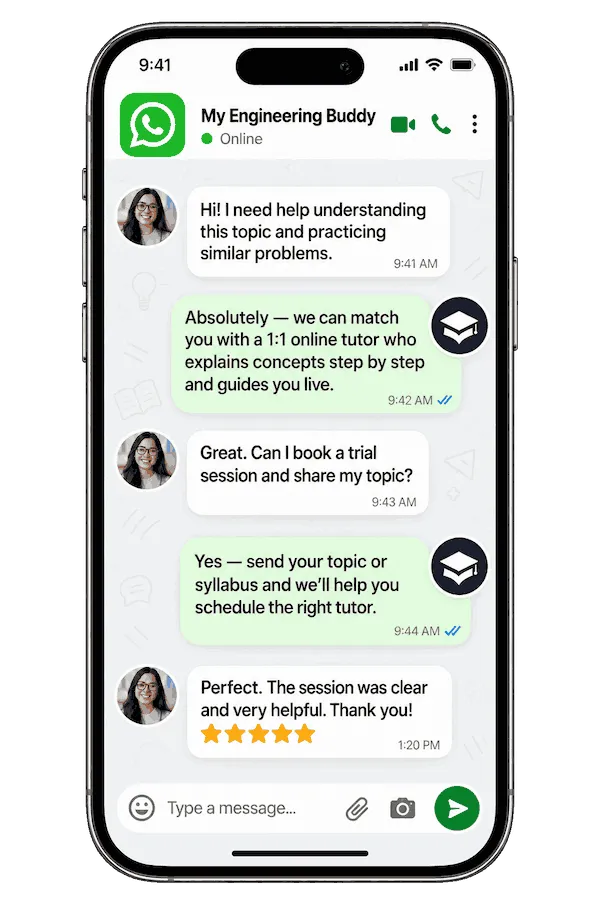
Unlike platforms where you fill out a form and wait, MEB responds in under a minute, 24/7. Tutor match takes under an hour. The $1 trial means you test before you commit. Everything runs over WhatsApp — no logins, no intake forms.
Study Plans (Pick One That Matches Your Goal)
The tutor builds your specific session sequence after the diagnostic, but here are the three common structures. Catch-up (1–3 weeks): students with a submission or exam date close — rapid focus on the weakest component, mark-scheme drilling, and targeted written practice. Exam prep (4–8 weeks): structured revision of all three components with timed practice responses, practitioner study, and devising log review. Weekly support: ongoing, aligned to school deadlines and NEA submission windows — useful for students who want consistent progress rather than a last-minute push.
Pricing Guide
GCSE Drama tutoring runs $20–$40/hr for standard levels. Tutors with professional directing, performance, or theatre design backgrounds are available at higher rates — share your specific component and exam board and MEB will match the right tier.
Rate is shaped by topic complexity, timeline, and tutor availability. Availability tightens every year in the 6–8 weeks before the written exam window and around NEA submission periods.
For students targeting drama programmes at conservatoires, Russell Group universities, or specialist performing arts courses, tutors with professional industry backgrounds are available — share your specific goal and MEB will match the tier to your ambition.
Start with the $1 trial — 30 minutes, no registration, no commitment. WhatsApp MEB for a quick quote.
MEB has been running since 2008. Seventeen years of session data across 2,800+ subjects means the matching process is faster and more accurate than most platforms can offer.
Source: My Engineering Buddy, 2008–2025.
FAQ
Is GCSE Drama hard?
It’s demanding in an unusual way. The practical components reward instinct, but the written exam and devising log require precise academic vocabulary. Most students find Component 3 — the written paper — the hardest part, especially connecting practitioner theory to specific textual moments.
How many sessions are needed?
Students with 4–6 weeks before a submission or exam typically need 6–10 sessions. Students starting earlier with weaker foundations benefit from 12–20 sessions. The tutor sets a realistic sequence after the first diagnostic.
Can you help with homework and assignments?
MEB tutoring is guided learning — you understand the work, then submit it yourself. For devising logs, written exam practice, and set text analysis, the tutor explains the approach and marks what you’ve written. See our Academic Integrity policy and Why MEB page for full details on what we help with and what we don’t.
Will the tutor match my exact syllabus or exam board?
Yes. AQA, Edexcel, and OCR each have different component structures, set texts, and marking criteria. Your tutor is matched specifically to your board — not a generic Drama curriculum — so the session covers what your examiner is actually looking for.
What happens in the first session?
The tutor runs a diagnostic: reviewing your current work, identifying the weakest component, and mapping out a session plan. If you bring a past written response or a draft devising log entry, the session immediately becomes productive rather than introductory.
Is online tutoring as effective as in-person?
For the written exam and devising log work — yes, completely. The tutor annotates your responses live on screen. For performance components, video review and verbal coaching via Google Meet are genuinely useful, though in-person rehearsal with your group is still part of your school process.
Can I get GCSE Drama help at midnight or on weekends?
Yes. MEB tutors cover US, UK, Gulf, Australian, and Canadian time zones. WhatsApp response averages under a minute at any hour. If your exam is tomorrow morning, message now.
What if I don’t like my assigned tutor?
Tell MEB via WhatsApp. You’ll be rematched, usually within the same day. The $1 trial is specifically designed so you can test the match before committing to a full session block.
How do I find a GCSE Drama tutor in my city?
You don’t need to. MEB tutors work online via Google Meet, matched to your time zone — not your postcode. Students in London, Dubai, Toronto, Sydney, and Houston all access the same pool of verified tutors.
What’s the difference between AQA, Edexcel, and OCR GCSE Drama?
Each board has different set texts, devising requirements, and Component 3 structures. AQA uses a devising log; Edexcel requires a process portfolio; OCR has its own documentation format. Your tutor knows which board you’re on and teaches to that specification specifically.
Do GCSE Drama tutors help with the devising log specifically?
Yes — and this is one of the most common reasons students contact MEB. The devising log needs to be analytical, not just descriptive. Tutors review your drafts, show you how to reframe descriptive sentences as critical reflection, and check that your log meets the mark-band descriptors for your board.
How do I get started?
Start with the $1 trial — 30 minutes of live 1:1 tutoring or one written question explained in full. WhatsApp MEB, get matched within the hour, and start your trial session. Three steps: message, match, start.
Trust & Quality at My Engineering Buddy
Every MEB tutor goes through subject-specific vetting: a live demo session, degree and experience verification, and ongoing review based on student feedback. Tutors covering GCSE Drama are assessed on their knowledge of exam board specifications, their ability to teach written analytical skills — not just theatre theory — and their familiarity with the devising and performance assessment criteria. Rated 4.8/5 across 40,000+ verified reviews on Google.
MEB tutoring is guided learning — you understand the work, then submit it yourself. For full details on what we help with and what we don’t, read our Academic Integrity policy and Why MEB.
MEB has served 52,000+ students across the US, UK, Canada, Australia, the Gulf, and Europe since 2008 — across 2,800+ subjects. Within GCSE, Drama sits alongside subjects like GCSE English help, GCSE History tutoring, and GCSE Media Studies help — all covered by the same verified tutor network and matching process. See how MEB structures sessions and builds tutor accountability at MEB’s tutoring methodology.
52,000+ students, 18 years, 4.8/5 on Google. MEB isn’t a new platform experimenting with tutor quality — it’s a track record.
Source: My Engineering Buddy, 2008–2025.
Try your first session for $1 — 30 minutes of live 1:1 tutoring or one homework question explained in full. No registration. No commitment. WhatsApp MEB now and get matched within the hour.
Explore Related Subjects
Students studying GCSE Drama often also need support in:
- GCSE Art and Design
- GCSE Religious Studies
- GCSE Sociology
- GCSE Psychology
- GCSE Citizenship Studies
- GCSE Physical Education
Next Steps
Before your first session, have ready: your exam board (AQA, Edexcel, or OCR) and which component is causing the most difficulty, a recent written response or devising log draft you’ve already attempted, and your exam or submission deadline date. The tutor handles the rest.
- Share your exam board, hardest component, and current timeline
- Share your availability and time zone
- MEB matches you with a verified tutor — usually within the hour
First session starts with a diagnostic so every minute counts.
Visit www.myengineeringbuddy.com for more on how MEB works.
WhatsApp to get started or email [email protected].
Reviewed by Subject Expert
This page has been carefully reviewed and validated by our subject expert to ensure accuracy and relevance.




