How to Get the Most from Online Finance Tutoring

- 85% of U.S. high schoolers want finance taught in school, yet few receive it.
- Personalized tutoring raises test scores by about 0.37 standard deviations on average.
- Online finance teaching offers flexibility — no travel, any schedule, any device.
- Finance tutors typically charge $20–$40 per hour depending on level and topic.
- Preparing specific questions before each session maximizes tutoring value.

Why Students Need Finance Tutoring
Curriculum Gaps
Many schools don’t cover finance in depth, leaving students unprepared. For example, 85% of U.S. high schoolers say they want financial topics taught in school, yet only about 45% take any dedicated finance class. In the UK, fewer than half of children receive a ‘meaningful’ financial education. Without extra help, crucial concepts like interest rates, budgeting or investing can remain confusing after just one or two lectures.
Finance is a broad field with many interconnected disciplines. Here is a visual map of the core areas our expert tutors cover. If you are looking for a finance tutor, understanding the breadth of topics covered can help you choose the right support.
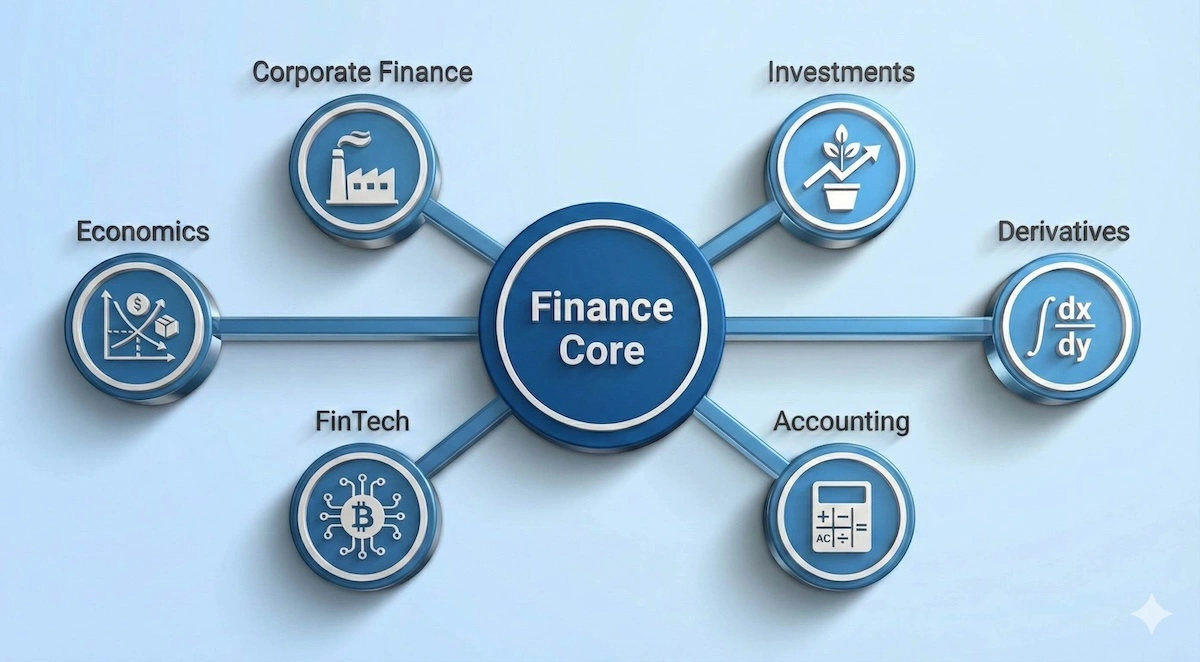
Our expert tutors cover the full spectrum of finance applications, from corporate strategy to modern FinTech.
Whether you are struggling with basic accounting or complex derivatives, our team has the specialized knowledge to help.
Bridging the Gap
That’s where finance tutoring comes in. A tutor provides one-on-one attention to review tricky concepts and reinforce lessons. For many students the alternative is learning finances only at home (81% of teens rely on parents for money advice, which can vary in quality). Tutors ensure no topic is skipped – whether it’s understanding a stock chart or preparing for an exam – helping students gain real confidence in finance.
It is often difficult to bridge the gap between abstract lecture theories and the practical problems you see on exams. The illustration below visualizes how personalized tutoring connects these two worlds.
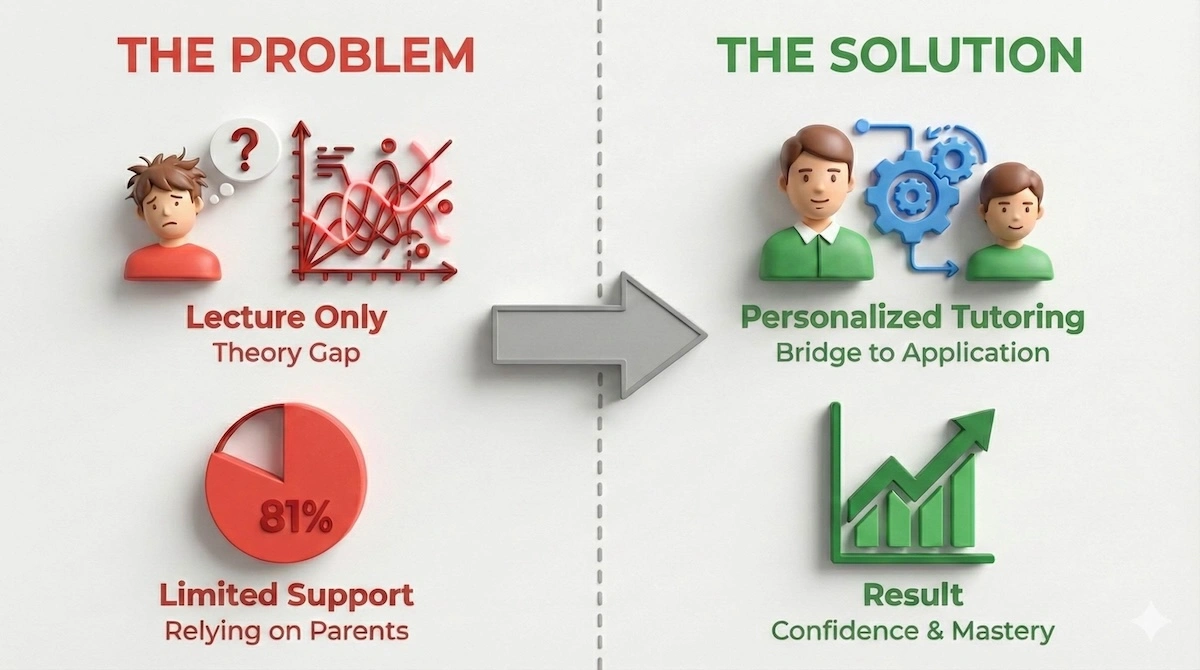
Finance tutoring bridges the gap between confusing lecture theory and practical application, ensuring you gain real confidence.
By closing this ‘theory gap’ early in the semester, you avoid the panic that typically sets in right before finals week.
Benefits of Personalized Finance Tutoring
- Improved Grades: Personalized sessions focus on your weak areas. Research shows one-on-one tutoring can raise test scores by about 0.37 standard deviations (roughly the 50th to the 66th percentile) on average.
- Stronger Foundations: Tutors reinforce fundamentals so that new topics make sense. As The Princeton Review notes, tutoring delivers “better grades and stronger foundational skills”.
- Confidence & Skills: Working with a tutor helps students feel more prepared. They often learn study tips and time-management along the way, which boosts motivation and confidence.
- Flexible Learning: Online finance teaching lets you learn anywhere on any schedule. Tutors use digital tools (whiteboards, chat, video) so that an online finance tutor can cover material just as well as in-person.
- Homework & Assignment Support: Finance tutors specialize in helping with coursework. If a student needs guidance on financial accounting assignments, a tutor can walk them step-by-step through each problem.
In short, finance tutoring does more than just answer questions – it builds lasting skills. Students who use a tutor typically master concepts more thoroughly and feel better prepared for tests or projects. This investment in tutoring translates into better grades and a deeper understanding of finance topics over time.
CAPM is one of the most common stumbling blocks for finance students due to its multiple variables. Let’s break down the formula to understand exactly what each component represents.
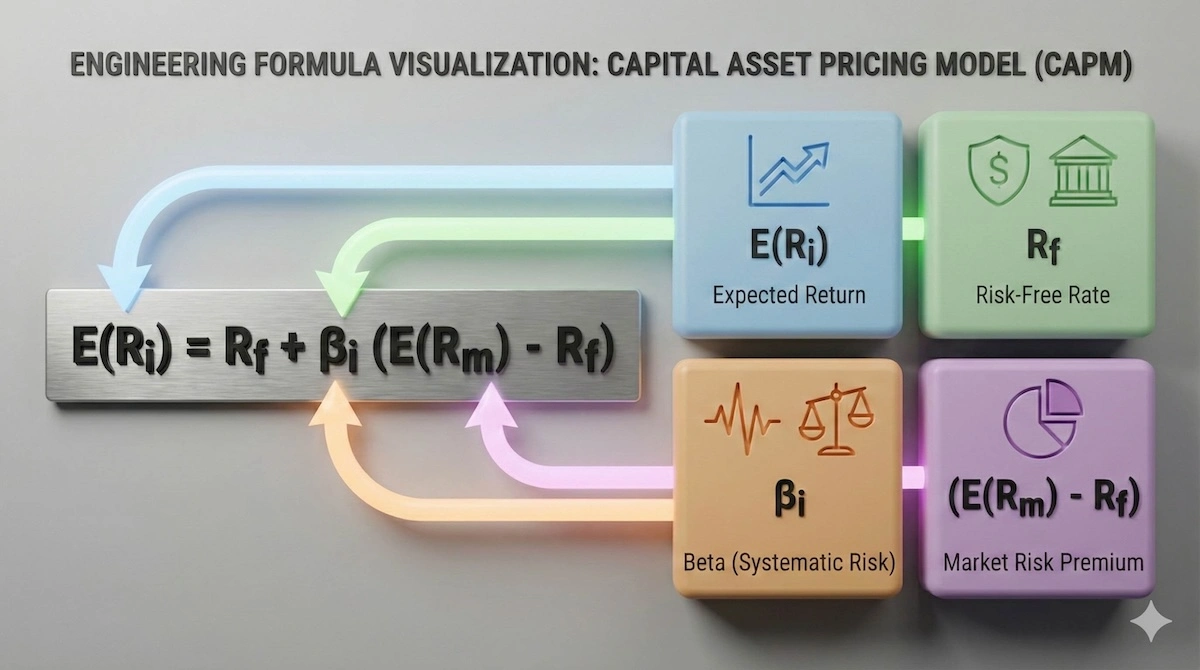
Understanding the Capital Asset Pricing Model (CAPM) is easier when you visualize each component of the formula.
Visualizing the relationship between Risk-Free Rate and Beta helps clarify why high-risk investments require higher expected returns.
Online vs. Traditional Finance Tutoring
Today’s finance tutoring often takes place online. With just a computer or tablet, you can connect to a finance teacher or tutor anywhere. Online finance teaching offers huge flexibility – no travel is needed and you can study from home, a library, or even after school at night. Tutors use screen-sharing and digital whiteboards to walk through equations, graphs and examples. This technology can make tough topics clearer, as students see problems solved in real-time.
Traditional in-person tutoring still has its place too. Some students prefer meeting face-to-face, working on paper, or using physical textbooks. Local tutors may offer a more hands-on approach in a classroom or home setting. But whether online or in-person, the key is personalized attention. In each format, tutors tailor lessons to your pace, which is something crowded classrooms often can’t do.
If you are unsure whether to choose a local tutor or an online platform, consider the structural differences. This comparison highlights why modern students prefer the flexibility of online learning. Students exploring options such as a CIA exam tutor will find that online platforms offer particularly strong specialist access.
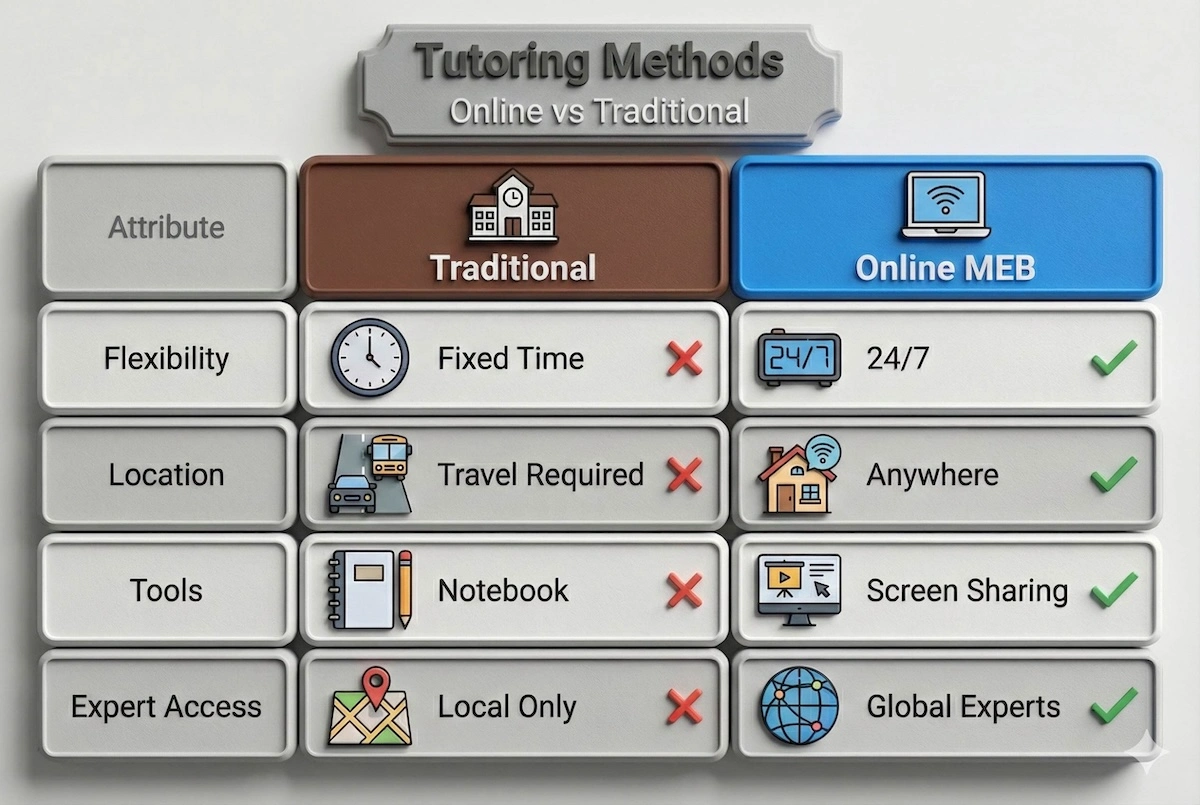
Compare traditional methods with online finance tutoring to see why digital flexibility and global access lead to better results.
As shown above, the ability to record sessions and access global experts gives online tutoring a distinct advantage over traditional methods.
Choosing the Right Finance Tutor
Qualifications and Expertise
When looking for a finance tutor, check their background. The best tutors have a solid finance or accounting education – for example a degree in finance, economics, or a related field – and ideally some teaching experience. It helps if a tutor has taught or studied the exact topics you’re learning (like AP Economics, college finance, or CFA-level material). Tutors should also be good communicators: they need to explain complex topics clearly. Many platforms vet their tutors or showcase ratings so you can see who excels.
Affordability and Scheduling
Another factor is cost. Many students ask “How much does a finance tutor cost?” Rates vary widely, but for high school and college finance, tutors often charge around $20–$40 per hour depending on experience and complexity. For example, services like MyEngineeringBuddy list tutoring packages in this range. Keep in mind that prices might rise for specialized exams or advanced college courses.
Also consider convenience: some tutors offer one-time sessions for last-minute questions, while others provide packages or ongoing support. Online platforms usually let you filter tutors by availability and price, making it easy to find the right tutor when you need one. Platforms reviewed in our Varsity Tutors review and our Wyzant review offer useful comparisons of pricing and availability across finance subjects.
Getting the Most from Finance Tutoring
To really benefit from tutoring, come prepared. Bring specific questions or a list of topics you find confusing to each session. For instance, if you have a finance assignment, send it to your tutor in advance. This way, your tutor can focus on exactly what you need. During sessions, ask your tutor to show multiple examples – seeing how a concept applies in different ways helps it sink in.
Take notes on any tips or shortcuts they share, and try problems on your own afterwards. Practice between tutoring sessions is key: the more you work on problems with guidance, the more independent you’ll become.
Remember that tutoring is a two-way street. Give feedback to your tutor if something isn’t clear, and don’t hesitate to ask them to slow down. The more your tutor understands your struggles, the better they can adapt. In time, you might even teach back a concept to your tutor – if you can explain it, you truly understand it.
By staying engaged and asking for help exactly when you need it, you’ll get the maximum value. Many students find that regular tutoring not only improves their homework grades, but also gives them lifelong skills in managing finance challenges. Students preparing for professional qualifications may also benefit from working with an investment banking tutor or seeking managerial accounting tutoring to round out their financial knowledge.
To maximize your return on investment for every hour of tutoring, follow a structured approach. The flowchart below outlines the ideal workflow for a successful session.
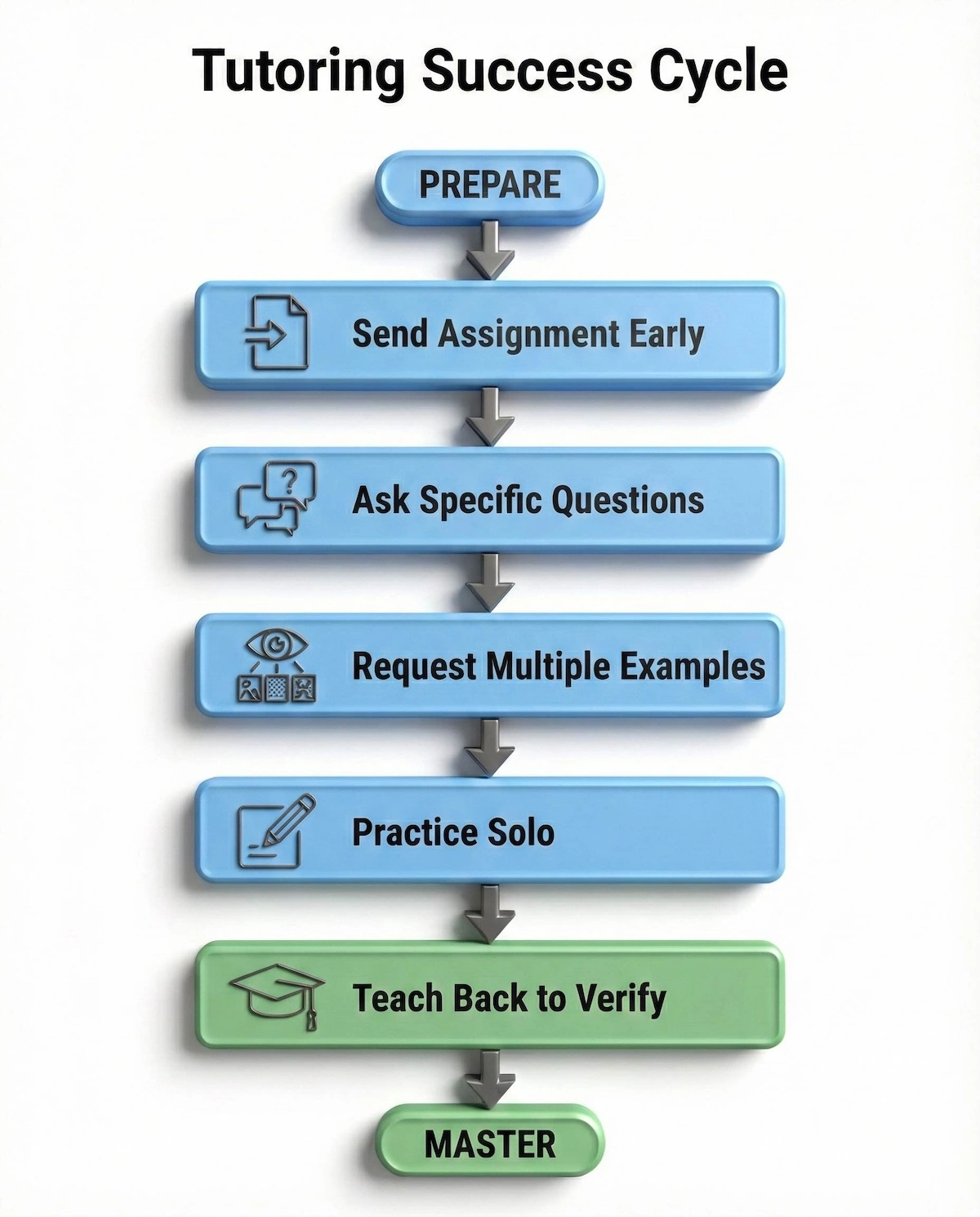
Follow this proven workflow to get the maximum value from every finance tutoring session.
Following this cycle—especially the final step of ‘teaching back’—is the fastest way to move from passive learning to active mastery. For additional platform comparisons, see our University Tutor review and our Tutor House review.
Frequently Asked Questions About Finance Tutoring
What is finance tutoring?
Finance tutoring is personalized instruction in financial subjects that helps students grasp concepts like budgeting, investing or corporate finance and complete related homework or projects.
Who benefits from finance tutoring?
High school or college students taking finance, economics or business courses (and anyone needing extra finance homework guidance) often benefit from working with a finance tutor.
How do I find a finance tutor?
You can find a finance tutor on online tutoring platforms, by asking at your school, or by searching for finance tutoring options – many websites let you filter tutors by subject, price and availability.
How much does a finance tutor cost?
Rates vary, but many private finance tutors charge around $20–$40 per hour for high school or college-level tutoring, depending on their credentials and the topic’s difficulty.
Can online finance teaching really help?
Yes – online finance teachers use video calls and digital tools to deliver interactive lessons, making it easy and convenient to get help with finance topics from anywhere.
Does tutoring improve grades?
Yes – research shows tutoring significantly boosts learning; one review found that personalized tutoring raises students’ test scores by about 0.37 standard deviations on average.
Related Subjects
Alternative Investments | Asset Management | Business Strategy | Business Valuation Corporate Restructuring & Insolvency | Capital Asset Pricing Model (CAPM) | Capital budgeting | Cost Analysis | Credit Risk | Cryptocurrency | Derivatives Pricing | Federal Income Taxation | Financial Derivatives | Financial Economics | Financial Technology (FinTech) | Fixed Income | Fixed Income Securities | Forex trading | Futures and Options | Insurance | International Financial Management | Investment Analysis | Investment Banking | Investment Management | Islamic Banking & Finance | Management Information Systems | Money and Banking | Options Strategy Trading | Performance Measurement | Personal Finance | Portfolio Management | Private Equity | Quantitative Analysis | Quantitative Finance | Quantitative Methods | Real Estate | Securities Analysis | Series 6 | Series 65 | Smart Contracts | Stock Market
Related Reading
******************************
This article provides general educational guidance only. It is NOT official exam policy, professional academic advice, or guaranteed results. Always verify information with your school, official exam boards (College Board, Cambridge, IB), or qualified professionals before making decisions. Read Full Policies & Disclaimer , Contact Us To Report An Error