




Hire The Best ETAP Tutor
Top Tutors, Top Grades. Without The Stress!
52,000+ Happy Students From Various Universities



How Much For Private 1:1 Tutoring & Hw Help?
Private 1:1 Tutoring and HW help Cost $20 – 35 per hour* on average.
Most students who struggle with ETAP hit the same wall: the software runs, the simulation finishes — and the results make no sense.
ETAP Tutor Online
ETAP (Electrical Transient Analyzer Program) is a power systems analysis software used by electrical engineers to model, simulate, and analyse load flow, short-circuit, protection coordination, arc flash, and transient stability in electrical networks.
MEB offers 1:1 online tutoring and homework help in 2800+ advanced subjects, including ETAP. Whether you’re working through a power systems course, completing a utility protection project, or stuck on an arc flash report that won’t converge, an electrical engineering tutor with hands-on ETAP experience can walk you through it live. If you’ve searched for an ETAP tutor near me and found nothing useful locally, online 1:1 tutoring is the faster, more flexible option. Sessions are built around your exact problem set — not a generic walkthrough.
- 1:1 online sessions tailored to your course syllabus or project scope
- Expert-verified tutors with real-world ETAP and power systems experience
- Flexible time zones — US, UK, Canada, Australia, Gulf
- Structured learning plan built after a diagnostic session
- Ethical homework and assignment guidance — you understand the work before you submit
52,000+ students across the US, UK, Canada, Australia, and the Gulf have used MEB since 2008 — including students in Electrical Engineering subjects like ETAP, Power System Analysis, and Power System Protection.
Source: My Engineering Buddy, 2008–2025.
How Much Does an ETAP Tutor Cost?
Most ETAP tutoring sessions run $20–$40/hr. Graduate-level work, utility-grade arc flash analysis, or protection coordination projects may reach $60–$100/hr depending on tutor expertise and project complexity. The $1 trial gets you 30 minutes of live tutoring or one homework question explained in full — no registration required.
| Level / Need | Typical Rate | What’s Included |
|---|---|---|
| Undergraduate / Course Project | $20–$40/hr | 1:1 sessions, homework guidance, simulation walkthrough |
| Graduate / Research / Utility-Level | $40–$100/hr | Expert tutor, protection coordination, arc flash depth |
| $1 Trial | $1 flat | 30 min live session or 1 homework question explained |
Tutor availability tightens around semester-end project deadlines — particularly in April, November, and December. Book early if your submission is within two weeks.
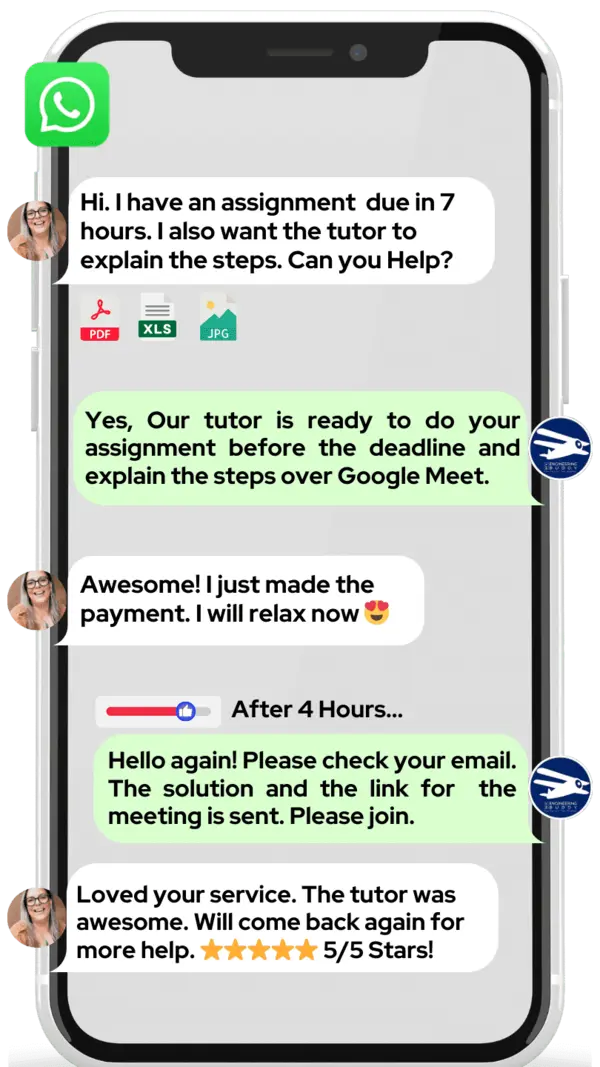
WhatsApp MEB for a quick quote — average response time under 1 minute.
Who This ETAP Tutoring Is For
ETAP is not a subject you pick up by clicking through menus. The learning curve is steep, and most courses assume more background knowledge than students actually have. This service is built for people who need results on a real deadline.
- Undergraduate electrical engineering students with a power systems or protection design assignment
- Graduate students building ETAP models for thesis research — load flow divergence, relay coordination, or transient stability
- Students retaking after a failed first attempt on a power systems exam or project submission
- Working engineers new to ETAP who need to produce a deliverable quickly
- Students at universities including Georgia Tech, University of Waterloo, TU Delft, Imperial College London, University of Queensland, and King Abdullah University of Science and Technology (KAUST) who use ETAP in core modules
- Anyone whose ETAP simulation won’t converge and whose professor hasn’t responded in three days
Sessions cover everything from setting up a basic single-line diagram to running arc flash studies to IEEE 1584 standards. If you need power systems tutoring alongside your ETAP work, MEB covers that too.
1:1 Tutoring vs Self-Study vs AI vs YouTube vs Online Courses
Self-study works if you have time, a complete dataset, and no deadline pressure. AI tools give fast text answers but can’t log into ETAP and debug your relay settings with you. YouTube gets you through menu navigation but stops when your load flow diverges for a reason specific to your network topology. Online courses teach ETAP concepts in sequence — not your sequence. 1:1 tutoring with MEB is live, on your actual ETAP file, correcting errors in real time. For a software tool where one wrong base voltage setting cascades through every calculation, that live correction matters.
Outcomes: What You’ll Be Able To Do in ETAP
After working with an MEB ETAP tutor, students consistently report being able to build and troubleshoot their own ETAP one-line diagrams without external help. You’ll be able to run and interpret load flow studies using Newton-Raphson or Fast Decoupled methods, analyse short-circuit fault currents to IEC or ANSI standards, set up protection coordination studies with time-current curves, and produce arc flash reports that meet IEEE 1584 calculation requirements. You’ll also be able to explain your results — which matters in university presentations and professional deliverables alike.
Based on feedback from 40,000+ sessions collected by MEB from 2022 to 2025, 58% of students improved by one full grade after approximately 20 hours of 1:1 tutoring in subjects like ETAP. A further 23% achieved at least a half-grade improvement.
Source: MEB session feedback data, 2022–2025.
Supporting a student through ETAP? MEB works directly with parents to set up sessions, track progress, and keep coursework on schedule. WhatsApp MEB — average response time is under a minute, 24/7.
What We Cover in ETAP (Syllabus / Topics)

Load Flow and Short-Circuit Analysis
- Newton-Raphson and Fast Decoupled load flow methods
- Voltage profile analysis and bus voltage violations
- Reactive power compensation and power factor correction
- Three-phase, line-to-line, and line-to-ground fault calculations
- ANSI and IEC short-circuit standards
- Generator contribution and motor contribution to fault current
Key references: Stevenson & Grainger’s Power Systems Analysis; Glover, Sarma & Overbye’s Power System Analysis and Design.
Protection Coordination and Arc Flash
- Time-current curve (TCC) plotting and relay coordination
- Overcurrent relay settings — pickup, time dial, instantaneous
- Fuse-relay and fuse-fuse coordination
- Arc flash hazard analysis to IEEE 1584-2018
- Incident energy calculations and PPE category assignment
- Device duty and interrupting rating verification
- NFPA 70E compliance requirements
Key references: Blackburn & Domin’s Protective Relaying: Principles and Applications; IEEE 1584-2018 standard.
Transient Stability and Motor Starting
- Swing equation and rotor angle stability
- Critical clearing time and equal-area criterion
- Motor starting impact on bus voltage — voltage dip analysis
- Induction and synchronous motor modelling in ETAP
- Dynamic simulation setup and result interpretation
Key references: Kundur’s Power System Stability and Control; Anderson & Fouad’s Power System Control and Stability.
At MEB, we’ve found that ETAP students spend the first two sessions on the same problem: a load flow that won’t converge. Nine times out of ten, it’s a base voltage mismatch or a transformer tap setting that’s off by one step. Getting that fixed early means every session after it is productive.
What a Typical ETAP Session Looks Like
The tutor starts by reviewing where you left off — usually a specific study that didn’t converge or a protection report that flagged an error. You share your ETAP file or screen via Google Meet. The tutor uses a digital pen-pad to annotate the one-line diagram alongside your screen, pointing out exactly where the network data is incorrect — a bus base voltage, a cable impedance entry, or a relay curve that’s crossed with an upstream device. You replicate the fix and re-run the study while the tutor watches. By the end of the session, you have a working model and a clear explanation of what was wrong and why. The tutor sets a specific practice task — run the arc flash module on a section you haven’t touched yet — and notes the next topic: motor starting analysis or transient stability setup.
How MEB Tutors Help You with ETAP (The Learning Loop)
Diagnose: In the first session, the tutor asks you to share your ETAP project file or a recent assignment. They identify exactly which module is causing problems — load flow, short circuit, protection, arc flash — and what the root error is, whether that’s a data entry issue, a convergence setting, or a conceptual gap in how you’ve modelled the network.
Explain: The tutor works through a corrected example on screen using a digital pen-pad. They don’t just fix it — they explain the calculation behind the ETAP result so you understand what the software is actually doing. For arc flash, that means walking through the IEEE 1584 equations. For load flow, it means showing you what the Jacobian update is converging toward.
Practice: You attempt the next section yourself, with the tutor present. If your relay coordination TCC shows an overlap, the tutor lets you find it first. This is the part most students skip when working alone — and it’s where the learning actually happens.
Feedback: The tutor gives step-by-step correction — not just “that’s wrong” but specifically where the curve crossing occurs, what the selectivity margin should be, and why that relay setting costs marks in a graded report.
Plan: Each session ends with a clear next topic and a specific task. If you need control systems tutoring as background support for your protection work, the tutor flags that too.
Sessions run on Google Meet with a digital pen-pad or iPad + Apple Pencil. Before your first session, have your ETAP file ready (or a description of your project scope), the assignment brief or exam spec, and your submission deadline. Start with the $1 trial — 30 minutes of live tutoring that also serves as your first diagnostic.
Try your first session for $1 — 30 minutes of live 1:1 tutoring or one homework question explained in full. No registration. No commitment. WhatsApp MEB now and get matched within the hour.
Tutor Match Criteria (How We Pick Your Tutor)
Not every electrical engineer knows ETAP. MEB matches on four criteria.
Subject depth: Tutors must have hands-on ETAP experience — not just power systems theory. That means real project exposure: load flow studies, protection coordination reports, or arc flash analyses, not just academic coursework.
Tools: All ETAP tutors work over Google Meet with a digital pen-pad or iPad + Apple Pencil. They can annotate your one-line diagram in real time and walk through simulation outputs alongside you.
Time zone: Matched to your region — US, UK, Gulf, Canada, or Australia. No 3 a.m. sessions unless you want them.
Goals: Whether you need a single convergence fix, help with a protection coordination assignment, or ongoing support through a semester-long power systems project, the tutor is selected for your specific scope — not a generic ETAP profile.
Unlike platforms where you fill out a form and wait, MEB responds in under a minute, 24/7. Tutor match takes under an hour. The $1 trial means you test before you commit. Everything runs over WhatsApp — no logins, no intake forms.
Study Plans (Pick One That Matches Your Goal)
Catch-up (1–3 weeks): for students behind on a power systems project or with a submission in under a month — tutor focuses on the failing module first, then works outward. Exam prep (4–8 weeks): structured revision across load flow, short circuit, protection, and arc flash, with past project walkthroughs. Weekly support: ongoing sessions aligned to your semester schedule, covering each ETAP module as your course introduces it. The tutor builds the exact sequence after the first diagnostic session — no generic plan.
Pricing Guide
ETAP tutoring starts at $20/hr for undergraduate course support. Graduate-level work — thesis modelling, utility protection projects, transient stability research — typically runs $60–$100/hr depending on the tutor’s industry background and the project’s complexity.
Rate factors: your academic level, the ETAP module involved, your deadline, and tutor availability. Availability drops sharply in April and November as engineering project deadlines cluster.
For students targeting roles at utility companies, grid operators, or engineering consultancies, MEB can match you with tutors who have professional power industry backgrounds — share your goal and MEB matches the tier to it.
Start with the $1 trial — 30 minutes, no registration, no commitment. WhatsApp MEB for a quick quote.
ETAP tutoring with MEB covers the full simulation workflow — from single-line diagram setup and load flow convergence to arc flash reporting and protection coordination. Sessions are built around your actual project file, not a textbook example.
Source: My Engineering Buddy, 2008–2025.
FAQ
Is ETAP hard to learn?
Yes — particularly for students without prior power systems exposure. The interface is dense, input errors cascade through every downstream calculation, and most university courses don’t include enough hands-on ETAP time. Most students need guided walkthroughs before they can work independently.
How many sessions are typically needed?
For a single assignment or convergence issue, 2–4 sessions usually resolves it. For a full semester of ETAP coursework or a graduate-level protection project, students typically work with a tutor for 8–15 sessions over 6–10 weeks.
Can you help with homework and assignments?
MEB tutoring is guided learning — you understand the work, then submit it yourself. See our Academic Integrity policy and Why MEB page for full details on what we help with and what we don’t. Tutors explain the method and check your reasoning — they don’t produce your deliverable.
Will the tutor match my exact syllabus or exam board?
Yes. Before your first session, share your course outline, assignment brief, or project scope. The tutor is matched to your specific module — whether that’s a university power systems course using ETAP or a professional study with a specific standard like IEEE 1584 or IEC 60909.
What happens in the first session?
The tutor reviews your current ETAP file or assignment, identifies the specific gap or error, and works through it with you live. You leave the first session with a working model or a clear corrected method — and a plan for the next session.
Is online ETAP tutoring as effective as in-person?
For a software subject like ETAP, online is often better. Screen sharing plus a digital pen-pad gives the tutor full visibility of your file and lets them annotate in real time. There’s no whiteboard in a physical room that replicates that for simulation-based work.
Can I get ETAP help at midnight?
Yes. MEB operates 24/7 across time zones. WhatsApp response times average under one minute. If your simulation is broken the night before a submission, message MEB — a tutor can often be arranged within the hour.
What’s the difference between ETAP and other power systems software like PSS/E or PSCAD?
ETAP is industry-standard for protection coordination, arc flash, and utility-grade one-line modelling. PSS/E is used more for large-scale transmission planning. PSCAD tutoring covers electromagnetic transient simulation. MEB tutors cover all three — let MEB know which tool your course or project uses.
Do you offer group ETAP sessions?
MEB specialises in 1:1 sessions. Group sessions can be arranged for small teams working on the same project — message MEB via WhatsApp with the number of participants and your project scope to discuss options and pricing.
How do I find an ETAP tutor in my city?
You don’t need to. MEB sessions run entirely online over Google Meet. Students in Houston, Abu Dhabi, London, Sydney, and Toronto all access the same tutor pool. Time zone matching means you get a tutor in your working hours regardless of location.
What if I don’t like my assigned tutor?
Tell MEB via WhatsApp. A replacement is arranged at no extra cost — usually within the same day. The $1 trial exists specifically so you can assess fit before committing to a full session package.
How do I get started?
Start with the $1 trial — 30 minutes of live ETAP tutoring or one assignment question explained in full. WhatsApp MEB, get matched with a verified tutor, and start your trial session. Three steps, no forms, no waiting.
Trust & Quality at My Engineering Buddy
Every MEB tutor goes through subject-specific screening before taking a session. For ETAP, that means demonstrating proficiency in the modules they claim — load flow, protection coordination, arc flash, or transient stability — not just general electrical engineering competency. Tutors complete a live demo evaluation and are reviewed after every session. Rated 4.8/5 across 40,000+ verified reviews on Google. MEB has been running since 2008 — that’s 18 years of tutor feedback data informing who stays on the platform and who doesn’t.
MEB tutoring is guided learning — you understand the work, then submit it yourself. For full details on what we help with and what we don’t, read our Academic Integrity policy and Why MEB.
MEB serves students across the US, UK, Canada, Australia, the Gulf, and Europe in 2,800+ subjects — from ETAP and power engineering tutoring to Signals and Systems help and Embedded Systems tutoring. Electrical Engineering is one of MEB’s largest subject areas, and ETAP is one of the most-requested specialist tools within it.
Students consistently tell us that the biggest shift happens between session two and session three: the software stops feeling like a black box. They start reading the error messages instead of ignoring them. That’s when they can work independently — and that’s the goal.
Explore Related Subjects
Students studying ETAP often also need support in:
- Power System Operation and Control
- Power Transmission Systems
- High Voltage Engineering
- Electrical Machines
- Transformer
- Smart Grid
- Distributed Control Systems (DCS)
- Power Generation
Next Steps
When you message MEB, have these ready:
- Your exam board, university module code, or project brief
- The ETAP module causing the problem (load flow, arc flash, protection, transient stability)
- Your submission deadline or exam date
Before your first session, have ready: your ETAP file or project scope description, a recent assignment or simulation output you struggled with, and your deadline. The tutor handles the rest.
MEB matches you with a verified ETAP tutor — usually within 24 hours, often within the hour. The first session starts with a diagnostic so every minute is used on what actually needs fixing.
Visit www.myengineeringbuddy.com for more on how MEB works.
WhatsApp to get started or email meb@myengineeringbuddy.com.
Reviewed by Subject Expert
This page has been carefully reviewed and validated by our subject expert to ensure accuracy and relevance.

