

Hire Verified & Experienced
Operational Amplifiers Tutors
4.8/5 40K+ session ratings collected on the MEB platform



Hire The Best Operational Amplifiers Tutor
Top Tutors, Top Grades. Without The Stress!

52,000+ Happy Students From Various Universities



How Much For Private 1:1 Tutoring & Hw Help?
Private 1:1 Tutoring and HW help Cost $20 – 35 per hour* on average.
Op-amp feedback analysis. You’ve redrawn the circuit four times. The answer still doesn’t match. That’s exactly where an Operational Amplifiers tutor steps in.
Operational Amplifiers Tutor Online
Operational amplifiers (op-amps) are high-gain electronic voltage amplifiers used in analog circuits for signal amplification, filtering, integration, and differentiation. Studied in electrical and electronics engineering, op-amps equip students to design and analyze analog signal processing systems.
If you’ve searched for an Operational Amplifiers tutor near me, MEB’s 1:1 online tutoring and homework help is built for exactly where you are — whether that’s a second-year circuits module, a graduate analog design course, or a final-year project involving instrumentation. As part of Electrical Engineering tutoring at MEB, op-amp sessions are matched to your exact syllabus, your current gaps, and your deadline. No generic slides. No catch-up sessions that feel like lectures.
- 1:1 online sessions tailored to your course syllabus and exam board
- Expert verified tutors with hands-on analog circuit experience
- Flexible time zones — US, UK, Canada, Australia, Gulf
- Structured learning plan built after a diagnostic session
- Ethical homework and assignment guidance — you understand before you submit
52,000+ students across the US, UK, Canada, Australia, and the Gulf have used MEB since 2008 — including students in Electrical Engineering subjects like Operational Amplifiers, Analog Circuits, and Analog Electronics.
Source: My Engineering Buddy, 2008–2025.
How Much Does an Operational Amplifiers Tutor Cost?
Most Operational Amplifiers tutoring sessions at MEB run $20–$40/hr. Advanced graduate-level or specialist analog IC design courses can reach up to $100/hr depending on tutor depth and timeline. The $1 trial gets you 30 minutes of live 1:1 tutoring or a full explanation of one homework question — no registration required.
| Level / Need | Typical Rate | What’s Included |
|---|---|---|
| Standard (most undergrad levels) | $20–$35/hr | 1:1 sessions, homework guidance |
| Advanced / Graduate / Specialist | $35–$100/hr | Expert tutor, IC design, advanced analog |
| $1 Trial | $1 flat | 30 min live session or 1 homework question |
Tutor availability tightens sharply during end-of-semester exam periods — especially in April–May and November–December. Book early if you’re within six weeks of a deadline.
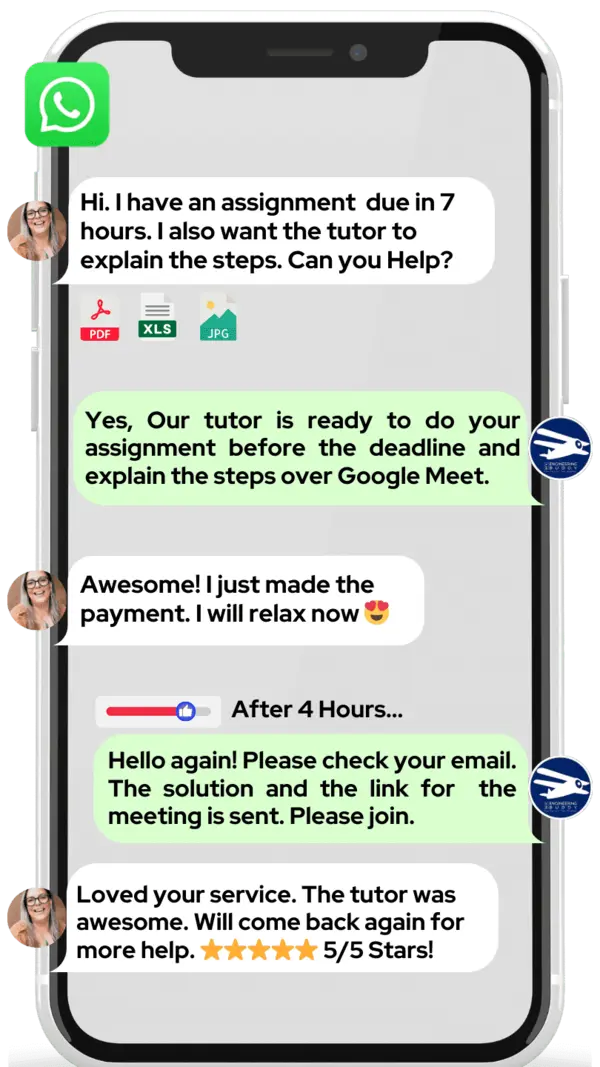
WhatsApp MEB for a quick quote — average response time under 1 minute.
Who This Operational Amplifiers Tutoring Is For
Op-amp courses trip up students at every level — from first-year electronics lab write-ups to graduate-level active filter design. The gap between understanding the ideal op-amp model and actually applying it in a non-inverting amplifier configuration or a Sallen-Key filter is wider than most courses make it look.
- Second and third-year undergrads stuck on feedback theory, gain calculations, or frequency response
- Students retaking after a failed first attempt at an analog electronics module
- Graduate students working on instrumentation amplifier design or analog signal conditioning circuits
- Students with a university conditional offer depending on this grade
- Parents watching a child’s confidence drop alongside their lab scores and assignment marks
- Students needing ethical homework and assignment guidance — explained fully so they can submit with confidence
MEB tutors have supported students at MIT, Stanford, Imperial College London, ETH Zurich, University of Toronto, Delft University of Technology, and UNSW Sydney — among many others.
Start with the $1 trial and turn that first session into a diagnostic that maps exactly where you’re losing marks.
1:1 Tutoring vs Self-Study vs AI vs YouTube vs Online Courses
Self-study works if you’re disciplined — but op-amp feedback loops are notoriously hard to debug alone. AI tools explain concepts fast but can’t watch you mis-apply the virtual ground rule in real time. YouTube covers inverting amplifiers well; it stops when you need to derive the closed-loop bandwidth of your specific circuit. Online courses move at a fixed pace — they won’t pause for your particular confusion about common-mode rejection ratio. 1:1 tutoring with MEB is live, calibrated to your exact course, and corrects errors in the moment — which matters especially in op-amp problems where a single sign error cascades through the entire analysis.
Outcomes: What You’ll Be Able To Do in Operational Amplifiers
After structured 1:1 sessions, students can analyze inverting and non-inverting amplifier configurations from first principles, apply virtual ground and virtual short concepts correctly without prompting, model the frequency response of a given op-amp circuit including gain-bandwidth product constraints, solve differential amplifier and instrumentation amplifier problems with full working, and explain why a real op-amp deviates from the ideal model — including input offset voltage, slew rate, and CMRR effects. That last point is where most exam marks are lost, and it’s where MEB tutors spend disproportionate time.
Based on feedback from 40,000+ sessions collected by MEB from 2022 to 2025, 58% of students improved by one full grade after approximately 20 hours of 1:1 tutoring in subjects like Operational Amplifiers. A further 23% achieved at least a half-grade improvement.
Source: MEB session feedback data, 2022–2025.
Supporting a student through Operational Amplifiers? MEB works directly with parents to set up sessions, track progress, and keep coursework on schedule. WhatsApp MEB — average response time is under a minute, 24/7.
At MEB, we’ve found that students who struggle with op-amp circuits are almost never stuck on the math — they’re stuck on which assumption to apply first. Identifying that in session one saves weeks of misdirected practice.
What We Cover in Operational Amplifiers (Syllabus / Topics)

Track 1: Fundamentals and Core Configurations
- Ideal op-amp model: infinite gain, infinite input impedance, zero output impedance
- Inverting and non-inverting amplifier configurations — gain derivation
- Virtual ground and virtual short principles
- Summing amplifier, difference amplifier, and voltage follower (buffer)
- Integrator and differentiator circuits — time-domain and frequency-domain analysis
- Input offset voltage, bias current, and offset null adjustment
- Slew rate — definition, causes, and effect on output waveform
Core texts: Microelectronics by Sedra & Smith; Electronic Devices and Circuit Theory by Boylestad & Nashelsky; Operational Amplifiers and Linear Integrated Circuits by Coughlin & Driscoll.
Track 2: Frequency Response, Feedback, and Stability
- Open-loop vs closed-loop gain — Bode plot construction for op-amp circuits
- Gain-bandwidth product (GBW) and its implications for circuit design
- Negative feedback theory: loop gain, feedback factor, closed-loop bandwidth
- Phase margin and gain margin — stability criteria for feedback amplifiers
- Compensation techniques: dominant pole compensation, lag-lead networks
- Common-mode rejection ratio (CMRR) and power supply rejection ratio (PSRR)
- Noise in op-amp circuits: voltage noise density, current noise, 1/f noise
Core texts: Analysis and Design of Analog Integrated Circuits by Gray, Hurst, Lewis & Meyer; Op Amp Applications Handbook by Walt Jung (Analog Devices); Art of Electronics by Horowitz & Hill.
Track 3: Active Filters, Comparators, and Instrumentation
- Active filter topologies: Sallen-Key, multiple feedback (MFB), state-variable
- Butterworth, Chebyshev, and Bessel filter design using op-amps
- Instrumentation amplifier design — three-op-amp configuration, CMRR optimization
- Comparator circuits: hysteresis (Schmitt trigger), window comparator
- Precision rectifiers, peak detectors, and sample-and-hold circuits
- Oscillator circuits using op-amps: Wien bridge, phase-shift oscillator
- Analog signal processing applications in sensor interfacing and data acquisition
Core texts: Active Filter Design by Wai-Kai Chen; Troubleshooting Analog Circuits by Robert Pease; Texas Instruments Op Amp for Everyone (free reference).
What a Typical Operational Amplifiers Session Looks Like
The tutor opens by checking the previous topic — typically the feedback derivation or Bode plot exercise from last time. Any errors in that working get corrected first, before new material. Then the session moves into the current problem: say, deriving the transfer function of a Sallen-Key low-pass filter or calculating the output of a difference amplifier given mismatched resistors. The tutor works the problem on a digital pen-pad, visible on screen, talking through each step — where to apply virtual short, how to handle the common-mode component, why the answer changes with finite op-amp gain. You then replicate the method on a similar problem while the tutor watches. If the reasoning breaks down somewhere, that’s where time is spent. The session closes with a specific practice problem set for before next time and the next topic noted — usually active filter design or instrumentation amplifier analysis. Get Analog Electronics help from the same pool of verified tutors if your course spans both.
How MEB Tutors Help You with Operational Amplifiers (The Learning Loop)
Diagnose: In the first session, the tutor works through a short set of problems with you — typically an inverting amplifier gain question and a feedback stability question. From how you approach them, the tutor identifies whether the gap is conceptual (you don’t know when to apply virtual ground) or procedural (you know the rule but mis-apply it under exam conditions). Those are different problems requiring different fixes.
Explain: Every explanation uses live worked examples on a digital pen-pad. No pre-made slides. The tutor builds the circuit, derives the gain expression, and annotates the Bode plot in real time — so you see the reasoning, not just the result. That matters when the exam asks you to derive something you’ve never seen before.
Practice: You attempt the next problem with the tutor present. Not after the session. Not from a textbook you might never open. Right there, while the tutor can see where you pause and why.
Feedback: Error correction is step-by-step. If you dropped a sign in the gain expression, the tutor shows you exactly which step introduced it and why that step is easy to mis-read under pressure. Exam papers are marked by examiners who know exactly where students lose marks — MEB tutors are trained to make those loss points visible.
Plan: Each session ends with a written note on what was covered, what’s next, and what you should attempt independently before the following session. Progress is tracked. Topics are sequenced — not random.
Sessions run over Google Meet. The tutor uses a digital pen-pad or iPad with Apple Pencil. Before your first session, have your course syllabus, a recent homework you struggled with, and your exam or coursework deadline date ready. The first session doubles as your diagnostic — you leave it knowing exactly where to focus. Start with the $1 trial — 30 minutes of live 1:1 tutoring or one op-amp problem explained in full.
Try your first session for $1 — 30 minutes of live 1:1 tutoring or one homework question explained in full. No registration. No commitment. WhatsApp MEB now and get matched within the hour.
Tutor Match Criteria (How We Pick Your Tutor)
Not every electronics tutor can handle graduate-level analog IC design. MEB matches on four criteria.
Subject depth: Tutors are matched to your exact level — first-year fundamentals, upper-division active filter design, or graduate-level CMOS op-amp design. Need Integrated Circuits help alongside op-amps? The same tutor can often cover both.
Tools: Every session uses Google Meet with a digital pen-pad or iPad and Apple Pencil. Circuit derivations require pen-on-screen — not typed LaTeX or screenshots.
Time zone: Matched to your region — US, UK, Gulf, Canada, or Australia. No 3am sessions unless you want them.
Goals: Whether you need exam score improvement, conceptual depth for a project, homework completion, or research support — the tutor is told before session one.
Unlike platforms where you fill out a form and wait, MEB responds in under a minute, 24/7. Tutor match takes under an hour. The $1 trial means you test before you commit. Everything runs over WhatsApp — no logins, no intake forms.
Study Plans (Pick One That Matches Your Goal)
Once the diagnostic is done, the tutor builds a session sequence around your timeline. Students behind on feedback theory with two weeks to a test follow a different plan from students doing pre-semester prep. Three standard tracks: Catch-up (1–3 weeks) for students with specific gaps to close before an exam; Exam prep (4–8 weeks) with structured topic progression and past paper work; Weekly support aligned to your semester calendar and coursework submission dates. The tutor decides the sequence after that first session — not before it.
Pricing Guide
Operational Amplifiers tutoring starts at $20/hr for standard undergraduate content. Graduate-level courses — CMOS op-amp design, advanced analog IC layout, research-level instrumentation — run up to $100/hr depending on tutor background and timeline pressure. Rate factors: level, topic complexity, how much notice you give, and tutor availability in your time zone.
For students targeting graduate school research roles, semiconductor industry positions, or analog IC design careers, tutors with professional industry backgrounds — from companies like Texas Instruments, Analog Devices, or similar — are available at higher rates. Share your specific goal and MEB matches the tier to your target.
MEB has covered Electronics Engineering tutoring across 2,800+ subjects since 2008 — including op-amp design, analog filter theory, and graduate-level instrumentation across the US, UK, Canada, Australia, and the Gulf.
Source: My Engineering Buddy, 2008–2025.
Start with the $1 trial — 30 minutes, no registration, no commitment. WhatsApp MEB for a quick quote.
Students consistently tell us that op-amp courses feel manageable in the lecture hall and completely different in the exam. The gap is almost always in applying the right model — ideal vs. real — under time pressure. That’s what sessions target first.
FAQ
Is Operational Amplifiers hard?
For most students, yes — especially feedback analysis and frequency response. The math is manageable, but knowing which model to apply (ideal vs. real) and when is where most marks are lost. It clicks faster with a tutor who can pinpoint your specific confusion.
How many sessions do I need?
Students with specific exam gaps typically need 6–10 sessions. Those building from a shaky foundation — or covering active filter design and instrumentation amplifiers — often benefit from 15–20 hours. The first diagnostic session gives you a clear picture.
Can you help with homework and assignments?
Yes — MEB tutoring is guided learning. The tutor explains the method, you work through the problem, and you submit your own work. MEB does not do the work for you. See our Academic Integrity policy and Why MEB page for full details on what we help with and what we don’t.
Will the tutor match my exact syllabus or exam board?
Yes. Before session one, you share your course outline or exam board. MEB tutors cover university modules from the US, UK, Canada, Australia, Gulf, and European institutions. Whether your course uses Sedra & Smith or a custom departmental syllabus, the tutor aligns to it.
What happens in the first session?
The tutor runs a short diagnostic — usually two or three problems covering core op-amp concepts. From your working, they identify where the gaps are and map a session plan. You leave the first session knowing exactly what to focus on and in what order.
Is online tutoring as effective as in-person?
For circuit analysis and op-amp derivations, yes. The digital pen-pad replicates whiteboard working on screen. Students in the US, UK, and Australia consistently report that seeing the tutor annotate a Bode plot live is clearer than watching a lecture recording at home.
What’s the difference between the ideal op-amp model and a real one — and why does it matter for exams?
The ideal model assumes infinite gain, infinite input impedance, and zero output impedance. Real op-amps deviate — finite GBW, input offset voltage, slew rate, CMRR. Exams at most universities test these deviations directly. Students who only know the ideal model drop marks on every real-device question.
My course covers both op-amp circuits and active filter design — can one tutor handle both?
Yes. Active filter design — Sallen-Key, MFB, state-variable topologies — is a direct extension of op-amp fundamentals. MEB tutors covering circuit design tutoring routinely cover both in the same module without switching tutors.
Can I get Operational Amplifiers help at midnight?
Yes. MEB operates across time zones 24/7. WhatsApp MEB at any hour and you’ll typically get a response in under a minute. Session scheduling depends on tutor availability in your region, but late-night slots are common for US, Gulf, and Australian students.
What if I don’t like my assigned tutor?
Tell MEB over WhatsApp and a replacement is arranged — usually within the same day. The $1 trial exists precisely so you can test the match before committing to a package. No friction, no awkward cancellation process.
Do MEB tutors use LTspice or circuit simulators in op-amp sessions?
Tutors can incorporate LTspice help into op-amp sessions where it’s relevant — especially for verifying filter designs or checking transient response against hand calculations. If your course requires simulation work, mention it when you contact MEB and the tutor will be matched accordingly.
How do I get started?
Three steps: WhatsApp MEB → get matched to a verified Operational Amplifiers tutor (usually within an hour) → start the $1 trial. Thirty minutes of live tutoring or one homework question explained in full. No registration. No commitment. Just message MEB and go.
Trust & Quality at My Engineering Buddy
Every MEB tutor goes through subject-specific vetting — not just a CV check. Applicants complete a live demo session evaluated against MEB’s internal rubric: explanation clarity, ability to adapt mid-session, and accuracy on the specific topics they claim to cover. For Operational Amplifiers, that means demonstrating competence in feedback analysis, frequency response, and active circuit design — not just basic inverting amplifier questions. Ongoing session feedback from students flags tutors who don’t maintain standard. Rated 4.8/5 across 40,000+ verified reviews on Google.
MEB tutoring is guided learning — you understand the work, then submit it yourself. For full details on what we help with and what we don’t, read our Academic Integrity policy and Why MEB.
MEB has served 52,000+ students across the US, UK, Canada, Australia, the Gulf, and Europe since 2008 — in 2,800+ subjects spanning Electrical Engineering, Analog Signal Processing, circuit analysis, and beyond. The platform was built for advanced technical subjects where generic tutoring platforms fall short. See our tutoring methodology for how sessions are structured.
MEB tutors hold degrees and professional experience in Electrical and Electronics Engineering and adjacent fields — vetted specifically for the subject and level they teach, not assigned from a general pool.
Source: My Engineering Buddy, 2008–2025.
Explore Related Subjects
Students studying Operational Amplifiers often also need support in:
- Signals and Systems
- Semiconductor Devices
- Digital Signal Processing
- Microelectronics
- VLSI Design
- Control Systems
- Electronic Circuit Design
Next Steps
Getting started takes three things: your exam board or course syllabus, your exam or deadline date, and five minutes on WhatsApp. MEB does the rest.
Before your first session, have ready:
- Your exam board and syllabus (or course outline)
- A recent past paper attempt or homework you struggled with
- Your exam or deadline date
The tutor handles everything from there — diagnostic, session plan, topic sequence, and progress tracking. MEB matches you with a verified Operational Amplifiers tutor usually within 24 hours. The first session starts with a diagnostic so every minute is used well.
Visit www.myengineeringbuddy.com for more on how MEB works.
WhatsApp to get started or email meb@myengineeringbuddy.com.
Reviewed by Subject Expert
This page has been carefully reviewed and validated by our subject expert to ensure accuracy and relevance.

