

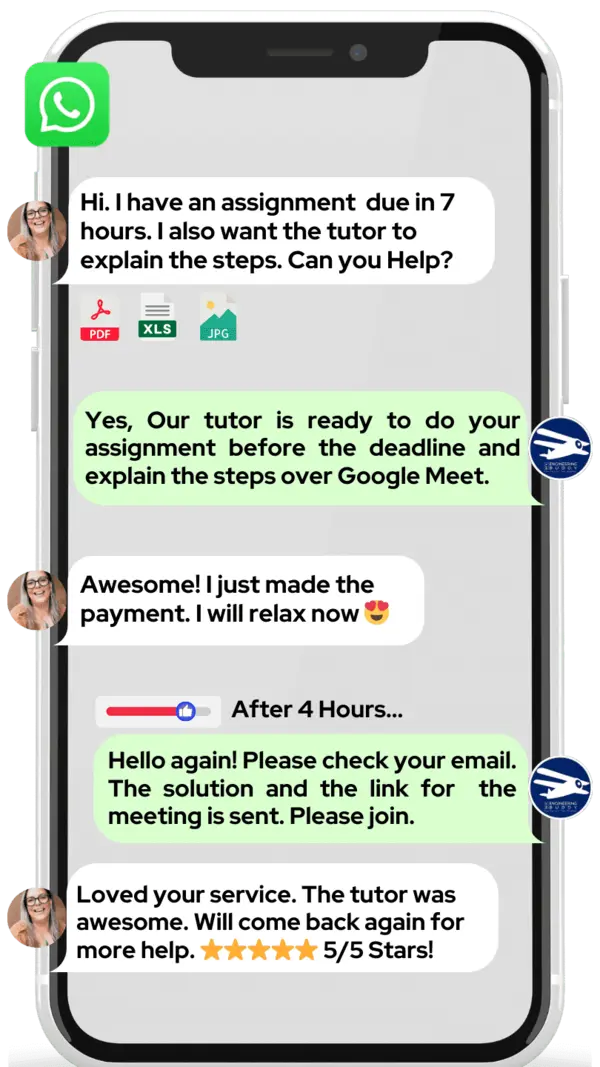



Hire The Best PSCAD Tutor
Top Tutors, Top Grades. Without The Stress!

52,000+ Happy Students From Various Universities



How Much For Private 1:1 Tutoring & Hw Help?
Private 1:1 Tutoring and HW help Cost $20 – 35 per hour* on average.
Your PSCAD simulation keeps diverging — and your deadline is in three weeks.
PSCAD Tutor Online
PSCAD (Power Systems Computer Aided Design) is a graphical simulation environment used for modelling and analysing electromagnetic transients in power systems, enabling engineers to design, test, and validate AC/DC networks, HVDC links, and power electronics circuits.
If you’re searching for a PSCAD tutor near me, the right help is online — and faster to access than anything local. MEB connects you with a verified PSCAD tutor online who knows the software inside out: cable transients, HVDC modelling, component scripting, and simulation convergence issues. Our tutors cover PSCAD as part of our full electrical engineering tutoring roster, matched to your exact course level and university syllabus.
- 1:1 online sessions tailored to your course module or research project
- Expert-verified tutors with power systems simulation experience
- Flexible time zones — US, UK, Canada, Australia, Gulf
- Structured learning plan built after a diagnostic session
- Ethical homework and assignment guidance — you understand the work before you submit
52,000+ students across the US, UK, Canada, Australia, and the Gulf have used MEB since 2008 — including students in Electrical Engineering subjects like PSCAD, power systems, and power electronics.
Source: My Engineering Buddy, 2008–2025.
How Much Does a PSCAD Tutor Cost?
Most PSCAD tutoring sessions run $20–$40/hr. Graduate-level or research-focused simulation work can reach $70–$100/hr depending on project complexity. Not sure if it’s worth it? Start with the $1 trial — 30 minutes live or one simulation problem explained in full.
| Level / Need | Typical Rate | What’s Included |
|---|---|---|
| Undergraduate / Coursework | $20–$40/hr | 1:1 sessions, assignment guidance |
| Postgraduate / Research | $40–$100/hr | Expert tutor, HVDC/EMT depth |
| $1 Trial | $1 flat | 30 min live session or 1 homework Q |
Tutor availability tightens at semester end and around project submission deadlines. Book early if you’re within four weeks of a deadline.
WhatsApp MEB for a quick quote — average response time under 1 minute.
Who This PSCAD Tutoring Is For
PSCAD is used at undergraduate and postgraduate level in power engineering programmes at universities including MIT, Imperial College London, TU Delft, University of Waterloo, and UNSW Sydney. The software also appears in industry onboarding at utilities, grid operators, and HVDC project teams. If you’re hitting a wall with it — whether that’s a simulation that won’t converge or a component model you can’t build from scratch — a 1:1 tutor closes the gap fast.
- Undergraduate students with a PSCAD lab assignment due and no idea where to start
- Postgraduate and PhD researchers modelling HVDC links or wind farm interconnects
- Students retaking a power systems module after a failed first attempt
- Students with a university conditional offer depending on passing this module
- Engineers new to PSCAD who need to get productive quickly for a project
- Students who’ve tried YouTube walkthroughs but still can’t get their transient model to run
1:1 Tutoring vs Self-Study vs AI vs YouTube vs Online Courses
Self-study works if you’re disciplined — but PSCAD has a steep interface learning curve that manuals don’t resolve quickly. AI tools give fast syntax answers but can’t watch your simulation diverge in real time and tell you why. YouTube covers the basics well; it stops dead when your specific component is throwing an error. Online courses are structured but fixed-pace, with no one to ask when your HVDC model behaves unexpectedly. 1:1 tutoring with MEB is live, calibrated to your exact university module or research brief, and corrects simulation errors in the session — not three days later.
Outcomes: What You’ll Be Able To Do in PSCAD
After working with an MEB PSCAD tutor, you’ll be able to build and run electromagnetic transient simulations from a blank canvas without stalling on interface issues. You’ll solve voltage and current transient problems in AC transmission systems with confidence. Model HVDC converter stations — including LCC and VSC topologies — and interpret the output waveforms correctly. Analyse power system faults, apply protection coordination logic, and explain your simulation choices clearly in a written report or viva. Apply custom component scripting using PSCAD’s FORTRAN interface for research-grade models.
Based on feedback from 40,000+ sessions collected by MEB from 2022 to 2025, 58% of students improved by one full grade after approximately 20 hours of 1:1 tutoring in subjects like PSCAD. A further 23% achieved at least a half-grade improvement.
Source: MEB session feedback data, 2022–2025.
Students consistently tell us that PSCAD feels impossible until it suddenly clicks — and that click almost always happens in a live session, not alone at 2am with the manual. At MEB, we’ve built the whole session structure around that moment.
What We Cover in PSCAD (Syllabus / Topics)

Track 1: PSCAD Fundamentals and Interface
- Navigating the PSCAD workspace: canvas, library, and output controls
- Building single-line and detailed circuit models from the master library
- Setting simulation time step and run-time parameters correctly
- Connecting voltage/current meters and output channels
- Using PSCAD’s EMTDC solver: what it does and why it matters
- Debugging non-convergence: common causes and systematic fixes
- Exporting and interpreting simulation output data
Key reference: PSCAD User’s Guide (Manitoba Hydro International); Electromagnetic Transients in Power Systems by Greenwood.
Track 2: Power System Modelling and Transients
- AC transmission line models: PI section, distributed parameter, Bergeron
- Transformer modelling: saturation, inrush, and leakage reactance
- Fault analysis: single line-to-ground, three-phase, and line-to-line faults
- Switching transients: circuit breaker operation and re-ignition
- Power factor correction and reactive power compensation in simulation
- Protection relay logic and coordination in PSCAD
- Power system analysis integration with PSCAD output data
Key reference: Power Systems Electromagnetic Transients Simulation by Neville Watson & Jos Arrillaga; Power System Analysis by Stevenson.
Track 3: HVDC and Power Electronics Simulation
- LCC-HVDC modelling: 12-pulse converter, firing angle control, DC link
- VSC-HVDC: PWM control, DC voltage regulation, active/reactive power dispatch
- Wind turbine and DFIG grid interface models
- Solar PV inverter modelling and grid connection studies
- Custom component scripting with the FORTRAN interface
- Multi-terminal HVDC network simulation
- Linking PSCAD models with power system operation and control studies
Key reference: VSC-HVDC Technology for Power Transmission by Dragan Jovcic; Power Electronics by Mohan, Undeland & Robbins.
A common pattern our tutors observe is that students waste the first 45 minutes of a lab session fighting PSCAD’s time-step settings. Get that one concept right in a single session and the rest of the simulation builds cleanly. At MEB, we make that the first thing we check.
Platforms, Tools & Textbooks We Support
PSCAD v4.x and v5.x are both supported — including the free Educational Edition and full commercial builds. MEB tutors also help where PSCAD integrates with MATLAB/Simulink for co-simulation, and where results feed into ETAP or PowerWorld for wider grid studies. Sessions run over Google Meet with screen sharing so the tutor can watch your simulation in real time.
- PSCAD v4.6, v4.7, v5.0 (Educational and Professional editions)
- MATLAB/Simulink (co-simulation and data import)
- ETAP (cross-tool power system studies)
- PowerWorld Simulator
- Microsoft Excel (output data analysis)
- Python (post-processing PSCAD output files)
What a Typical PSCAD Session Looks Like
The tutor opens by checking where you got stuck last time — whether that was a Bergeron line model throwing an error or your LCC converter not firing at the right angle. You share your PSCAD canvas via Google Meet screen share, and the tutor walks through your component connections in real time, using a digital pen-pad to annotate the circuit diagram and show you exactly what the solver is seeing. You replicate the fix yourself — the tutor doesn’t click it for you. By the end, you’ve run a clean simulation, checked the output waveforms against expected values, and been given a specific build task for the next session: usually a more complex topology or an additional fault condition to model.
How MEB Tutors Help You with PSCAD (The Learning Loop)
Diagnose: In the first session, the tutor identifies exactly where you’re losing marks or losing time — whether that’s misunderstanding EMTDC’s numerical integration method, incorrect component parameterisation, or a gap in underlying power systems theory that’s making the simulation opaque.
Explain: The tutor works through a live example on Google Meet — building a transmission line model or VSC converter from scratch, annotating each step with a digital pen-pad or iPad and Apple Pencil so you see the reasoning, not just the result.
Practice: You attempt the next component or scenario while the tutor watches. This is where most of the learning happens — not in explanation, but in the doing.
Feedback: The tutor catches errors step by step — a wrong time step here, a missing snubber circuit there — and explains why each mistake costs marks or causes divergence, not just what the correct setting is.
Plan: Every session ends with a clear next topic, a specific PSCAD task to attempt before the next session, and an updated timeline tied to your submission or exam date.
Sessions run over Google Meet. Before your first session, share your course outline or assignment brief, a screenshot or file of the simulation you’re stuck on, and your deadline. Start with the $1 trial — 30 minutes of live PSCAD tutoring that also serves as your first diagnostic. Whether you need a quick fix before a lab deadline, structured revision over 4–6 weeks, or ongoing weekly support through your semester, the tutor maps the session plan after that first diagnostic.
At MEB, we’ve found that students who share their actual PSCAD file before the first session — not just a description of the problem — get twice as far in that first hour. The tutor can see the exact error, not a paraphrase of it.
Source: My Engineering Buddy tutor feedback, 2024.
Try your first session for $1 — 30 minutes of live 1:1 tutoring or one homework question explained in full. No registration. No commitment. WhatsApp MEB now and get matched within the hour.
Tutor Match Criteria (How We Pick Your Tutor)
Not every power systems tutor knows PSCAD. MEB matches on four criteria specifically.
Subject depth: The tutor must have hands-on PSCAD experience at your level — undergraduate coursework, postgraduate research, or industry modelling. A general circuits tutor is not matched to a PSCAD brief.
Tools: Every PSCAD tutor uses Google Meet with screen sharing and a digital pen-pad or iPad with Apple Pencil — so annotation happens live on your actual simulation canvas.
Time zone: Matched to your region. US, UK, Gulf, Canada, and Australia all have tutor availability across multiple time slots.
Goals: Whether you need to fix a specific simulation error this week, pass a power systems module exam, or build a research-grade HVDC model over a semester, the match is calibrated to that aim — not a generic “power engineering” bucket.
Unlike platforms where you fill out a form and wait, MEB responds in under a minute, 24/7. Tutor match takes under an hour. The $1 trial means you test before you commit. Everything runs over WhatsApp — no logins, no intake forms.
Pricing Guide
PSCAD tutoring starts at $20/hr for undergraduate coursework support. Postgraduate research sessions — particularly HVDC multi-terminal modelling or custom FORTRAN scripting — typically run $60–$100/hr depending on tutor seniority and project scope.
Rate factors: your degree level, the complexity of the simulation task, your timeline, and tutor availability. A student two weeks from a submission deadline may need a more senior tutor with immediate availability — that affects the rate.
Availability is limited during semester-end periods. If your submission is in the next three weeks, book now.
For students targeting top utilities, grid operators, or research programmes at institutions like ETH Zurich, Imperial College London, or the University of British Columbia, tutors with industry HVDC project backgrounds are available at higher rates — share your specific research goal and MEB will match the tier to your work.
Start with the $1 trial — 30 minutes, no registration, no commitment. WhatsApp MEB for a quick quote.
FAQ
Is PSCAD hard to learn?
PSCAD has a steep learning curve, mainly around its interface conventions and solver settings rather than the underlying theory. Most students hit the same three or four roadblocks. A tutor who knows the software gets you past them in one session, not three weeks of trial and error.
How many sessions will I need?
For a specific assignment or simulation error, often one to three sessions. For a full module covering transients, HVDC, and protection, most students use eight to fifteen hours. The first diagnostic session gives a clearer timeline based on your actual gaps.
Can you help with PSCAD homework and assignments?
MEB tutoring is guided learning — you understand the work, then submit it yourself. The tutor explains the concepts and walks through the simulation logic with you. See our Academic Integrity policy and Why MEB page for full details on what we help with and what we don’t.
Will the tutor match my exact syllabus or exam board?
Yes. Before your first session, share your course outline or assignment brief. MEB matches tutors to your specific university module, not a generic power systems curriculum. PSCAD is taught differently at different institutions — the tutor adapts to yours.
What happens in the first session?
The tutor runs a short diagnostic — reviewing your current simulation file or assignment, identifying the key gaps, and setting a clear session plan. You won’t spend the first hour covering things you already know. The diagnostic shapes every session that follows.
Is online PSCAD tutoring as effective as in-person?
For simulation-based subjects like PSCAD, online is often better. Screen sharing means the tutor sees your exact canvas in real time — more precise than pointing at a laptop screen in a library. Google Meet plus a digital pen-pad replicates the whiteboard without the commute.
Can I get PSCAD help late at night or on weekends?
Yes. MEB operates 24/7 across all regions. If your simulation is diverging at midnight the night before a deadline, WhatsApp MEB and a tutor can be matched within the hour. Late-night and weekend slots are available for US, UK, Gulf, and Australian time zones.
What’s the difference between PSCAD and MATLAB/Simulink for power systems?
PSCAD uses EMTDC as its solver and is built specifically for electromagnetic transient studies — it handles high-frequency switching events and HVDC modelling more naturally. MATLAB/Simulink is more general-purpose. Many courses and research projects require both; MEB tutors cover either or the integration between them.
Do you offer help with PSCAD’s FORTRAN scripting interface?
Yes. Custom component scripting in PSCAD uses a FORTRAN-based interface — a specific skill that most standard tutors don’t cover. MEB has specialists in this area for research students who need to build models that go beyond the master library components.
What if I don’t like my assigned tutor?
Request a swap via WhatsApp. MEB will match you with a different tutor, usually within the same day. There’s no penalty and no argument — if the match isn’t right, we fix it. The $1 trial exists precisely so you can check fit before committing to a longer schedule.
How do I get started?
Start with the $1 trial — 30 minutes of live PSCAD tutoring or one simulation question explained in full. Three steps: WhatsApp MEB, get matched to a PSCAD tutor within the hour, and start your trial session. No registration, no forms.
Trust & Quality at My Engineering Buddy
Every MEB tutor goes through a subject-specific screening process: a live demo session, degree and experience verification, and ongoing review based on student feedback. For PSCAD, that means confirming hands-on simulation experience — not just a power systems degree. Rated 4.8/5 across 40,000+ verified reviews on Google, MEB has been matching students with expert tutors since 2008. Tutors with power system protection and high voltage engineering backgrounds are among the specialists available for advanced PSCAD work. Learn more about how tutors are selected at our tutoring methodology page.
MEB tutoring is guided learning — you understand the work, then submit it yourself. For full details on what we help with and what we don’t, read our Academic Integrity policy and Why MEB.
MEB is a 1:1 online tutoring platform serving students in the US, UK, Canada, Australia, Gulf, and Europe across 2,800+ subjects since 2008. Electrical Engineering is one of our largest subject areas — including power generation and smart grid alongside PSCAD. 52,000+ students have used MEB to date.
MEB has operated since 2008. That’s 17 years of tutor matching, session feedback, and syllabus tracking across electrical engineering, power systems, and simulation tools — long enough to know which PSCAD errors show up on every undergraduate assignment.
Source: My Engineering Buddy, 2008–2025.
Our experience across thousands of sessions shows that the students who improve fastest in PSCAD are the ones who stop treating it as a software problem and start treating it as a power systems problem. The tutor’s job is to make that shift happen early.
Explore Related Subjects
Students studying PSCAD often also need support in:
- Power System Analysis
- Power Transmission Systems
- Electrical Machines
- Control Systems
- Signals and Systems
- PSpice
- LTspice
Next Steps
To get matched with the right PSCAD tutor, share three things via WhatsApp: your exam board or university module name, the specific simulation task or topic you’re stuck on, and your deadline or exam date. MEB handles the rest — tutor match typically happens within 24 hours, often faster.
Before your first session, have ready:
- Your course outline or assignment brief (or research proposal if postgraduate)
- Your current PSCAD file or a screenshot of the simulation error you’re hitting
- Your submission or exam deadline date
The tutor runs a diagnostic in the first session so every minute is used on the gaps that actually matter.
Visit www.myengineeringbuddy.com for more on how MEB works.
WhatsApp to get started or email meb@myengineeringbuddy.com.
Reviewed by Subject Expert
This page has been carefully reviewed and validated by our subject expert to ensure accuracy and relevance.

