

Hire Verified & Experienced
Audio Engineering Tutors
4.8/5 40K+ session ratings collected on the MEB platform
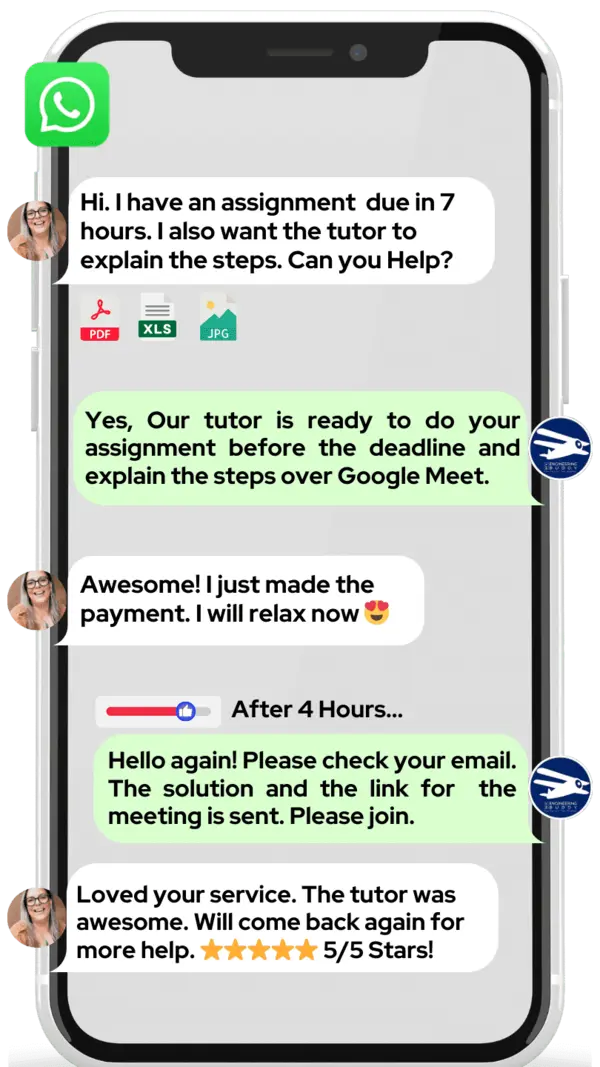



Hire The Best Audio Engineering Tutor
Top Tutors, Top Grades. Without The Stress!

52,000+ Happy Students From Various Universities



How Much For Private 1:1 Tutoring & Hw Help?
Private 1:1 Tutoring and HW help Cost $20 – 35 per hour* on average.
Most students who struggle with audio engineering aren’t bad at it — they’re missing one concept that breaks everything downstream. Psychoacoustics, signal flow, or mastering chain: one gap, and the rest falls apart.
Audio Engineering Tutor Online
Audio engineering is the technical discipline of capturing, processing, mixing, and reproducing sound. It covers acoustics, signal processing, recording systems, and mastering, equipping practitioners to produce broadcast-quality audio across music, film, and broadcast media.
If you’ve searched for an Audio Engineering tutor near me, MEB’s 1:1 online tutoring and homework help covers the full subject — from signal flow and room acoustics to DAW workflows and spatial audio. Our Electrical Engineering tutoring network includes specialists in audio systems, psychoacoustics, and professional audio software. One tutor, your exact syllabus, your timeline.
- 1:1 online sessions tailored to your course or module syllabus
- Expert-verified tutors with degrees in audio engineering, acoustics, or electrical engineering
- Flexible scheduling across US, UK, Canada, Australia, and the Gulf
- Structured learning plan built after a diagnostic session
- Ethical homework and assignment guidance — you understand the work, then submit it yourself
52,000+ students across the US, UK, Canada, Australia, and the Gulf have used MEB since 2008 — including students in Electrical Engineering subjects like Audio Engineering, Digital Signal Processing tutoring, and Analog Signal Processing help.
Source: My Engineering Buddy, 2008–2025.
How Much Does an Audio Engineering Tutor Cost?
Most audio engineering tutoring sessions run $20–$40/hr. Graduate-level or highly specialised topics — spatial audio, Dolby Atmos production, advanced DSP — can reach up to $100/hr. Try your first session for the $1 trial: 30 minutes of live 1:1 tutoring or one homework question explained in full.
| Level / Need | Typical Rate | What’s Included |
|---|---|---|
| Standard (most undergrad levels) | $20–$35/hr | 1:1 sessions, homework guidance |
| Advanced / Specialist (DSP, Atmos, mastering) | $35–$70/hr | Expert tutor, niche depth |
| $1 Trial | $1 flat | 30 min live session or 1 homework question |
Tutor availability narrows during semester exam periods — especially May and December. Book early if you have a fixed submission deadline.
WhatsApp MEB for a quick quote — average response time under 1 minute.
Who This Audio Engineering Tutoring Is For
Audio engineering sits at the intersection of physics, mathematics, and creative production. Students often find that university courses move fast, and the gap between hearing a concept in a lecture and applying it in a DAW session can be significant.
- Undergraduate students in audio engineering, music technology, or electrical engineering programmes at universities such as NYU Steinhardt, Berklee College of Music, SAE Institute, University of Surrey, or McGill
- Students who failed an audio systems or acoustics module and are retaking — the $1 trial is a low-risk way to identify exactly what went wrong
- Students with a conditional university offer that depends on this year’s grade in a music technology or audio programme
- Graduate students working on audio DSP research, spatial audio projects, or thesis work involving signal processing
- Parents watching a student’s confidence drop alongside their grades — when an otherwise capable student starts avoiding assignments, the gap is usually conceptual, not motivational
- Working engineers moving into live sound, broadcast, or post-production who need to close specific technical gaps
At MEB, we’ve found that audio engineering students often know the theory in isolation but freeze when asked to apply it end-to-end — from mic placement through signal chain to final export. The sessions that move fastest are the ones that start with a specific, real project the student is already working on.
1:1 Tutoring vs Self-Study vs AI vs YouTube vs Online Courses
Self-study works if your fundamentals are solid — but most students don’t know which gaps are actually holding them back. AI tools explain concepts quickly but can’t listen to your mix and tell you why the low-mids are masking. YouTube covers signal flow beautifully and stops when you’re troubleshooting a phase cancellation problem on your specific session. Online courses are structured but paced for an average learner, not your exact deadline. 1:1 tutoring with MEB is live, calibrated to your actual course materials, and corrects errors before they become habits. For audio engineering specifically — where so much depends on ear training alongside technical knowledge — real-time feedback is not optional.
Outcomes: What You’ll Be Able To Do in Audio Engineering
After working with an MEB audio engineering tutor, you’ll be able to analyze a signal chain and identify where noise, distortion, or phase cancellation is introduced. You’ll apply EQ, compression, and reverb decisions with technical reasoning — not guesswork. You’ll explain the acoustic properties of a recording space and predict how room modes affect frequency response. You’ll solve problems in digital audio workstations like Pro Tools, Logic Pro, or Reaper with confidence. You can present your mix decisions using correct terminology — gain staging, headroom, LUFS normalisation — in assignments, viva examinations, or professional contexts.
Based on feedback from 40,000+ sessions collected by MEB from 2022 to 2025, 58% of students improved by one full grade after approximately 20 hours of 1:1 tutoring in subjects like Audio Engineering. A further 23% achieved at least a half-grade improvement.
Source: MEB session feedback data, 2022–2025.
Supporting a student through Audio Engineering? MEB works directly with parents to set up sessions, track progress, and keep coursework on schedule. WhatsApp MEB — average response time is under a minute, 24/7.
What We Cover in Audio Engineering (Syllabus / Topics)

Track 1: Acoustics and Psychoacoustics
- Sound wave properties: frequency, wavelength, amplitude, phase
- Room acoustics: standing waves, room modes, reverberation time (RT60)
- Psychoacoustic models: equal loudness contours, masking, binaural perception
- Microphone polar patterns and placement theory
- Acoustic treatment: absorption, diffusion, bass trapping
- Loudness standards: ITU-R BS.1770, LUFS, true peak limiting
Core texts include Acoustics and the Performance of Music by Jürgen Meyer and Handbook for Sound Engineers by Glen Ballou — both widely used in undergraduate audio programmes at Surrey, McGill, and Berklee.
Track 2: Signal Processing and Systems
- Analogue and digital signal chain: ADC/DAC, bit depth, sample rate
- Fourier analysis and frequency domain representation
- Filters: low-pass, high-pass, band-pass — design and application
- Dynamic range processing: compression, limiting, expansion, noise gating
- Convolution reverb and impulse response measurement
- Spatial audio formats: stereo, 5.1 surround, Dolby Atmos, ambisonics
- Get Signals and Systems help if your course covers Laplace transforms and Z-transforms alongside audio systems
Key references: The Audio Expert by Ethan Winer and Introduction to Digital Signal Processing by Roman Kuc — standard across audio engineering modules at NYU, Berklee, and SAE Institute.
Track 3: Recording, Mixing, and Mastering
- Gain staging from source to mix bus: headroom management
- Multitrack session organisation: routing, busing, stem structure
- EQ decisions by frequency region: sub, low-mid, presence, air
- Stereo imaging tools: mid-side processing, haas effect, panning laws
- Mastering chain: metering, limiting, dithering, format delivery
- DAW-specific workflows: Pro Tools, Logic Pro X, Ableton Live, Reaper
Practical references include Mixing Secrets for the Small Studio by Mike Senior and Mastering Audio by Bob Katz — both recommended on syllabi at Berklee Online and University of Surrey.
Students consistently tell us that the moment signal processing clicks is when they connect the maths — Fourier transforms, convolution — to what they’re actually hearing in a mix. The abstract and the practical are the same thing. We teach both together, not in separate sessions.
Platforms, Tools & Textbooks We Support
Audio engineering is software-intensive. MEB tutors work directly inside the platforms you’re assessed on — not around them. Sessions can cover DAW-specific workflows, plugin operation, and technical assignment requirements in your exact production environment.
- Pro Tools (industry standard for recording and post-production)
- Logic Pro X (common in Mac-based undergraduate programmes)
- Ableton Live (electronic music production and live performance curricula)
- Reaper (widely used in UK university audio labs)
- iZotope RX (audio restoration and post-production)
- MATLAB / Python with scipy.signal (DSP coursework and signal analysis assignments)
- Max/MSP and SuperCollider (computer music and interactive audio modules)
What a Typical Audio Engineering Session Looks Like
The tutor opens by checking the previous session’s topic — say, you were working on compression ratios and attack/release settings on a drum bus. They ask you to explain your decision from last time. That one question tells them more than a quiz. From there, you work through your current problem together on screen: maybe it’s understanding why your mix sounds muddy in the 300–500Hz range, or how to set up a mid-side EQ in Logic. The tutor uses a digital pen-pad to annotate a frequency spectrum or draw a signal chain in real time. You replicate the process on your own session file. The session closes with a specific listening task — A/B compare two reference tracks using a defined set of criteria — and the next topic is noted before you log off.
How MEB Tutors Help You with Audio Engineering (The Learning Loop)
Diagnose: In the first session, the tutor asks you to walk through a piece of work — an assignment brief, a mix you’re stuck on, or a concept from your lecture slides. Within 20 minutes, they know whether your issue is mathematical (Fourier analysis, filter design), perceptual (ear training, critical listening), software-based (DAW operation), or conceptual (signal flow, gain structure). Most students have one primary gap driving several surface problems.
Explain: The tutor works through problems live — drawing signal chains, annotating spectrograms, demonstrating plugin settings — on a digital pen-pad you can see in real time over Google Meet. No pre-recorded slides. Every explanation is built for your specific question.
Practice: You attempt the next problem yourself, with the tutor present. In audio engineering, this often means adjusting settings in your own DAW session while talking through your reasoning. The tutor listens and watches — not just for the right answer, but for the thinking pattern.
Feedback: Errors are corrected at the point they occur, with a clear explanation of the consequence — why that compression setting introduced pumping, why that EQ cut removed the presence you actually needed. Students learn faster when they understand the cost of the mistake, not just the correction.
Plan: At the end of each session, the tutor sets a defined task — a specific mix decision to make, a problem set question to attempt, a listening exercise — and notes the next topic. You are never left wondering what to do before the next session.
Sessions run over Google Meet with digital pen-pad or iPad + Apple Pencil. Before your first session, have your DAW project files ready, your assignment brief or module guide, and a note of your exam or submission date. Start with the $1 trial — 30 minutes of live tutoring that also serves as your first diagnostic. Whether you need a two-week catch-up before a submission, structured revision over six weeks, or ongoing weekly support through the semester, the tutor maps the plan after that first session.
Audio engineering is one of those subjects where students often pass theory components and fail practical assessments — or vice versa. MEB tutors are selected for the ability to teach both, connecting the technical and the applied in the same session.
Source: My Engineering Buddy, 2008–2025.
Try your first session for $1 — 30 minutes of live 1:1 tutoring or one homework question explained in full. No registration. No commitment.
WhatsApp MEB now
and get matched within the hour.
Tutor Match Criteria (How We Pick Your Tutor)
Not every audio engineering expert is the right tutor for every student. MEB matches on four criteria specifically.
Subject depth: The tutor must have demonstrable knowledge in your specific track — acoustics, DSP, production, or post-production. A mastering engineer and an acoustics researcher are both audio professionals; they are not interchangeable for your assignment.
Tools: The tutor must be familiar with the DAW or analysis software you’re using — Pro Tools, Logic, Reaper, MATLAB, or whichever platform your course runs on. Sessions use Google Meet with digital pen-pad or iPad + Apple Pencil.
Time zone: Matched to your region — US, UK, Gulf, Canada, Australia — so sessions start at a time that doesn’t eat into your sleep.
Goals: Whether you’re targeting a specific assignment grade, building conceptual depth for a viva, or closing a gap before final exams, the tutor match reflects that goal, not a one-size approach.
Unlike platforms where you fill out a form and wait, MEB responds in under a minute, 24/7. Tutor match takes under an hour. The $1 trial means you test before you commit. Everything runs over WhatsApp — no logins, no intake forms.
Pricing Guide
Audio engineering tutoring starts at $20/hr for standard undergraduate modules. Advanced topics — spatial audio production, Dolby Atmos delivery, advanced DSP coursework — run $35–$70/hr. Graduate research support and specialist professional certification coaching can reach $100/hr.
Rate factors include course level, topic complexity, your timeline, and tutor availability. A student who needs help with a specific Pro Tools session for a coursework deadline has a different rate profile than a PhD candidate modelling room impulse responses in MATLAB.
For students targeting positions at broadcast studios, post-production houses, or research roles at organisations like the Audio Engineering Society, tutors with professional studio or academic research backgrounds are available at higher rates — share your specific goal and MEB will match the tier to your ambition.
Availability tightens significantly in November–December and April–May. Start with the $1 trial — 30 minutes, no registration, no commitment. WhatsApp MEB for a quick quote.
FAQ
Is audio engineering hard?
It depends on your starting point. The maths — Fourier analysis, filter theory, signal flow — challenges students without a strong physics or electronics background. The perceptual side challenges students who are technically strong but haven’t developed critical listening. Both are teachable. Most students find one harder than the other.
How many sessions will I need?
Students closing a single conceptual gap — say, compression or EQ decision-making — often see clear progress in 4–6 sessions. Students covering an entire module from scratch typically need 15–20 hours. The first diagnostic session produces a clear estimate specific to your situation.
Can you help with audio engineering homework and assignments?
Yes. MEB tutoring is guided learning — you understand the work, then submit it yourself. This applies to assignment briefs, mix analyses, written reports, and problem sets. See our Academic Integrity policy and Why MEB page for full details on what we help with and what we don’t.
Will the tutor match my exact syllabus or exam board?
Yes. Before the first session, share your module guide or assignment brief. The tutor reviews it and structures the session around your specific learning outcomes — not a generic audio engineering curriculum. This applies whether you’re at NYU, Surrey, SAE, Berklee, or any other institution.
What happens in the first session?
The tutor asks you to walk through a piece of work — an assignment, a mix, or a concept you’re struggling with. In 20–30 minutes, they identify the primary gap. From that point, the session becomes a working session: tutor explains, you attempt, tutor corrects in real time.
Is online audio engineering tutoring as effective as in-person?
For most audio engineering topics — signal processing, acoustics theory, DAW troubleshooting, assignment guidance — yes. Screen sharing and digital pen annotation replace a whiteboard. The one limitation is physical equipment: you need your own DAW setup. Most university students already have this.
What’s the difference between audio engineering and sound design — and can MEB help with both?
Audio engineering covers the technical capture, processing, and delivery of sound. Sound design tutoring focuses on the creative construction of sonic elements for film, games, and media. The two overlap in synthesis and signal processing. MEB covers both — specify which your course requires when you message.
My course uses Pro Tools for assessment. Can the tutor work inside my session file?
Yes. MEB tutors familiar with Pro Tools can work through your session structure, routing, and mix decisions in real time over screen share. This covers session setup, I/O configuration, gain staging, and mix bus processing — exactly what your practical assessment requires.
Do you cover the Audio Engineering Society (AES) curriculum or papers?
MEB tutors with backgrounds in acoustics research and professional audio can cover AES-standard topics — room measurement, loudness normalisation standards, spatial audio formats, and perceptual coding. If your coursework references specific AES papers or standards, share them when you book and MEB will confirm tutor availability. The Broadcast Engineering tutoring track also covers overlapping broadcast audio standards.
Can you help with a dissertation or final-year project in audio engineering?
Yes. MEB supports final-year projects involving room acoustics measurement, audio plugin development, perceptual listening tests, and DSP system design. The tutor helps with conceptual framing, methodology, signal processing implementation, and written analysis — you produce and submit the work. Connect with a tutor who has research experience in your specific project area.
How do I get started?
WhatsApp MEB, share your subject, current level, and what you’re stuck on. MEB matches you with a verified tutor — usually within the hour. Your first session is the $1 trial: 30 minutes of live tutoring or one homework question explained in full. Three steps: WhatsApp, match, start.
Can I get audio engineering help at midnight or on weekends?
Yes. MEB operates 24/7 across time zones. Students in the Gulf, Australia, and North America regularly book late-night or weekend sessions. WhatsApp MEB any time — average response is under a minute, and tutor availability extends well beyond standard business hours.
Trust & Quality at My Engineering Buddy
Every MEB tutor goes through subject-specific vetting — not a generic platform screen. Audio engineering tutors hold degrees in audio engineering, electrical engineering, acoustics, or music technology. They complete a live demo evaluation before their first student session, and tutor quality is reviewed continuously through session feedback. Rated 4.8/5 across 40,000+ verified reviews on Google. For Digital Signal Processing tutoring and Analog Signal Processing — adjacent to audio engineering — MEB applies the same screening standard.
MEB tutoring is guided learning — you understand the work, then submit it yourself. For full details on what we help with and what we don’t, read our Academic Integrity policy and Why MEB.
MEB has served 52,000+ students across the US, UK, Canada, Australia, the Gulf, and Europe in 2,800+ subjects since 2008. Within Electrical Engineering, the platform covers a wide range from Communication Systems tutoring to Microwave Engineering help — with audio engineering sitting at the applied, systems-level end of that range. Tutors are matched by subject depth, not general availability.
MEB has operated since 2008 — long enough to have tutored students who are now audio engineers at major studios, broadcast networks, and post-production facilities. The platform is built around one thing: making a difficult subject click.
Source: My Engineering Buddy, 2008–2025.
A common pattern our tutors observe is that students arrive thinking they have an audio engineering problem — they can’t get their mix to translate on different speakers. The actual problem is gain staging from the recording stage. Fix that, and everything downstream improves. This is why the diagnostic matters.
Explore Related Subjects
Students studying Audio Engineering often also need support in:
- Analog Circuits
- Circuit Analysis
- Electronics Engineering
- Optical Communications
- Wireless Communication
- Telecommunications
- Embedded Systems
Next Steps
To get started, share: your exam board or course name, the specific topic or assignment you’re stuck on, your current timeline and deadline, and your availability and time zone.
Before your first session, have ready:
- Your module guide or assignment brief (or both)
- A recent piece of work you struggled with — a mix session, a problem set, a draft assignment
- Your exam or submission date
MEB matches you with a verified audio engineering tutor — usually within 24 hours. The first session starts with a diagnostic so every minute is used well. Visit www.myengineeringbuddy.com for more on how MEB works.
WhatsApp to get started or email meb@myengineeringbuddy.com.
Reviewed by Subject Expert
This page has been carefully reviewed and validated by our subject expert to ensure accuracy and relevance.

