




Hire The Best Multisim Tutor
Top Tutors, Top Grades. Without The Stress!


52,000+ Happy Students From Various Universities




How Much For Private 1:1 Tutoring & Hw Help?
Private 1:1 Tutoring and HW help Cost $20 – 35 per hour* on average.
Multisim won’t simulate and the deadline is tonight. That’s exactly when students message MEB.
Multisim Tutor Online
Multisim is a SPICE-based circuit simulation software developed by National Instruments, used in electronics and electrical engineering courses to design, build, and test analog and digital circuits in a virtual environment before physical prototyping.
If you’ve searched for a Multisim tutor near me, you already know what Google returns — general tutors, forum posts, and YouTube walkthroughs that stop right before the part that’s broken. MEB connects you with a specialist electrical engineering tutor who knows Multisim at the level your course demands. One session can close the gap between a simulation that crashes and one that runs correctly on submission day.
- 1:1 online sessions matched to your exact course syllabus and simulation tasks
- Expert-verified tutors with hands-on Multisim and circuit simulation backgrounds
- Flexible time zones — sessions available across the US, UK, Canada, Australia, and Gulf
- Structured learning plan built after a first-session diagnostic of where your circuit work is failing
- Guided homework and assignment support — you understand the simulation, then submit it yourself
52,000+ students across the US, UK, Canada, Australia, and the Gulf have used MEB since 2008 — including students in Electrical Engineering subjects like Multisim, circuit analysis, and analog electronics.
Source: My Engineering Buddy, 2008–2025.
How Much Does a Multisim Tutor Cost?
Most Multisim tutoring sessions run $20–$40/hr. Graduate-level work or highly specialised simulation projects can reach up to $100/hr. Not sure if it’s worth it? The $1 trial gives you 30 minutes live or one full homework question solved and explained — before you commit to anything.
| Level / Need | Typical Rate | What’s Included |
|---|---|---|
| Standard (most undergraduate levels) | $20–$35/hr | 1:1 sessions, circuit build and simulation guidance |
| Advanced / Specialist | $35–$70/hr | Expert tutor, graduate/research-level simulation depth |
| $1 Trial | $1 flat | 30 min live session or 1 full homework question explained |
Tutor availability tightens significantly in the weeks before semester project deadlines and final exam periods. Book early if you’re within four weeks of a submission.
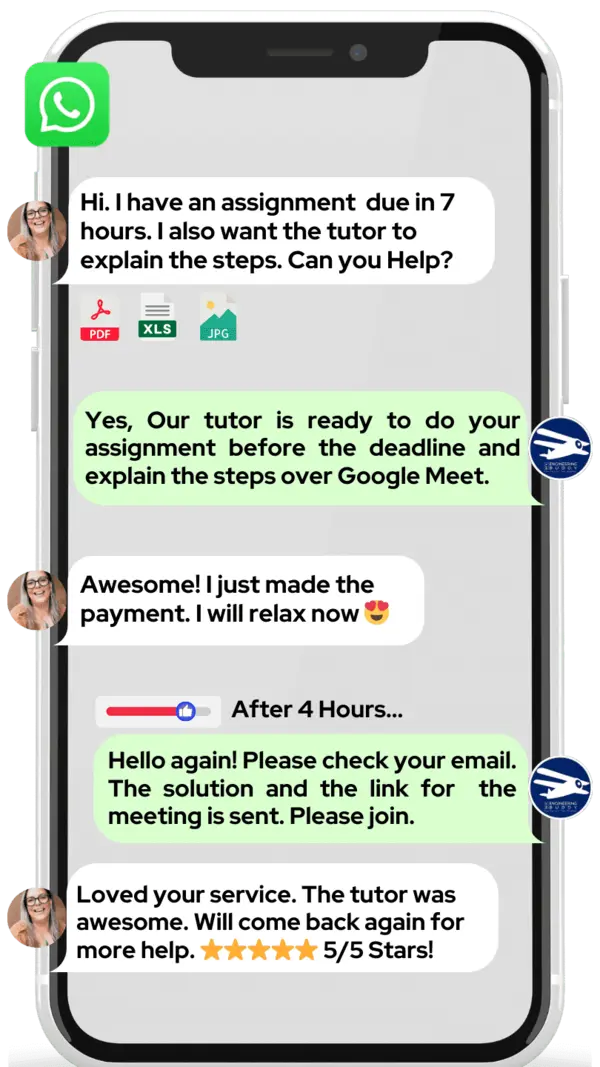
WhatsApp MEB for a quick quote — average response time under 1 minute.
Who This Multisim Tutoring Is For
This isn’t for students who want a quick answer copied into their lab report. It’s for students who need to actually understand why their circuit isn’t behaving — and fix it properly before the deadline.
- Undergraduates in electronics or electrical engineering hitting simulation errors they can’t diagnose
- Students retaking a circuits lab module after a failed first attempt
- Students with a university conditional offer depending on passing their electronics coursework
- Graduate students running more complex multi-stage simulation projects
- Students preparing for a viva or presentation where they need to explain their simulation methodology
- Parents watching a child’s confidence drop alongside their circuit design grades
MEB tutors have worked with students at institutions including MIT, Georgia Tech, Imperial College London, the University of Toronto, TU Delft, KAUST, and the University of Melbourne — so whatever your course structure looks like, the tutor has seen it.
1:1 Tutoring vs Self-Study vs AI vs YouTube vs Online Courses
Self-study works if you’re disciplined, but Multisim errors rarely explain themselves. AI tools give fast answers — they can’t watch your schematic and tell you the op-amp is wired backwards. YouTube covers component theory well but stops when your simulation produces unexpected oscillations on a specific node. Online courses teach the software in a fixed sequence that won’t match your assignment deadline. With MEB, a tutor watches your actual Multisim screen, identifies the fault in your circuit in real time, and walks you through the fix — then makes you replicate it so you own the solution.
Outcomes: What You’ll Be Able To Do in Multisim
After working with a Multisim tutor online through MEB, students consistently report being able to build and simulate working analog and digital circuits without the tool crashing mid-run. Solve DC operating point and transient analysis tasks with correct probe placement and scope interpretation. Analyze filter frequency response using Bode plot outputs and compare simulated results to theoretical predictions. Model BJT and MOSFET amplifier stages, identifying gain and saturation characteristics directly in the simulation. Explain simulation methodology to a lab assessor or in a written report without gaps in reasoning.
Based on feedback from 40,000+ sessions collected by MEB from 2022 to 2025, 58% of students improved by one full grade after approximately 20 hours of 1:1 tutoring in subjects like Multisim. A further 23% achieved at least a half-grade improvement.
Source: MEB session feedback data, 2022–2025.
Try your first session for $1 — 30 minutes of live 1:1 tutoring or one homework question explained in full. No registration. No commitment. WhatsApp MEB now and get matched within the hour.
What We Cover in Multisim (Syllabus / Topics)
MEB tutors work across all core Multisim use cases taught in undergraduate and graduate electrical and electronics engineering programmes.

Track 1: Analog Circuit Simulation
- Building and simulating resistor, capacitor, and inductor networks
- DC operating point analysis and bias point calculations
- Transient analysis — time-domain waveforms, rise/fall times
- AC sweep and frequency response analysis for filters and amplifiers
- Diode and BJT characteristic curves — simulation vs theoretical comparison
- Op-amp tutoring — inverting, non-inverting, differential, and instrumentation configurations
- MOSFET biasing, small-signal models, and gain verification in simulation
Key references: Sedra & Smith Microelectronic Circuits, Boylestad & Nashelsky Electronic Devices and Circuit Theory, Nilsson & Riedel Electric Circuits.
Track 2: Digital Circuit Simulation
- Logic gate simulation — AND, OR, NAND, NOR, XOR combinations
- Combinational circuit design: multiplexers, decoders, adders
- Sequential circuits: flip-flops, registers, counters built and verified in Multisim
- Timing diagrams — clock signal generation and propagation delay measurement
- Seven-segment display drive circuits and BCD decoder implementations
- Digital electronics help — connecting simulation output to datasheet specifications
Key references: Floyd Digital Fundamentals, Mano & Ciletti Digital Design, Wakerly Digital Design: Principles and Practices.
Track 3: Mixed-Signal and Advanced Simulation
- Mixed analog-digital circuit simulation — ADC/DAC interface circuits
- Power supply design: rectifier, filter, and voltage regulator simulation
- Oscillator circuits — Colpitts, Hartley, Wien bridge — frequency verification
- Instrumentation amplifier and sensor interface circuits
- Signals and systems tutoring — connecting Multisim simulation output to Fourier and Laplace theory
- Exporting simulation data and interpreting results for written lab reports
Key references: Razavi Design of Analog CMOS Integrated Circuits, Horowitz & Hill The Art of Electronics, National Instruments Multisim User Manual.
Platforms, Tools & Textbooks We Support
Multisim is the primary simulation environment, but tutors also support students working across related tools. If your course requires you to move between platforms, the tutor can cover that transition directly in session.
- Multisim (all recent versions, including Multisim Live)
- LTspice tutoring — for students whose courses use both simulators
- PSpice help — cross-tool simulation technique comparison
- Google Meet with digital pen-pad for annotating schematics in real time
- Screen sharing — student shares Multisim window directly for live error diagnosis
- Lab report and technical writing support tied to simulation outputs
At MEB, we’ve found that most Multisim errors students bring to a first session aren’t software bugs — they’re wiring decisions made three steps earlier that look fine until the simulation runs. Catching those early is the difference between a working circuit and an hour of frustrated re-runs.
What a Typical Multisim Session Looks Like
The tutor opens by checking what happened in the previous session — usually a specific circuit stage the student was asked to complete independently. The student shares their Multisim window. If the simulation isn’t running correctly, the tutor walks the schematic in order: component values, node connections, source configuration, and ground references — naming each step. For sessions covering BJT amplifier gain verification or RC filter response, the tutor builds a parallel version on screen using the digital pen-pad and asks the student to explain where their version diverges. The session closes with one concrete task: a modified circuit or a new analysis type to attempt before next time, with the topic for the following session already noted.
How MEB Tutors Help You with Multisim (The Learning Loop)
Diagnose: In the first session, the tutor identifies exactly where your Multisim work is breaking down. That might be schematic entry errors, incorrect component model selection, misread oscilloscope probes, or a gap in the underlying circuit theory that’s causing every simulation to fail at the same point.
Explain: The tutor works through a live example on screen — same circuit type, similar complexity to your assignment — using a digital pen-pad to annotate the schematic as they go. No passive watching. You follow every step.
Practice: You replicate the approach on your own circuit while the tutor watches. Errors get caught as they happen, not after you’ve submitted.
Feedback: The tutor walks through every mistake — why the simulation produced that output, what the grader is likely checking, and what to fix in your methodology rather than just the specific circuit.
Plan: Each session ends with the next topic confirmed, a short task assigned, and a timeline mapped against your submission date. No session exists in isolation.
Sessions run over Google Meet with screen sharing and a digital pen-pad or iPad with Apple Pencil. Before your first session, have your Multisim file open, your assignment brief ready, and one specific simulation output you can’t explain. The first session begins with a diagnostic that shapes every session after it. Start with the $1 trial — 30 minutes of live tutoring that also serves as your first diagnostic.
Students consistently tell us that the moment things click in Multisim is when the tutor connects the simulation output directly back to the theory they thought they understood — and shows them precisely where the gap was hiding.
Source: My Engineering Buddy, 2008–2025.
Tutor Match Criteria (How We Pick Your Tutor)
Not every electronics tutor knows Multisim at the depth your course requires. MEB matches on four criteria.
Subject depth: The tutor must have demonstrated Multisim competence at or above your current course level — undergraduate lab work, graduate simulation projects, or professional circuit design experience.
Tools: All Multisim tutors use Google Meet with a digital pen-pad or iPad and Apple Pencil for annotating schematics live. No static slideshows.
Time zone: Matched to your region — US, UK, Gulf, Canada, or Australia — so sessions happen at sensible hours without a 3am compromise on either side.
Goals: Whether you need to pass a specific lab assignment, close a conceptual gap in circuit theory, or complete a final-year simulation project, the tutor is matched to that goal — not assigned generically.
Unlike platforms where you fill out a form and wait, MEB responds in under a minute, 24/7. Tutor match takes under an hour. The $1 trial means you test before you commit. Everything runs over WhatsApp — no logins, no intake forms.
Study Plans (Pick One That Matches Your Goal)
After the first diagnostic session, the tutor builds a session sequence matched to your timeline. Catch-up (1–3 weeks): for students with a specific simulation assignment due and gaps to close fast. Exam prep (4–8 weeks): structured coverage of all simulation types likely to appear in coursework or practical exams. Weekly support: ongoing sessions aligned to semester lab deadlines, with each session building on the last. The sequence isn’t fixed — it shifts as your understanding develops and new topics arrive on the course.
Pricing Guide
Multisim tutoring runs $20–$40/hr for most undergraduate course levels. Graduate-level simulation work, research project support, or highly specialised circuit domains can reach $100/hr. Rate is set by level, topic complexity, and tutor availability at your preferred time.
For students targeting positions at firms like Texas Instruments, Analog Devices, or Qualcomm — or working toward professional certification — tutors with industry circuit design backgrounds are available at higher rates. Share your specific goal and MEB matches the tier to what you’re actually aiming for.
Availability tightens in the four weeks before major project submission windows. The earlier you book, the more session options you have.
Start with the $1 trial — 30 minutes, no registration, no commitment. WhatsApp MEB for a quick quote.
FAQ
Is Multisim hard to learn?
The interface is manageable, but the errors aren’t obvious. Most students struggle not with clicking buttons but with knowing why a simulation produces the wrong output — which is a circuit theory problem, not a software problem. That’s where a tutor makes the difference.
How many sessions do students typically need?
For a specific assignment rescue, one to three sessions usually closes the gap. For semester-long support covering multiple simulation types — analog, digital, mixed-signal — most students run six to twelve sessions spaced across the term.
Can you help with homework and assignments in Multisim?
MEB tutoring is guided learning — you understand the simulation methodology, then complete and submit the work yourself. See our Academic Integrity policy and Why MEB page for full details on what we help with and what we don’t.
Will the tutor match my exact syllabus or exam board?
Yes. Before matching, MEB asks for your course outline or assignment brief. Tutors are selected based on familiarity with your specific simulation tasks — not assigned on general electronics knowledge alone.
What happens in the first session?
The tutor runs a diagnostic: you share your current Multisim file or assignment brief, the tutor identifies where understanding is breaking down, and the session immediately addresses the most urgent gap. The remaining sessions are planned from there.
Is online Multisim tutoring as effective as in-person?
For simulation software, online is often better. Screen sharing means the tutor sees your exact Multisim environment. The digital pen-pad allows annotation directly on your schematic. There’s no whiteboard in a library that can replicate that.
What’s the difference between Multisim and LTspice — and can MEB help with both?
Both are SPICE-based simulators. Multisim uses a more visual schematic interface common in teaching environments; LTspice is widely used in industry and research. MEB tutors cover both. If your course requires you to switch between them, the tutor handles that directly in session.
Can MEB help me if my Multisim simulation runs but gives physically impossible results?
This is one of the most common issues — a simulation completes without errors but outputs voltages or currents that can’t be correct. The tutor diagnoses the cause: usually a component model mismatch, an incorrect source configuration, or a missing ground reference. Most cases are resolved within one session.
Can I get Multisim help at midnight or on weekends?
Yes. MEB operates 24/7 across time zones. WhatsApp response averages under one minute. If a deadline is tonight and the simulation isn’t working, message MEB now — a tutor match typically happens within the hour regardless of the time.
Do you offer group Multisim sessions?
MEB specialises in 1:1 sessions only. Group sessions reduce the diagnostic precision that makes the tutoring effective — the tutor adapts every explanation to the specific circuit error in front of them. That’s not possible in a group format.
How do I get started?
Three steps: WhatsApp MEB with your Multisim assignment or question, get matched with a verified tutor (usually within the hour), then start the $1 trial — 30 minutes live or one full question explained before any further commitment.
How do I find a Multisim tutor in my city or country?
You don’t need to. All MEB sessions are online — screen sharing and a digital pen-pad replace the need to be in the same room. Students from the US, UK, Canada, Australia, UAE, and across Europe all work with the same pool of verified Multisim tutors.
Trust & Quality at My Engineering Buddy
Every MEB tutor goes through a multi-stage screening process: qualification check, subject-specific knowledge assessment, a live demo session evaluated by an MEB reviewer, and ongoing review based on student feedback after every session. Tutors working on Multisim and circuit design tutoring are assessed on their ability to diagnose simulation errors in real time — not just explain theory. Rated 4.8/5 across 40,000+ verified reviews on Google.
MEB tutoring is guided learning — you understand the work, then submit it yourself. For full details on what we help with and what we don’t, read our Academic Integrity policy and Why MEB.
MEB has been serving students across the US, UK, Canada, Australia, the Gulf, and Europe since 2008 — across 2,800+ subjects. In Electrical Engineering, that includes electronics engineering tutoring, electronic circuit design help, and analog circuits tutoring alongside Multisim. If your course touches any of these areas, MEB has a tutor who has covered it before. See how MEB’s tutoring methodology works for more on the session structure and quality controls.
MEB has operated since 2008. The session structure, the $1 trial, the WhatsApp-first contact model — none of it changed because it works. 52,000+ students is the result of that consistency, not a marketing number.
Source: My Engineering Buddy, 2008–2025.
A common pattern our tutors observe is that students arrive with one circuit that won’t simulate correctly and leave with a method they can apply to the next five. That transfer is what the session is actually for.
Explore Related Subjects
Students studying Multisim often also need support in:
- Digital circuit
- Semiconductor devices
- Microelectronics
- Integrated circuits (IC)
- Power electronics
- Embedded systems
- Network theory
- Microcontrollers
Next Steps
When you contact MEB, have three things ready:
- Your course outline or assignment brief — or the specific simulation task you’re stuck on
- Your availability and time zone
- Your exam date or submission deadline, so the tutor can sequence the sessions correctly
Before your first session, have ready: your Multisim file or circuit schematic, the assignment brief or lab sheet you’re working from, and a note of the specific output or error you can’t explain. The tutor handles the rest.
MEB matches you with a verified Multisim tutor — usually within 24 hours, often within the hour. The first session opens with a diagnostic so every minute is used on the right problem.
Visit www.myengineeringbuddy.com for more on how MEB works.
WhatsApp to get started or email meb@myengineeringbuddy.com.
Reviewed by Subject Expert
This page has been carefully reviewed and validated by our subject expert to ensure accuracy and relevance.

