

Hire Verified & Experienced
Sound Design Tutors
4.8/5 40K+ session ratings collected on the MEB platform



Hire The Best Sound Design Tutor
Top Tutors, Top Grades. Without The Stress!
52,000+ Happy Students From Various Universities



How Much For Private 1:1 Tutoring & Hw Help?
Private 1:1 Tutoring and HW help Cost $20 – 35 per hour* on average.
Your mix sounds flat. Your classmates are landing placements. You’re still guessing at gain staging. One decent Sound Design tutor fixes that gap faster than six months of YouTube.
Sound Design Tutor Online
Sound Design is the creation and manipulation of audio elements — including synthesis, sampling, Foley, and spatial audio — used in film, games, music production, and interactive media to shape listener experience and emotional response.
MEB offers 1:1 online lessons and coaching in 2,800+ advanced subjects, including Sound Design. If you’ve searched for a Sound Design tutor near me and found generic results, MEB works differently — you get a tutor matched to your specific DAW, workflow, and creative goals, drawn from our Fine Arts and audio production roster. Sessions run live, one-to-one, on your schedule. One tutor. Your brief. No guesswork.
- 1:1 online sessions tailored to your DAW, brief, or programme syllabus
- Expert-verified tutors with subject-specific audio production knowledge
- Flexible time zones — US, UK, Canada, Australia, Gulf
- Structured practice plan built after an initial diagnostic session
- Structured practice plans and progress tracking across every session
52,000+ students across the US, UK, Canada, Australia, and the Gulf have used MEB since 2008 — including students in Fine Arts subjects like Sound Design, Music Theory, and Music.
Source: My Engineering Buddy, 2008–2025.
How Much Does a Sound Design Tutor Cost?
Most Sound Design sessions run $20–$40/hr. Specialist tutors covering Dolby Atmos spatial audio, game audio middleware (Wwise, FMOD), or advanced synthesis run up to $100/hr. Not sure where you land? Start with the $1 trial — 30 minutes live or one specific question explained in full, no registration needed.
| Level / Need | Typical Rate | What’s Included |
|---|---|---|
| Standard (most levels) | $20–$35/hr | 1:1 sessions, DAW walkthroughs, technique coaching |
| Advanced / Specialist | $35–$100/hr | Game audio, spatial audio, professional workflow depth |
| $1 Trial | $1 flat | 30 min live session or one detailed question answered |
Tutor availability tightens significantly during semester end periods and portfolio submission weeks. Book early if you’re on a deadline.
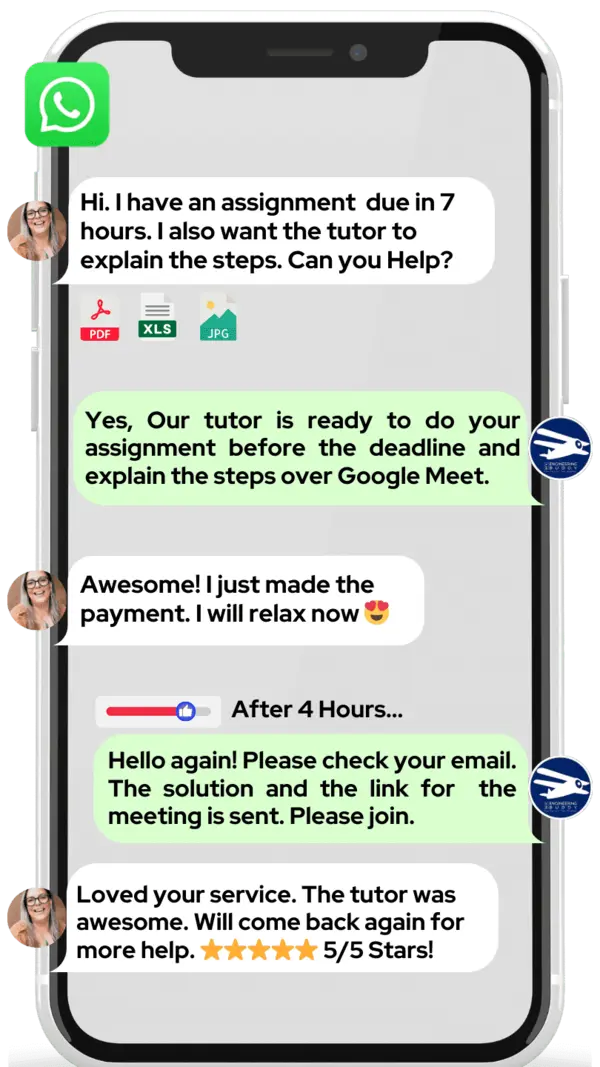
WhatsApp MEB for a quick quote — average response time under 1 minute.
Who This Sound Design Tutoring Is For
Sound Design sits at the overlap of technical precision and creative instinct. Most students struggle not because they lack talent but because no one has ever shown them the systematic side — gain structure, layering logic, spectral balance.
- Undergraduate and postgraduate students in music technology, film, or game audio programmes
- Students whose portfolio submission deadline is approaching with unfinished or weak tracks
- Students with a conditional programme offer that depends on demonstrating technical audio skills
- Self-taught producers hitting a ceiling — everything sounds almost right but not quite
- Students who tried once, submitted work they weren’t happy with, and need to rebuild from the right foundation
- Parents watching a child’s confidence drop as peers advance faster in a competitive audio programme
Students come from programmes at institutions including Berklee College of Music, Goldsmiths University of London, NYU Tisch, SAE Institute, Royal College of Music, BIMM Institute, and Berklee Online. MEB tutors know the expectations at these programmes.
Even an hour or two per week with the right Sound Design private lessons tutor changes the trajectory. The $1 trial is the lowest-risk way to find out if it’s the right fit.
1:1 Tutoring vs Self-Study vs AI vs YouTube vs Online Courses
Self-study works if you’re disciplined and already know what you don’t know — most students don’t. AI tools answer questions fast but can’t hear your mix, watch your routing, or catch the mistake you’re making three steps back. YouTube gets you 80% of the way and then stops exactly where you need help most. Online courses are structured but fixed-pace — your specific brief isn’t in the syllabus. 1:1 Sound Design tutoring with MEB is live, calibrated to your DAW, your project, and your exact weak points, corrected in the session rather than two days later when you’ve already moved on.
Outcomes: What You’ll Be Able To Do in Sound Design
After working with an MEB Sound Design tutor, you’ll be able to apply layered synthesis techniques to build original textures from scratch, not just presets. You’ll analyze a reference track and reverse-engineer its spatial structure — stereo field, reverb architecture, high-frequency air. You’ll present a coherent sound world for a brief — film trailer, game level, or interactive installation — and explain every creative and technical decision behind it. You’ll solve common mix problems: muddiness in the low-mids, harsh resonances, a stereo image that collapses in mono. You’ll submit work that sounds intentional, not accidental.
Based on feedback from 40,000+ sessions collected by MEB from 2022 to 2025, students working 1:1 on Sound Design consistently report faster progress than self-directed practice alone, noticeably stronger technical control of their DAW, and clearer creative decision-making when building a sound world from a brief. Progress varies by starting level and practice frequency.
Source: MEB session feedback data, 2022–2025.
Try your first session for $1 — 30 minutes of live 1:1 tutoring or one question explained in full. No registration. No commitment. WhatsApp MEB now and get matched within the hour.

What We Cover in Sound Design (Syllabus / Topics)
Synthesis and Sound Creation
- Subtractive, additive, FM, wavetable, and granular synthesis principles
- Oscillator, filter, envelope, and LFO interaction
- Designing from scratch: pads, leads, bass, FX, atmospheres
- Modular signal flow and patch design logic
- Sampling, resampling, and sample manipulation techniques
- Noise shaping and spectral sculpting with EQ and filtering
Core references: The Synth Bible by Gordon Reid (Sound on Sound series), Designing Sound by Andy Farnell — essential for procedural and synthesis-based approaches across any DAW.
Audio Post-Production and Foley
- Foley recording and layering for film and game environments
- Dialogue editing, ADR, and production audio clean-up
- Ambience and room tone construction
- Stems, stems grouping, and export-ready session management
- Loudness standards: LUFS targets for broadcast, streaming, and cinema
- Surround and spatial audio mixing (5.1, 7.1, Dolby Atmos basics)
Core references: The Sound Effects Bible by Ric Viers, Audio Post Production for Film and Television by John Watkinson — covers the full post chain from on-set to delivery.
Game Audio and Interactive Sound
- Adaptive audio principles: vertical remixing, horizontal re-sequencing
- Wwise and FMOD middleware fundamentals — event-driven audio logic
- Implementation workflow: Unity and Unreal audio integration basics
- State machines, randomisation, and variation scripting for realism
- Designing UI sounds, weapons, environments, and character audio
- Asset naming, organisation, and delivery conventions for game pipelines
Core references: The Game Audio Tutorial by Richard Stevens and Dave Raybould, Game Audio Implementation by Richard Stevens — covers both design logic and practical Wwise/FMOD workflows.
At MEB, we’ve found that Sound Design students who struggle most are usually working backwards — building sounds before they understand what the sound needs to do in context. The tutor’s first job is to reverse that order.
Platforms, Tools & Textbooks We Support
Sound Design is software-specific in a way most subjects aren’t. Your tutor is matched to your exact setup — not a generic audio educator who’ll ask you to switch tools.
- DAWs: Ableton Live, Logic Pro, Pro Tools, Reaper, Cubase, FL Studio, Bitwig Studio
- Synthesis plugins: Serum, Massive X, Omnisphere, Vital, Reaktor, PhasePlant
- Post & editing: iZotope RX, Izotope Ozone, Waves bundles, FabFilter suite
- Game audio middleware: Wwise, FMOD
- Spatial audio: Dolby Atmos Production Suite, Apple Spatial Audio tools
- Spectral editors: iZotope Iris, Spectralayers
What a Typical Sound Design Session Looks Like
The tutor opens by checking last session’s task — usually something like “design three distinct impact sounds for a sci-fi trailer using only synthesis, no samples.” You share your session file on screen. The tutor screens your routing, identifies where the layers are conflicting in the 200–400Hz range, and shows you — with a digital pen-pad — exactly where the cuts go and why. Then you replicate the process on your own while the tutor watches. You’re not copying. You’re internalising the decision logic. Session closes with a specific brief: build a looping ambience for an underwater environment, deliverable for next session, targeting a specific LUFS and frequency balance. Next topic is noted — most likely spatial processing or working with Music Theory concepts to add intentional harmonic texture to your sound design work.
How MEB Tutors Help You with Sound Design (The Learning Loop)
Diagnose: In the first session, the tutor identifies exactly where your process breaks down. Is it synthesis — you’re reaching for presets because you don’t trust your ear? Is it mix translation — sounds fine in headphones, breaks on speakers? Or is it conceptual — you can make sounds but can’t explain why they work for the brief?
Explain: The tutor works through the problem live, using a digital pen-pad to annotate your session file or draw signal paths on screen. Nothing is left as abstraction — every concept maps to a knob, a waveform, or a decision you can repeat.
Practice: You attempt the technique while the tutor watches. The goal is for you to do the work, not observe it. Common tasks: redesigning a sound layer by layer with constraints, or matching a reference track’s spatial depth using only the tools in your existing session.
Feedback: The tutor flags each error with a reason. Not “that sounds harsh” — but “your high shelf is boosting at 10kHz which is fighting the reverb tail; pull it back 2dB and narrow the Q.” That’s the kind of correction that sticks.
Plan: Session ends with a concrete next topic and a practice brief tied to it. Progress is tracked. If you’re working toward a portfolio deadline, the tutor maps backward from that date and allocates session time accordingly.
Sessions run on Google Meet. Tutors use a digital pen-pad or iPad with Apple Pencil. Before your first session, share your DAW version, the brief or project description you’re working from, and one example of recent work you’re not happy with. That’s enough for the tutor to hit the ground running.
Start with the $1 trial — 30 minutes of live Sound Design tutoring that also serves as your first diagnostic.
Students consistently tell us that the first session is the one where they realise how much they were guessing. That’s not a criticism — it’s the point. Naming what you don’t know is the fastest route to fixing it.
Tutor Match Criteria (How We Pick Your Tutor)
Not every audio professional makes a good Sound Design tutor. MEB screens for both.
Subject depth: Tutors are matched by specialism — film post, game audio, music production, or live performance sound. A game audio specialist won’t be assigned to a film scoring brief.
Tools: Matched to your specific DAW and plugin ecosystem. Sessions run over Google Meet with digital pen-pad or iPad and Apple Pencil for annotating session files live.
Time zone: Matched to your region — US, UK, Gulf, Canada, or Australia. No 3am sessions.
Goals: Whether you need portfolio depth, conceptual clarity, workflow speed, or help with Music History context for a Sound Design module, the tutor is briefed before session one.
Unlike platforms where you fill out a form and wait, MEB responds in under a minute, 24/7. Tutor match takes under an hour. The $1 trial means you test before you commit. Everything runs over WhatsApp — no logins, no intake forms.
Study Plans (Pick One That Matches Your Goal)
Catch-up (1–3 weeks): for students behind on a module or approaching a portfolio crit with gaps. Sessions focus on the highest-impact weak points first. Exam prep (4–8 weeks): structured revision for assessed Sound Design coursework or end-of-year portfolio. Weekly support: ongoing sessions aligned to semester deadlines, with briefs matching live coursework. The tutor builds the specific sequence after your diagnostic session — nothing is templated from a pre-written plan.
Pricing Guide
Sound Design tutoring starts at $20/hr for foundational and intermediate levels. Graduate-level work, specialist game audio (Wwise, FMOD implementation), or Dolby Atmos spatial mixing runs up to $100/hr. Rate factors include your level, topic complexity, timeline, and tutor availability.
Peak periods — semester end, portfolio submission weeks, and conservatoire audition prep months — see high demand. Book as early as you can if you’re working to a fixed deadline.
For students targeting competitive film audio, game audio, or post-production programmes at conservatoires and specialist schools, tutors with professional industry backgrounds — credits in film, games, or broadcast — are available at higher rates. Share your specific goal and MEB will match the tier to your ambition.
Start with the $1 trial — 30 minutes, no registration, no commitment. WhatsApp MEB for a quick quote.
MEB has served 52,000+ students since 2008 with a 4.8/5 average across platforms — covering everything from foundational synthesis to professional-level game audio implementation. Sessions are live. Tutors are matched, not randomly assigned.
Source: My Engineering Buddy internal data, 2008–2025.
FAQ
Is Sound Design hard to learn?
The technical side — synthesis architecture, signal routing, spectral EQ — takes real work to internalise. The creative side is learnable faster than most students expect once the technical foundation is solid. The hardest part is usually the gap between the two: making intentional creative decisions with technical precision.
How many sessions will I need?
Students with a specific portfolio deadline typically need 6–12 sessions, depending on current level and brief complexity. Students using MEB for ongoing programme support usually book weekly. The diagnostic session gives the tutor enough to estimate a realistic session count for your goal.
How do you structure practice between sessions?
The tutor sets a specific brief at the end of each session — a concrete deliverable tied to the next session’s topic. Between sessions you work through it independently. The tutor reviews it at the start of the next session before moving forward. Progress builds cumulatively, not in isolated blocks.
Will the tutor match my current level and goals?
Yes. MEB matches by specialism, DAW, level, and brief type. A student working on Foley for a short film gets a different tutor than one learning synthesis for electronic music production. You won’t be assigned a generalist audio teacher.
What happens in the first session?
The tutor starts with a diagnostic: they’ll ask to see recent work, ask about your brief or programme requirements, and identify two or three specific areas to address. By the end of session one, you’ll have a clear picture of what’s holding you back and a plan for the next three to four sessions.
Are online Sound Design lessons as effective as in-person?
For most Sound Design work, yes. Screen sharing means the tutor sees your session file in real time. The digital pen-pad replicates the whiteboard. The only limitation is physical Foley recording — but technique, synthesis, mixing, and workflow coaching all transfer fully to online sessions.
Which DAW does the tutor use — what if mine is different?
MEB tutors cover all major DAWs: Ableton Live, Logic Pro, Pro Tools, Reaper, Cubase, FL Studio, and Bitwig. When you contact MEB, specify your DAW and primary plugin setup. The matched tutor works within your environment — you won’t be asked to switch tools mid-project.
Can you help with Wwise or FMOD for game audio?
Yes. MEB has tutors with hands-on Wwise and FMOD experience, including event-driven audio logic, state machines, and Unity or Unreal integration. If you’re working on a specific game audio implementation brief, share the project scope when you contact MEB — the tutor is briefed in advance.
What’s the difference between Sound Design and music production — should I be learning both?
Sound Design focuses on building and placing audio elements in context — for image, game, or experience. Music production focuses on arranging, mixing, and mastering musical content. They overlap in synthesis and mix technique. Many students benefit from both. MEB covers music and Sound Design as separate or combined tracks depending on your programme.
Can I get Sound Design help at short notice — even late at night?
Yes. MEB operates 24/7 across time zones. WhatsApp response time averages under a minute. If a tutor is available for same-day or late-night sessions in your time zone, MEB confirms it immediately. Peak periods may have shorter availability windows — contact as early as you can.
Do you offer group Sound Design sessions?
No. MEB is 1:1 only. Every session is built around one student’s brief, DAW setup, and current gaps. Group sessions aren’t offered because Sound Design problems are almost always individual — your mix, your routing, your brief — and group pacing defeats the purpose.
How do I get started?
WhatsApp MEB, share your DAW, your brief or module, and your timeline. MEB matches you with a verified tutor — usually within the hour. Your first session is the $1 trial: 30 minutes of live 1:1 Sound Design coaching, or one specific question explained in full. Three steps: WhatsApp, matched, start.
Trust & Quality at My Engineering Buddy
Every MEB tutor goes through a subject-specific screening process: qualification check, live demo session evaluation, and ongoing review based on student feedback. Tutors covering Sound Design hold degrees or professional credits in music technology, audio engineering, film post-production, or game audio — not just broad music qualifications. Rated 4.8/5 across 40,000+ verified reviews on Google.
MEB operates as guided learning. You do the work; the tutor makes sure you understand it. For full details on what MEB helps with and what falls outside guided learning, read our Academic Integrity policy and Why MEB.
MEB has been serving students in Fine Arts, Animation, Performing Arts, and audio disciplines since 2008 — across 2,800+ subjects, 52,000+ students, US, UK, Canada, Australia, Gulf, and Europe. The platform was built for the student who needs real, subject-specific expertise, not a generalist marketplace. Read more on our tutoring methodology.
Our experience across thousands of sessions shows that the students who make the fastest progress are the ones who come with a specific piece of work they’re stuck on — not a vague topic. Specificity in the brief makes the session twice as productive.
Explore Related Subjects
Students studying Sound Design often also need support in:
Next Steps
Share your DAW, your brief or module name, and your deadline. Share your time zone and availability. MEB matches you with a verified Sound Design tutor — usually within 24 hours, often faster. Your first session starts with a diagnostic so every minute is used on what actually matters.
Before your first session, have ready:
- Your programme brief or course outline (or the specific project you’re stuck on)
- A recent piece of work you’re not satisfied with — a session file, a mix, or an export
- Your DAW version, primary plugins, and any submission deadline or crit date
The tutor handles the rest. Visit www.myengineeringbuddy.com for more on how MEB works.
WhatsApp to get started or email meb@myengineeringbuddy.com.
Reviewed by Subject Expert
This page has been carefully reviewed and validated by our subject expert to ensure accuracy and relevance.

