

Hire Verified & Experienced
Bayesian Statistics Tutors
4.8/5 40K+ session ratings collected on the MEB platform
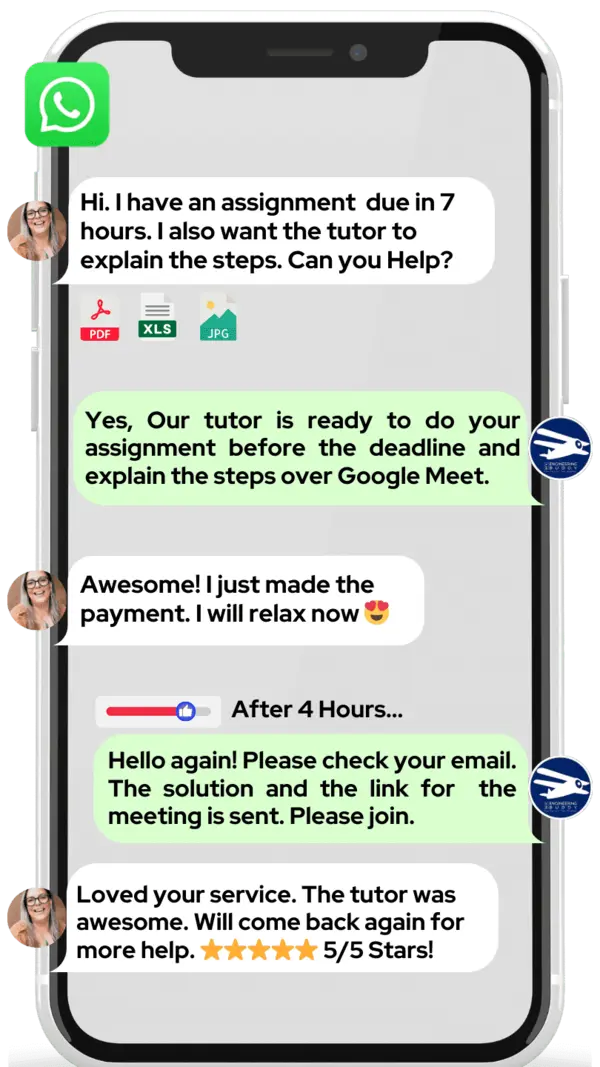



Hire The Best Bayesian Statistics Tutor
Top Tutors, Top Grades. Without The Stress!
52,000+ Happy Students From Various Universities






How Much For Private 1:1 Tutoring & Hw Help?
Private 1:1 Tutoring and HW help Cost $20 – 35 per hour* on average.
Bayes’ theorem looks clean on paper. Posterior distributions, conjugate priors, MCMC — in practice, most students hit a wall inside the first three weeks.
Bayesian Statistics Tutor Online
Bayesian Statistics is a branch of statistics that uses prior knowledge combined with observed data to update probability estimates. It underpins inference, decision-making, and predictive modelling across data science, clinical research, and machine learning.
If you are searching for a Bayesian Statistics tutor near me, MEB connects you with 1:1 online tutoring and homework help across 2,800+ advanced subjects — including the full Statistics tutoring subject family. Our tutors work through prior specification, likelihood functions, posterior derivation, and computational methods at your level, on your syllabus, at a time that works for you. One outcome students consistently report: the ideas that seemed abstract in lectures become workable in sessions.
- 1:1 online sessions tailored to your course or syllabus
- Expert-verified tutors with postgraduate-level Bayesian knowledge
- Flexible time zones — US, UK, Canada, Australia, Gulf
- Structured learning plan built after a diagnostic session
- Ethical homework and assignment guidance — you understand the work before you submit
52,000+ students across the US, UK, Canada, Australia, and the Gulf have used MEB since 2008 — including students in Statistics subjects like Bayesian Statistics, Mathematical Statistics tutoring, and Computational Statistics help.
Source: My Engineering Buddy, 2008–2025.
How Much Does a Bayesian Statistics Tutor Cost?
Most Bayesian Statistics sessions run $20–$40/hr. Graduate-level or research-focused work — MCMC implementation, hierarchical model design, Stan or PyMC3 — can reach $70–$100/hr. The $1 trial gives you 30 minutes of live 1:1 tutoring or a full explanation of one homework question before you commit to anything.
| Level / Need | Typical Rate | What’s Included |
|---|---|---|
| Undergraduate (intro / mid-level) | $20–$35/hr | 1:1 sessions, homework guidance |
| Graduate / Research Methods | $35–$70/hr | Expert tutor, model-building depth |
| Specialist (MCMC, Stan, PyMC3) | $70–$100/hr | Research-grade, niche implementation |
| $1 Trial | $1 flat | 30 min live session or 1 homework question |
Tutor availability tightens during semester-end and dissertation submission periods. Early booking is worth it.
WhatsApp MEB for a quick quote — average response time under 1 minute.
Who This Bayesian Statistics Tutoring Is For
Bayesian Statistics appears in undergraduate stats modules, graduate research methods courses, data science programmes, epidemiology, and machine learning curricula. The gap between “I followed the lecture” and “I can actually do this” is wide — and it opens fast.
- Undergraduate students hitting the wall with prior distributions and Bayes’ theorem derivations
- Masters and PhD students whose dissertation relies on Bayesian inference or hierarchical modelling
- Data science students needing to implement models in R, Python (PyMC3), or Stan
- Students retaking after a failed first attempt — with a new strategy, not just more reading
- Students with a university conditional offer depending on their statistics grade
- Researchers in psychology, medicine, or economics who need Bayesian methods for study design or analysis
Students at universities including MIT, University of Toronto, University College London, ETH Zurich, University of Melbourne, and Duke have used MEB for statistics support at exactly this level.
At MEB, we’ve found that students who struggle with Bayesian Statistics are rarely weak at maths — they’re stuck on the conceptual shift from frequentist thinking. Once that clicks, the rest moves quickly. Getting that first session right sets the entire trajectory.
1:1 Tutoring vs Self-Study vs AI vs YouTube vs Online Courses
Self-study works if you’re disciplined — but Bayesian Statistics has a conceptual barrier most students can’t clear alone. AI tools explain Bayes’ theorem fast but can’t watch you set up a prior wrong and stop you. YouTube handles the overview; it disappears when you’re stuck on a posterior predictive check. Online courses move at a fixed pace — not yours. With MEB, a live tutor catches the exact moment your reasoning breaks down, corrects it, and rebuilds from there. That’s the difference when posterior derivations or MCMC convergence is on the line.
Outcomes: What You’ll Be Able To Do in Bayesian Statistics
After working with an MEB Bayesian Statistics tutor, students can apply Bayes’ theorem to derive posterior distributions from specified priors and likelihoods. They can model real problems using conjugate families — Beta-Binomial, Normal-Normal, Gamma-Poisson — and explain why each choice is appropriate. Students learn to analyse MCMC output, assess chain convergence using trace plots and the Gelman-Rubin statistic, and present results with credible intervals rather than p-values. They can write up a Bayesian analysis in a dissertation or coursework report in a way that holds up to academic scrutiny.
Based on feedback from 40,000+ sessions collected by MEB from 2022 to 2025, 58% of students improved by one full grade after approximately 20 hours of 1:1 tutoring in subjects like Bayesian Statistics. A further 23% achieved at least a half-grade improvement.
Source: MEB session feedback data, 2022–2025.
Try your first session for $1 — 30 minutes of live 1:1 tutoring or one homework question explained in full. No registration. No commitment. WhatsApp MEB now and get matched within the hour.
What We Cover in Bayesian Statistics (Syllabus / Topics)

Track 1: Foundations of Bayesian Inference
- Probability review: conditional probability, Bayes’ theorem derivation
- Prior distributions: informative, weakly informative, non-informative priors
- Likelihood functions and their role in updating beliefs
- Posterior derivation: analytical and numerical approaches
- Conjugate priors: Beta-Binomial, Normal-Normal, Dirichlet-Multinomial
- Posterior predictive distributions and their interpretation
- Credible intervals vs confidence intervals — the distinction that loses marks
Key texts: Bayesian Data Analysis (Gelman et al., 3rd ed.), Think Bayes (Downey). For probability distribution help, MEB tutors cover both frameworks.
Track 2: Bayesian Computation — MCMC and Probabilistic Programming
- Markov Chain Monte Carlo: Metropolis-Hastings algorithm
- Gibbs sampling and its applications in multi-parameter models
- Hamiltonian Monte Carlo and the NUTS sampler (used in Stan)
- Convergence diagnostics: trace plots, R-hat, effective sample size
- Implementation in R (rstan, brms), Python (PyMC3, NumPyro)
- Posterior predictive checks — testing whether the model fits the data
- Approximate Bayesian Computation (ABC) for intractable likelihoods
Key texts: Statistical Rethinking (McElreath), Probabilistic Programming and Bayesian Methods for Hackers (Davidson-Pilon). Students needing R programming tutoring can combine both in one session.
Track 3: Hierarchical and Applied Bayesian Models
- Hierarchical (multilevel) models: partial pooling, shrinkage
- Random effects and mixed models in a Bayesian framework
- Bayesian linear and logistic regression help — priors on coefficients
- Model comparison: WAIC, LOO-CV, Bayes factors
- Bayesian approaches to clinical trials and adaptive designs
- Spatial and temporal extensions: Gaussian processes, state-space models
- Bayesian networks and causal inference frameworks
Key texts: Doing Bayesian Data Analysis (Kruschke), A First Course in Bayesian Statistical Methods (Hoff). For applied work, MEB also supports causal inference tutoring.
What a Typical Bayesian Statistics Session Looks Like
The tutor opens by checking the previous topic — usually prior specification or a posterior derivation the student attempted between sessions. They pull up the student’s working directly on screen. The session then moves to the current problem: say, building a hierarchical model for grouped data or diagnosing a poorly converged MCMC chain. The tutor writes through each step on a digital pen-pad — showing the algebra, the code, the output — and asks the student to replicate or explain a step before moving forward. Errors get corrected immediately, with an explanation of why the mark would have been lost. The session closes with a specific practice task: one model to specify and one MCMC run to interpret before next time. The next topic is named.
How MEB Tutors Help You with Bayesian Statistics (The Learning Loop)
Diagnose: In the first session, the tutor identifies exactly where the student’s understanding breaks down — whether that’s the conceptual leap from frequentist to Bayesian thinking, trouble with likelihood specification, or confusion reading MCMC diagnostics. Nothing is assumed. Everything is tested.
Explain: The tutor works through live examples on a digital pen-pad — deriving a posterior step by step, writing and running Stan or PyMC3 code, interpreting output. No slides. No pre-recorded videos. The explanation responds to what the student does not yet understand.
Practice: The student attempts a problem with the tutor present. This is where the real gaps show. Attempting a posterior predictive check or a Gibbs sampling derivation under light pressure surfaces errors that reading alone never would.
Feedback: Every mistake is corrected with a reason. “The prior is wrong because…” not just “that’s not right.” Students learn to self-check using the same logic the tutor applies.
Plan: Each session ends with a named next topic, a specific task, and a note of what still needs review. Progress is tracked across sessions — not just within them.
Sessions run on Google Meet with a digital pen-pad or iPad with Apple Pencil. Before the first session, share your course outline or syllabus, any recent assignments or problem sets you struggled with, and your exam or submission deadline. Start with the $1 trial — 30 minutes of live tutoring that also serves as your first diagnostic.
Students consistently tell us that Bayesian Statistics makes sense in sessions in a way it just doesn’t from a textbook alone. The notation is dense, the reasoning is unfamiliar — but once a tutor works through a full example from prior to posterior to predictive, the structure becomes clear fast.
Tutor Match Criteria (How We Pick Your Tutor)
Not every statistician can teach Bayesian methods well. MEB matches on specifics.
Subject depth: Tutors hold postgraduate degrees in statistics, data science, biostatistics, or a closely related quantitative field — with demonstrated experience in Bayesian methods at the level the student is working at.
Tools: Every session runs on Google Meet with a digital pen-pad or iPad with Apple Pencil. For students needing statistical computing help, tutors work directly in R or Python within the session.
Time zone: Matched to the student’s region — US, UK, Gulf, Canada, or Australia. No scheduling around someone else’s continent.
Goals: Exam preparation, dissertation methods chapter, conceptual depth, or ongoing weekly homework support — the tutor is matched to the actual goal, not a generic statistics profile.
Unlike platforms where you fill out a form and wait, MEB responds in under a minute, 24/7. Tutor match takes under an hour. The $1 trial means you test before you commit. Everything runs over WhatsApp — no logins, no intake forms.
Study Plans (Pick One That Matches Your Goal)
Catch-up (1–3 weeks): for students behind on priors, likelihoods, or MCMC basics before an exam or submission. Fast-track to the most tested concepts. Exam prep (4–8 weeks): structured revision working through all major Bayesian topics — foundations, computation, model comparison — against a specific exam date or dissertation deadline. Weekly support: ongoing, aligned to lecture schedule and coursework timelines. The tutor maps the exact session sequence after the first diagnostic — no two plans are identical.
Pricing Guide
Bayesian Statistics tutoring runs $20–$40/hr for most undergraduate levels. Graduate-level support — hierarchical modelling, MCMC implementation, dissertation methods — typically sits at $50–$100/hr depending on tutor specialisation and timeline urgency. Rate factors include topic complexity, the computational tools involved, and how quickly you need to move.
For students targeting top PhD programmes or research positions where Bayesian fluency is expected, tutors with active research or industry backgrounds in probabilistic modelling are available at higher rates. Share your specific goal and MEB will match the tier to your ambition.
Availability tightens significantly at semester end and during dissertation submission windows. Book early if your deadline is under eight weeks away.
Start with the $1 trial — 30 minutes, no registration, no commitment. WhatsApp MEB for a quick quote.
MEB tutors have supported students across Biostatistics tutoring, Advanced Statistics help, and Bayesian Statistics since 2008 — with structured, subject-specific sessions that cover the exact methods your course or dissertation demands.
Source: My Engineering Buddy, 2008–2025.
FAQ
Is Bayesian Statistics hard?
It’s conceptually demanding — the shift from frequentist thinking to probability as a degree of belief trips most students early on. The notation is dense. But with a tutor who can work through conjugate priors and MCMC diagnostics step by step, the structure becomes manageable quickly.
How many sessions are needed?
Students closing specific gaps — one topic, one assignment type — often see real progress in 3–5 sessions. Students building from foundations to full MCMC implementation typically work over 10–20 sessions. The first diagnostic sets a realistic plan based on your actual starting point.
Can you help with homework and assignments?
MEB tutoring is guided learning — you understand the work, then submit it yourself. The tutor explains the method, works through a similar example, and checks your reasoning. See our Academic Integrity policy and Why MEB page for full details on what we help with and what we don’t.
Will the tutor match my exact syllabus or exam board?
Yes. Before the first session, share your course outline or exam board requirements. Tutors are matched to your specific curriculum — whether that’s a university module, a graduate research methods course, or a data science programme with specific probabilistic modelling content.
What happens in the first session?
The tutor runs a short diagnostic — checking where your understanding sits across priors, likelihoods, and posterior derivation. From there, the session addresses the most urgent gap immediately. You leave the first session with a clearer problem and a named next step.
Is online tutoring as effective as in-person?
For Bayesian Statistics, yes — the pen-pad workflow replicates the whiteboard experience directly. Tutors can annotate derivations, run live code in R or Python, and share their screen in real time. Students consistently report it’s more focused than in-person sessions.
Can I get Bayesian Statistics help at midnight or on weekends?
MEB operates 24/7. WhatsApp MEB at any hour — average response time is under a minute. Tutors span multiple time zones, so late-night sessions for US, UK, and Gulf students are standard, not an exception.
What if I don’t get along with my assigned tutor?
Request a switch. It happens and it’s not a problem. MEB re-matches you, usually within the same day. The $1 trial exists specifically so you can assess fit before committing to a full session block.
What’s the difference between Bayesian and frequentist statistics, and why does it matter for tutoring?
Frequentist methods treat probability as long-run frequency; Bayesian methods treat it as a degree of belief updated by evidence. Many students are taught both in the same programme. MEB tutors work across both frameworks and can clarify the distinctions that matter for your specific course or dissertation.
Do I need to know R or Python before starting Bayesian Statistics tutoring?
No. Tutors can teach the coding alongside the statistics. If you need Stan, PyMC3, or brms for a dissertation or course project, the tutor handles both the conceptual model-building and the implementation in the same session. MEB also offers dedicated R programming tutoring if you want to go deeper on the language itself.
How do I get started?
Three steps: WhatsApp MEB, get matched with a verified Bayesian Statistics tutor — usually within the hour — then start with the $1 trial. Thirty minutes of live tutoring or one homework question explained in full. No registration needed. No commitment beyond that first session.
Trust & Quality at My Engineering Buddy
Every MEB tutor is vetted through a multi-stage process: subject knowledge screening, a live demo evaluation observed by a senior MEB reviewer, and ongoing feedback review after each student session. Tutors hold postgraduate degrees — most at PhD level in quantitative fields — and are matched only to subjects within their verified specialisation. Rated 4.8/5 across 40,000+ verified reviews on Google. For hypothesis testing help or any adjacent statistics topic, the same vetting standards apply.
MEB tutoring is guided learning — you understand the work, then submit it yourself. For full details on what we help with and what we don’t, read our Academic Integrity policy and Why MEB.
MEB has served 52,000+ students across the US, UK, Canada, Australia, Gulf, and Europe in 2,800+ subjects since 2008. Statistics is one of our largest subject families — covering Bayesian Statistics, inferential statistics tutoring, applied statistics help, and the full range of quantitative methods that sit alongside them. Read more about how sessions are structured at MEB’s tutoring methodology page.
MEB has been running 1:1 online statistics sessions since 2008. The subjects change — frequentist one semester, Bayesian the next — but the tutoring structure stays the same: diagnose first, explain live, practice under supervision, correct with reasons.
Source: My Engineering Buddy, 2008–2025.
Explore Related Subjects
Students studying Bayesian Statistics often also need support in:
- Monte Carlo Simulation
- Decision Theory
- Multivariate Statistics
- Time Series Analysis
- Predictive Modeling
- Design of Experiments
- Survival Analysis
Next Steps
When you contact MEB, have the following ready:
- Your exam board, university module code, or course outline
- Your exam date, dissertation deadline, or submission window
- A recent problem set, past paper attempt, or assignment you struggled with
MEB matches you with a verified Bayesian Statistics tutor — usually within 24 hours, often within the hour. The first session opens with a diagnostic so every minute is used directly on your actual gaps.
Visit www.myengineeringbuddy.com for more on how MEB works.
WhatsApp to get started or email meb@myengineeringbuddy.com.
Reviewed by Subject Expert
This page has been carefully reviewed and validated by our subject expert to ensure accuracy and relevance.
