

Hire Verified & Experienced
Analog Circuits Tutors
4.8/5 40K+ session ratings collected on the MEB platform



Hire The Best Analog Circuits Tutor
Top Tutors, Top Grades. Without The Stress!



52,000+ Happy Students From Various Universities






How Much For Private 1:1 Tutoring & Hw Help?
Private 1:1 Tutoring and HW help Cost $20 – 35 per hour* on average.
Transistor biasing made sense in the lecture. Then the homework landed — and nothing worked.
Analog Circuits Tutor Online
Analog Circuits is a core electrical engineering discipline covering continuous-signal behaviour in components such as transistors, op-amps, and diodes. It equips students to design, analyse, and troubleshoot amplifiers, filters, and oscillators in real-world electronic systems.
If you’re searching for an Analog Circuits tutor near me, MEB offers 1:1 online tutoring within the broader Electrical Engineering tutoring programme — covering everything from BJT biasing to op-amp stability analysis. Our tutors work at your exact course level, whether you’re an undergraduate hitting a wall at the midterm or a graduate student deep in IC design. One session can close a gap that three hours of re-reading notes won’t touch.
- 1:1 online sessions tailored to your specific course and syllabus
- Expert-verified tutors with hands-on subject knowledge in analog design
- Flexible time zones — US, UK, Canada, Australia, Gulf
- Structured learning plan built after a diagnostic session
- Ethical homework and assignment guidance — you understand before you submit
52,000+ students across the US, UK, Canada, Australia, and the Gulf have used MEB since 2008 — including students in Electrical Engineering subjects like Analog Circuits, Analog Electronics, and Electronic Circuit Design.
Source: My Engineering Buddy, 2008–2025.
How Much Does an Analog Circuits Tutor Cost?
Most Analog Circuits tutoring sessions run $20–$40/hr. Graduate-level or specialist IC design work can reach $100/hr. Not sure if it’s worth committing? The $1 trial gives you 30 minutes of live 1:1 tutoring — no registration, no commitment.
| Level / Need | Typical Rate | What’s Included |
|---|---|---|
| Undergraduate (most levels) | $20–$35/hr | 1:1 sessions, homework guidance |
| Advanced / Graduate | $35–$70/hr | Expert tutor, deep analog design coverage |
| $1 Trial | $1 flat | 30 min live session or 1 homework question explained in full |
Tutor availability tightens sharply in the weeks before final exams. Book early if your exam is within four weeks.
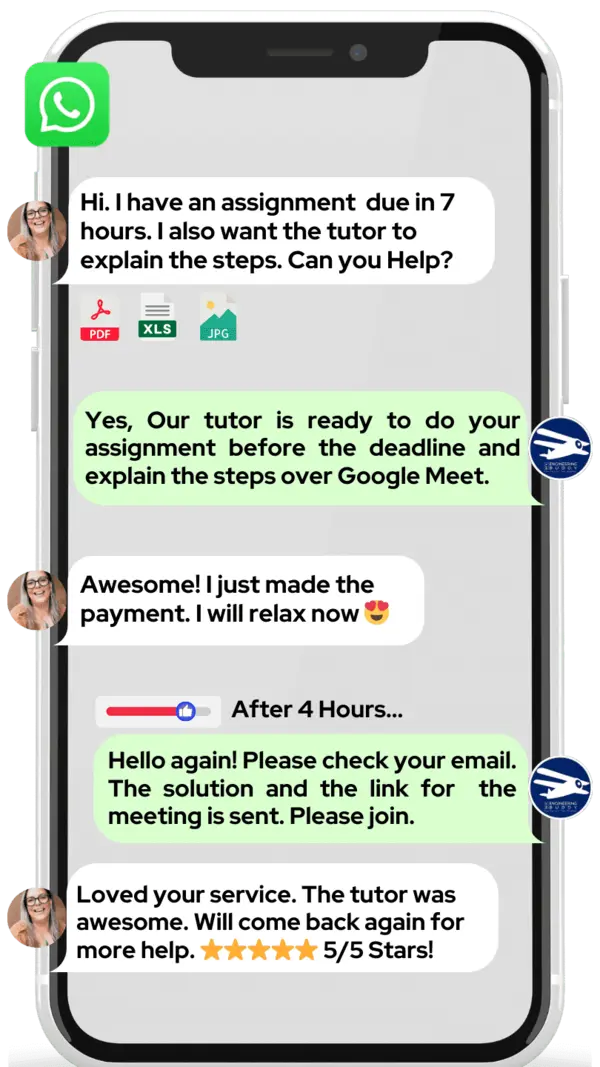
WhatsApp MEB for a quick quote — average response time under 1 minute.
Who This Analog Circuits Tutoring Is For
Analog Circuits is one of the subjects where students feel fine until they suddenly don’t. The gap between understanding a circuit schematic and being able to derive its frequency response from scratch is where most people get stuck.
- Undergraduates in ECE or EE programmes hitting their first amplifier design course
- Students retaking after a failed first attempt — gaps in BJT or MOSFET biasing are almost always the root cause
- Students 4–6 weeks from finals with significant topics still uncovered
- Graduate students whose research touches op-amp design, sensor interfacing, or mixed-signal systems
- Students with a conditional university offer depending on passing this course
- Parents watching a student’s confidence drop alongside their lab grades
MEB has worked with students at MIT, Stanford, Georgia Tech, Imperial College London, the University of Toronto, ETH Zurich, and Delft University of Technology — studying everything from introductory circuit analysis to graduate-level IC design.
1:1 Tutoring vs Self-Study vs AI vs YouTube vs Online Courses
Self-study works if you’re disciplined — but analog circuits have no obvious error message when your reasoning is wrong. AI tools explain quickly but can’t watch you botch a Thevenin equivalent and catch where the thinking broke down. YouTube is excellent for watching someone else solve a problem; it stops helping the moment your circuit doesn’t match the example. Online courses move at a fixed pace, regardless of whether you’ve actually understood pole-zero analysis. With a 1:1 Analog Circuits tutor at MEB, the session adapts live — if you misapply the virtual ground assumption in an op-amp circuit, the tutor catches it in the moment, not after you’ve built three wrong conclusions on top of it.
Outcomes: What You’ll Be Able To Do in Analog Circuits
After structured 1:1 sessions, students solve BJT and MOSFET biasing problems without relying on memorised formulas. They analyse small-signal equivalent circuits confidently, apply Miller’s theorem to multi-stage amplifiers, and model the frequency response of common-emitter and common-source configurations. Students can explain why a feedback amplifier stabilises gain and present a complete Bode plot for a given transfer function. They apply op-amp circuit techniques — summing amplifiers, integrators, differentiators — to practical signal conditioning problems that appear in coursework and lab assessments.
Based on feedback from 40,000+ sessions collected by MEB from 2022 to 2025, 58% of students improved by one full grade after approximately 20 hours of 1:1 tutoring in subjects like Analog Circuits. A further 23% achieved at least a half-grade improvement.
Source: MEB session feedback data, 2022–2025.
At MEB, we’ve found that most analog circuits students aren’t missing the theory — they’re missing the moment where someone shows them exactly how to translate the theory into a circuit that actually works on paper. That’s the gap one good session closes.
What We Cover in Analog Circuits (Syllabus / Topics)

Track 1: Semiconductor Devices and Biasing
- Diode characteristics — ideal vs real, load-line analysis
- BJT operation: active, saturation, and cut-off regions
- MOSFET biasing — enhancement and depletion mode
- DC bias point calculation and Q-point stability
- Thermal stability and bias compensation techniques
- Small-signal models: hybrid-pi and T-model
Key texts: Microelectronic Circuits by Sedra & Smith; Electronic Devices and Circuit Theory by Boylestad & Nashelsky.
Track 2: Amplifier Design and Frequency Response
- Common-emitter, common-base, and common-collector configurations
- Common-source, common-gate, and source-follower amplifiers
- Multi-stage amplifier analysis and gain calculation
- Miller’s theorem and its application to high-frequency models
- Bode plots — magnitude and phase response
- Gain-bandwidth product and bandwidth extension techniques
- Operational amplifier circuits: inverting, non-inverting, differential, and instrumentation amplifier configurations
Key texts: Analysis and Design of Analog Integrated Circuits by Gray, Hurst, Lewis & Meyer; The Art of Electronics by Horowitz & Hill.
Track 3: Feedback, Oscillators, and Filters
- Negative feedback theory — loop gain, stability, and sensitivity
- Barkhausen criterion and oscillator design conditions
- RC, LC, and crystal oscillator circuits
- Active filter design — Butterworth, Chebyshev, and Sallen-Key topologies
- Passive filter networks and impedance matching
- Phase margin, gain margin, and compensation techniques
Key texts: Microelectronics by Razavi; Design of Analog CMOS Integrated Circuits by Razavi. Students using simulation tools can pair these with LTspice tutoring for hands-on verification.
What a Typical Analog Circuits Session Looks Like
The tutor opens by checking where the previous topic — say, small-signal modelling of a BJT — landed. Did the homework make sense? Where did the numbers stop adding up? From there, the session moves into live problem-solving: the student shares their screen or worksheet, and the tutor walks through a common-emitter amplifier gain calculation using a digital pen-pad, annotating each step in real time. The student then replicates the approach on a fresh problem — MOSFET source-follower this time — while the tutor watches for reasoning errors, not just arithmetic slips. The session closes with a specific practice task (three Bode plot sketches from given transfer functions) and a clear note of what comes next: feedback amplifier stability analysis. Nothing vague. Nothing left open-ended.
How MEB Tutors Help You with Analog Circuits (The Learning Loop)
Diagnose: In the first session, the tutor asks targeted questions — not a quiz, but a conversation — to identify exactly where the student’s model breaks down. Is it the DC biasing? The small-signal transition? The frequency domain? Knowing this means no time is wasted on topics the student already has.
Explain: The tutor works through a live example using a digital pen-pad on Google Meet — deriving the voltage gain of a common-source amplifier step by step, for instance — so the student sees the reasoning, not just the answer.
Practice: The student attempts the next problem while the tutor watches. This is where the real gaps surface. Analog circuits require the student to hold the circuit topology in mind while tracking sign conventions, reference directions, and approximation conditions simultaneously.
Feedback: Errors are corrected at the step where they occur, not at the end. The tutor explains why a particular assumption (virtual ground, strong inversion) holds or fails for the specific circuit — the kind of nuance that textbooks gloss over.
Plan: The session ends with a clear topic sequence for the next meeting and a specific set of problems to attempt independently. Progress is tracked session to session.
Sessions run on Google Meet. The tutor uses a digital pen-pad or iPad with Apple Pencil to annotate schematics live. Before your first session, have your course syllabus, a recent homework problem you struggled with, and your exam date ready. The first session is diagnostic — the tutor uses it to map the plan for everything that follows. Start with the $1 trial — 30 minutes of live tutoring that also serves as your first diagnostic.
Students consistently tell us that the moment things click in Analog Circuits isn’t when they read the derivation — it’s when they try to reproduce it themselves and a tutor catches the exact step where the logic slips. That’s what live 1:1 is built for.
Tutor Match Criteria (How We Pick Your Tutor)
Not every electronics tutor is the right fit for Analog Circuits. Here’s what MEB screens for:
Subject depth: Tutors are matched to your specific course level — introductory BJT analysis, upper-division amplifier design, or graduate CMOS IC design. Syllabus and exam board fit is non-negotiable.
Tools: Every tutor works on Google Meet with a digital pen-pad or iPad and Apple Pencil. Schematics are drawn live — not described verbally.
Time zone: Matched to your region. Students in the US, UK, Gulf, Canada, and Australia all get tutors available in their working hours.
Goals: Whether you need exam marks, conceptual depth for a viva, homework guidance, or research-level support in microelectronics, the tutor is selected accordingly.
Unlike platforms where you fill out a form and wait, MEB responds in under a minute, 24/7. Tutor match takes under an hour. The $1 trial means you test before you commit. Everything runs over WhatsApp — no logins, no intake forms.
Study Plans (Pick One That Matches Your Goal)
MEB tutors don’t follow a fixed syllabus — they build your session sequence after the first diagnostic. That said, three plans cover most students: a catch-up sprint (1–3 weeks, targeting the highest-yield topics before an exam — typically biasing, small-signal models, and op-amp circuits); a structured exam prep block (4–8 weeks, working through every major topic with past paper practice built in); or weekly semester support, aligned to your lecture schedule and assignment deadlines. The tutor decides the exact sequence based on where you are after session one. Students using simulation tools alongside the theory often pair sessions with Multisim tutoring for circuit verification practice.
Pricing Guide
Analog Circuits tutoring starts at $20/hr for standard undergraduate levels. Rates reach $35–$70/hr for advanced analog design, mixed-signal topics, or graduate-level coursework. Specialist IC design or research support can go up to $100/hr, depending on tutor background and topic complexity.
Rate factors include: your level, how quickly you need to move, topic complexity, and tutor availability. Availability is limited during peak exam periods in April–May and November–December — both in North America and the UK.
For students targeting programmes at highly competitive institutions, tutors with industry backgrounds in analog IC design or RF electronics are available at higher rates. Share your specific course and goal — MEB will match the rate tier accordingly.
Start with the $1 trial — 30 minutes, no registration, no commitment. WhatsApp MEB for a quick quote.
MEB has covered Signals and Systems, Semiconductor Devices, and Analog Circuits for students across four continents — since 2008, across 2,800+ advanced engineering subjects.
Source: My Engineering Buddy, 2008–2025.
FAQ
Is Analog Circuits hard?
Yes — consistently rated among the harder undergraduate EE courses. The difficulty isn’t the maths alone; it’s keeping circuit topology, reference conventions, and approximation conditions in mind simultaneously. Most students need guided practice, not more reading.
How many sessions are needed?
Students with specific exam gaps typically need 6–12 sessions. Those looking for semester-long support average one session per week, aligned to their course schedule. The tutor sets the plan after the diagnostic — it depends on your starting point.
Can you help with homework and assignments?
MEB tutoring is guided learning — you understand the work, then submit it yourself. The tutor explains the method, walks through a similar problem, and lets you apply it. See our Academic Integrity policy and Why MEB page for full details on what we help with and what we don’t.
Will the tutor match my exact syllabus or exam board?
Yes. Share your course outline, university, and current topic before the first session. Tutors are matched to your specific syllabus — not a generic analog circuits curriculum. University-specific course structures in the US, UK, Canada, and Australia are all covered.
What happens in the first session?
The tutor asks targeted questions to locate exactly where your understanding breaks down — Q-point calculation, small-signal transition, frequency response, or elsewhere. From that diagnostic, the full session plan is built. Nothing is assumed; everything is verified in the first 15 minutes.
Is online tutoring as effective as in-person?
For analog circuits specifically, yes. The tutor draws schematics live with a digital pen-pad on Google Meet — you see every annotation as it happens. Students regularly report that the live screen-sharing format is clearer than a physical whiteboard because they can zoom in on specific circuit nodes.
What’s the difference between Analog Circuits and Digital Circuits — and do I need tutoring in both?
Analog circuits deal with continuous signals and real-world component behaviour — noise, nonlinearity, and frequency response all matter. Digital circuits use discrete logic states. Many EE students need both; Digital Circuit tutoring is available separately if your course covers both tracks.
Can a tutor help me with LTspice or Multisim simulations alongside the theory?
Yes. Many Analog Circuits students are expected to simulate their designs before building or submitting. Tutors can walk through simulation setup, help interpret results, and connect simulation output back to hand-calculated expected values. This is one of the most commonly requested areas of support.
Do you cover advanced topics like CMOS differential amplifiers and current mirrors?
Yes. Graduate-level topics — CMOS differential pairs, current mirrors, cascode amplifiers, bandgap references, and two-stage op-amp compensation — are covered by tutors with IC design backgrounds. Share your specific topic when you message MEB and the match will reflect that depth. Students working in this area often also need VLSI Design tutoring.
Can I get Analog Circuits help at midnight or on weekends?
Yes. MEB operates 24/7. Time zones across the US, Gulf, and Australia mean there is almost always a tutor available. WhatsApp response time averages under one minute. Session scheduling is flexible — including same-day slots during exam season.
How do I get started?
WhatsApp MEB, share your course and your hardest current topic, and you’ll be matched with a verified tutor — usually within the hour. The first session is the $1 trial: 30 minutes of live 1:1 tutoring or one homework problem fully explained. Three steps: WhatsApp → matched → start trial.
A common pattern our tutors observe is that students who struggle most with analog circuits have never had someone draw a small-signal equivalent circuit in front of them in real time. Watching the derivation live — and then doing it yourself with correction — is how it actually sticks.
Trust & Quality at My Engineering Buddy
Every MEB tutor goes through subject-specific screening before taking sessions. That means a live demo evaluation — not just a CV review — followed by ongoing feedback monitoring after each session. Tutors covering Analog Circuits hold degrees in Electrical Engineering, Electronics, or related disciplines, and many have industry backgrounds in analog IC design, RF systems, or embedded hardware. Rated 4.8/5 across 40,000+ verified reviews on Google.
MEB tutoring is guided learning — you understand the work, then submit it yourself. For full details on what we help with and what we don’t, read our Academic Integrity policy and Why MEB.
MEB has been serving students in the US, UK, Canada, Australia, the Gulf, and Europe since 2008 — across 2,800+ advanced subjects. Within Electrical Engineering, that includes Circuit Analysis tutoring, Analog Signal Processing tutoring, and Analog Circuits. The MEB tutoring methodology is built around diagnostic-first sessions, structured feedback loops, and tutor accountability — not one-size-fits-all lesson plans.
MEB’s 18-year track record, 52,000+ students served, and subject-specific tutor vetting make it one of the most established online tutoring platforms for advanced engineering subjects — including Integrated Circuits and Circuit Design.
Source: My Engineering Buddy, 2008–2025.
Try your first session for $1 — 30 minutes of live 1:1 tutoring or one homework question explained in full. No registration. No commitment.
WhatsApp MEB now
and get matched within the hour.
Explore Related Subjects
Students studying Analog Circuits often also need support in:
- Analog Communication
- Basic Electronics
- Control Systems
- Digital Signal Processing
- Electromagnetic Field Theory
- Network Theory
- Power Electronics
- Sensors and Actuators
Next Steps
Getting started takes less than five minutes.
- Share your exam board or course outline, your hardest current topic, and your exam or assignment date
- Share your availability and time zone
- MEB matches you with a verified Analog Circuits tutor — usually within 24 hours, often within the hour
- First session starts with a diagnostic so every minute is used productively
Before your first session, have ready: your course syllabus or exam board details, a recent homework problem or past paper attempt you struggled with, and your exam or deadline date. The tutor handles the rest.
Visit www.myengineeringbuddy.com for more on how MEB works.
WhatsApp to get started or email meb@myengineeringbuddy.com.
Reviewed by Subject Expert
This page has been carefully reviewed and validated by our subject expert to ensure accuracy and relevance.

