

Hire Verified & Experienced
Power generation Tutors
4.8/5 40K+ session ratings collected on the MEB platform
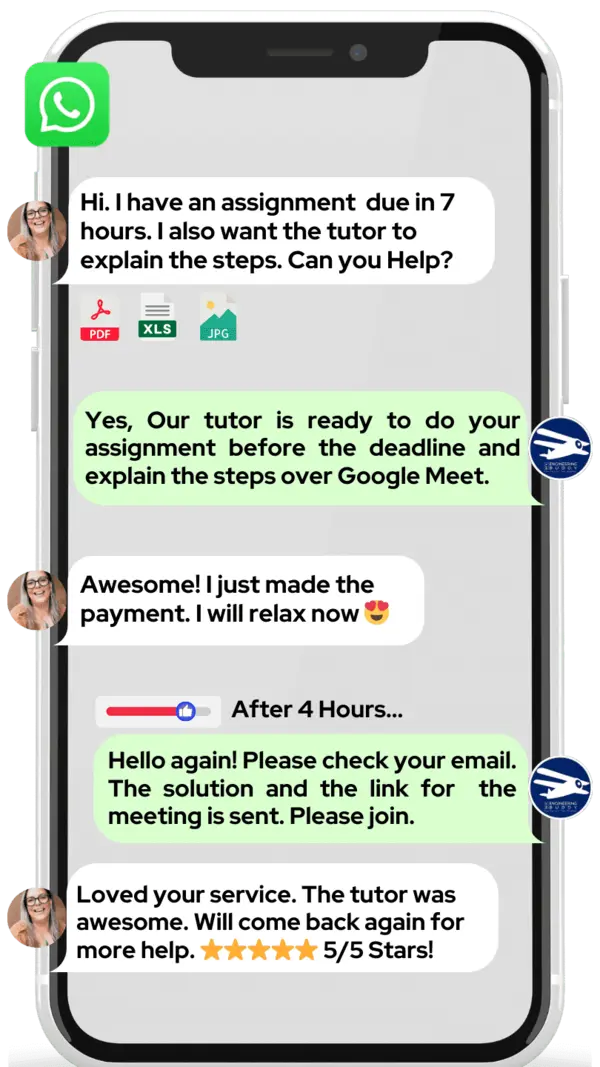



Hire The Best Power generation Tutor
Top Tutors, Top Grades. Without The Stress!
52,000+ Happy Students From Various Universities



How Much For Private 1:1 Tutoring & Hw Help?
Private 1:1 Tutoring and HW help Cost $20 – 35 per hour* on average.
Most students who fail power generation exams don’t lack ability — they hit the thermal cycles or grid stability topics and nobody explains them clearly.
Power Generation Tutor Online
Power generation is the study of converting primary energy sources — fossil fuels, nuclear, hydro, wind, solar — into electrical energy. It covers thermodynamic cycles, generator principles, grid integration, and plant operation across undergraduate and graduate electrical engineering programmes.
MEB connects you with a 1:1 online Electrical Engineering tutor who has worked through exactly the syllabus modules tripping you up right now. Whether you’re Googling a power generation tutor near me in the US, UK, Canada, or the Gulf, or you need someone who can explain Rankine cycle efficiency or turbine governor control before your next submission, MEB has tutors ready. No waitlists. No generic prep material. Just the topic you’re stuck on, explained until it makes sense.
- 1:1 online sessions tailored to your exact course and syllabus module
- Expert-verified tutors with graduate-level or professional power engineering backgrounds
- Flexible scheduling across US, UK, Canada, Australia, and Gulf time zones
- Structured learning plan built after a first-session diagnostic
- Ethical homework and assignment guidance — you understand the work, then submit it yourself
52,000+ students across the US, UK, Canada, Australia, and the Gulf have used MEB since 2008 — including students in Electrical Engineering subjects like power generation, power systems, and power electronics.
Source: My Engineering Buddy, 2008–2025.
How Much Does a Power Generation Tutor Cost?
Most power generation tutoring sessions run $20–$40/hr. Graduate-level topics — transient stability analysis, SCADA integration, advanced thermodynamics — can reach up to $100/hr depending on tutor specialisation. The $1 trial gives you 30 minutes of live 1:1 tutoring or a full explanation of one homework question before you commit to anything.
| Level / Need | Typical Rate | What’s Included |
|---|---|---|
| Undergraduate (most modules) | $20–$35/hr | 1:1 sessions, homework guidance |
| Graduate / Advanced specialist | $35–$100/hr | Expert tutor, niche depth, research support |
| $1 Trial | $1 flat | 30 min live session or 1 homework question explained |
Tutor availability tightens significantly in the four weeks before end-of-semester finals and major submission deadlines. WhatsApp MEB for a quick quote — average response time under 1 minute.
Who This Power Generation Tutoring Is For
Power generation sits at the intersection of thermodynamics, electrical machines, and grid engineering. It’s demanding at every level — and the students who struggle most are usually those who never got a clear explanation of energy conversion fundamentals before the harder topics hit.
- Undergraduate electrical or mechanical engineering students covering power plant modules
- Graduate students working through advanced grid integration or renewable energy systems
- Students retaking after a failed first attempt in power systems or energy engineering
- Students with a university conditional offer depending on this grade
- Engineers pursuing professional certification who need to fill specific knowledge gaps
- Parents watching a child’s confidence drop alongside their grades in an engineering programme
Students at universities including MIT, Georgia Tech, Imperial College London, the University of Michigan, Delft University of Technology, and the University of Waterloo have used MEB for power generation and related coursework support.
The $1 trial is the fastest way to check whether the tutor match is right — no forms, no commitment.
At MEB, we’ve found that power generation students who struggle with grid stability problems are almost always missing a clear mental model of how generators respond to load changes. Fixing that one gap usually unlocks the rest of the topic faster than any amount of additional reading.
1:1 Tutoring vs Self-Study vs AI vs YouTube vs Online Courses
Self-study works if you’re disciplined, but power generation problems — load flow equations, per-unit systems, turbine dynamics — need someone to catch where your working goes wrong. AI tools give fast definitions but can’t diagnose why your fault analysis answer is off by a factor of ten. YouTube covers Rankine cycle basics well and stops there. Online courses move at a fixed pace with no adjustment for your specific module or exam board. 1:1 tutoring with MEB is live, calibrated to your exact course, and corrects errors the moment they appear — not after you’ve submitted the assignment.
Outcomes: What You’ll Be Able To Do in Power Generation
After working with an MEB power generation tutor, you’ll be able to solve Rankine and Brayton cycle efficiency problems with confidence, analyze generator characteristics and synchronisation conditions, model load dispatch and economic operation of power plants, explain fault current behaviour in grid-connected systems, and apply per-unit normalisation correctly across multi-voltage networks. These aren’t abstract outcomes — they’re the specific skills that separate passing grades from strong ones in power engineering coursework.
Based on feedback from 40,000+ sessions collected by MEB from 2022 to 2025, 58% of students improved by one full grade after approximately 20 hours of 1:1 tutoring in subjects like power generation. A further 23% achieved at least a half-grade improvement.
Source: MEB session feedback data, 2022–2025.
Try your first session for $1 — 30 minutes of live 1:1 tutoring or one homework question explained in full. No registration. No commitment. WhatsApp MEB now and get matched within the hour.
What We Cover in Power Generation (Syllabus / Topics)

Track 1: Thermal and Nuclear Power Generation
- Rankine cycle: steam generation, turbine expansion, condensation, feedwater heating
- Brayton cycle for gas turbines: compression, combustion, expansion stages
- Combined cycle plants: HRSG integration and efficiency gains
- Nuclear reactor types: PWR, BWR, CANDU — thermal output and steam generation
- Boiler design, fuel combustion analysis, and flue gas losses
- Turbine governors and speed regulation under varying load
- Thermal plant efficiency calculations and heat rate analysis
Recommended texts: Power Plant Engineering by P.K. Nag; Thermodynamics: An Engineering Approach by Çengel & Boles; Nuclear Reactor Analysis by Duderstadt & Hamilton.
Track 2: Renewable and Distributed Generation
- Solar PV systems: cell characteristics, MPPT algorithms, inverter interfacing
- Wind turbine aerodynamics: Betz limit, power curves, variable-speed operation
- Hydroelectric generation: turbine types, head calculations, draft tube design
- Grid integration of intermittent renewables: frequency response and ramp rates
- Energy storage coupling: battery banks, pumped hydro, flywheel systems
- Distributed generation: microgrids, islanding detection, protection coordination
Recommended texts: Renewable and Efficient Electric Power Systems by Masters; Wind Energy Explained by Manwell, McGowan & Rogers.
Track 3: Generator Theory and Grid Connection
- Synchronous generator equivalent circuit and phasor analysis
- Active and reactive power control: AVR and turbine governor interaction
- Synchronisation conditions: voltage matching, frequency, phase angle
- Per-unit system: base selection, impedance normalisation, multi-machine networks
- Load flow analysis: Newton-Raphson and Gauss-Seidel methods
- Fault analysis: three-phase and asymmetrical faults, symmetrical components
- Economic dispatch and optimal power flow fundamentals
Recommended texts: Power System Analysis by Glover, Sarma & Overbye; Electric Machinery Fundamentals by Chapman.
What a Typical Power Generation Session Looks Like
The tutor opens by checking the previous topic — usually wherever the student got stuck on turbine governor response or per-unit load flow. From there, the session moves to the current problem: a worked example on, say, Rankine cycle efficiency or synchronous generator synchronisation, drawn live on a digital pen-pad so every step is visible. The student attempts the next problem while the tutor watches, catches the exact point where the working diverges, and explains why — not just what the answer is. The session closes with a specific practice task (two fault analysis problems, one load dispatch question) and a note of what comes next in the sequence.
How MEB Tutors Help You with Power Generation (The Learning Loop)
Diagnose: In the first session, the tutor identifies which specific gap is causing the most damage — often it’s per-unit normalisation or Rankine cycle thermodynamics, not the advanced topic the student thinks is the problem.
Explain: The tutor works through a fully solved example live, using a digital pen-pad on Google Meet. Every intermediate step is shown and labelled — no skipped algebra, no “this part is obvious.”
Practice: The student attempts a parallel problem with the tutor present. This is not optional. Watching someone solve a generator synchronisation problem and doing one yourself are entirely different cognitive tasks.
Feedback: The tutor identifies where the working went wrong, why marks would be lost in an exam, and what the correct reasoning looks like. Step-by-step, not just “check your signs.”
Plan: At the end of each session, the tutor notes the next topic in the sequence and sets a specific practice task. Progress is tracked across sessions so nothing falls through.
Sessions run on Google Meet with a digital pen-pad or iPad and Apple Pencil. Before the first session, have your course syllabus or module outline, a recent problem set or past paper question you couldn’t finish, and your exam or submission date. The first session covers your diagnostic and starts on the highest-priority gap immediately. Start with the $1 trial — 30 minutes of live tutoring that also serves as your first diagnostic.
Students consistently tell us that the moment a power generation concept clicks — usually when they see the per-unit system explained from base values rather than from formula sheets — the rest of the load flow analysis falls into place within the same session. The formula comes last, not first.
Tutor Match Criteria (How We Pick Your Tutor)
Not every electrical engineering tutor is right for power generation. MEB matches on four criteria.
Subject depth: The tutor must have covered your specific modules — thermal plant design, renewable integration, or generator theory — at the level you’re studying, whether that’s second-year undergraduate or a graduate power systems course.
Tools: All tutors use Google Meet with a digital pen-pad or iPad and Apple Pencil. Worked solutions are drawn live — not typed and pasted.
Time zone: Matched to your region. US, UK, Gulf, Canada, and Australia are all covered without scheduling gymnastics.
Goals: Whether you need to pass a resit, hit a distinction for a conditional offer, or fill a specific gap before a professional exam, the tutor is briefed on your target before the first session.
Unlike platforms where you fill out a form and wait, MEB responds in under a minute, 24/7. Tutor match takes under an hour. The $1 trial means you test before you commit. Everything runs over WhatsApp — no logins, no intake forms.
Study Plans (Pick One That Matches Your Goal)
After the diagnostic, the tutor builds the sequence around your timeline. Catch-up (1–3 weeks): closing specific gaps before a submission or resit — Rankine cycle, per-unit systems, or fault analysis depending on where you are. Exam prep (4–8 weeks): structured revision working through past papers, generator theory, and load flow methods systematically. Weekly support: ongoing sessions aligned to your semester, covering each new power generation module as your course progresses. The tutor maps the plan after the first diagnostic — not before.
Pricing Guide
Power generation tutoring starts at $20/hr for standard undergraduate modules. Graduate-level work — transient stability, advanced economic dispatch, SCADA systems — runs $35–$100/hr depending on tutor background and topic complexity. Rate factors include your level, the specific topic area, how quickly you need sessions scheduled, and tutor availability.
Availability in the two to three weeks before end-of-semester finals is limited. The earlier you start, the more options you have.
For students targeting top graduate programmes or professional power engineering roles, tutors with industry backgrounds in grid operations, renewable project development, or transmission planning are available at higher rates — share your specific goal and MEB will match the tier to your ambition.
Start with the $1 trial — 30 minutes, no registration, no commitment. WhatsApp MEB for a quick quote.
MEB has been running since 2008. In that time, the platform has grown to cover 2,800+ subjects across electrical engineering, power systems, and adjacent fields — with tutors available across every major time zone.
Source: My Engineering Buddy, 2008–2025.
A common pattern our tutors observe is that power generation students spend most of their study time re-reading notes on topics they already half-understand, and almost no time on the two or three specific calculations they consistently get wrong. One diagnostic session changes that immediately.
FAQ
Is power generation hard?
It’s demanding because it combines thermodynamics, electrical machine theory, and grid analysis in one subject. Most students find thermal cycle calculations and per-unit load flow the steepest parts. Both become manageable with structured, worked-example-based tutoring.
How many sessions are needed?
Students closing a single conceptual gap — per-unit systems, synchronous generator phasors — typically need 3–5 sessions. Students preparing for a full end-of-year exam over 6–8 weeks usually need 12–20 hours of 1:1 work spread across that period.
Can you help with homework and assignments?
MEB tutoring is guided learning — you understand the work, then submit it yourself. The tutor explains the method, works through a similar example, and checks your reasoning. See our Academic Integrity policy and Why MEB page for full details on what we help with and what we don’t.
Will the tutor match my exact syllabus or exam board?
Yes. When you WhatsApp MEB, share your university, module name, and exam board or course code. The tutor is matched based on that — not just on “electrical engineering” as a broad field. Syllabus fit is a hard matching criterion.
What happens in the first session?
The tutor runs a short diagnostic — asking you to work through one or two problems live — to identify exactly where understanding breaks down. From that point, the session and the plan ahead are built around what you actually need, not a generic topic order.
Is online tutoring as effective as in-person?
For power generation specifically, yes. The digital pen-pad replicates whiteboard working precisely. Students in the US, UK, Gulf, and Australia consistently report that seeing a turbine governor response or load flow diagram drawn step-by-step on screen is clearer than a static textbook diagram.
What’s the difference between power generation and power systems at university?
Power generation focuses on how electricity is produced — plant thermodynamics, generator operation, and source types. Power systems covers how that electricity moves through networks — transmission, distribution, and protection. Many degree programmes sequence them in years two and three respectively, and topics overlap significantly in grid integration modules.
Can MEB tutors help with simulation tools used in power generation courses?
Yes. Tutors support PSCAD and ETAP — the two most common simulation environments in power generation and power systems coursework. If your course uses a different platform, mention it when you WhatsApp MEB and the match will reflect that requirement.
How do I find a power generation tutor in my city?
You don’t need to. All MEB sessions are online via Google Meet. Students in New York, London, Dubai, Toronto, and Sydney get the same tutor quality and response time. Location is irrelevant — time zone compatibility is handled at the matching stage.
Can you help at midnight before a deadline?
WhatsApp MEB any time. Average response is under a minute, 24/7. If a tutor is available for that time slot, the session can be booked immediately. Peak exam periods fill fast — earlier contact gives you more options.
How do I get started?
WhatsApp MEB with your module name, exam board or university, and your timeline. You’re matched with a verified power generation tutor — usually within the hour. The first session is the $1 trial: 30 minutes live or one problem explained in full. Three steps: WhatsApp → matched → start trial.
Trust & Quality at My Engineering Buddy
Every MEB tutor goes through a subject-specific screening process — degree verification, a live demo session evaluated against a structured rubric, and ongoing review based on student feedback after each session. Tutors covering power generation topics hold relevant engineering degrees or hold professional roles in grid operations, plant engineering, or renewable energy development. Rated 4.8/5 across 40,000+ verified reviews on Google.
MEB tutoring is guided learning — you understand the work, then submit it yourself. For full details on what we help with and what we don’t, read our Academic Integrity policy and Why MEB.
MEB has been serving students across the US, UK, Canada, Australia, the Gulf, and Europe since 2008 — across 2,800+ subjects. In Electrical Engineering specifically, that includes power generation, power system analysis tutoring, electrical machines tutoring, and control systems help. The platform’s tutoring methodology is described in full at our tutoring methodology page.
The National Fire Protection Association publishes standards that inform electrical safety in power generation facilities — a reminder of how directly this subject connects to professional practice and real infrastructure.
National Fire Protection Association
Explore Related Subjects
Students studying power generation often also need support in:
- Power Transmission Systems
- Power System Protection
- Smart Grid
- Energy Storage Systems
- Thermal Power Plants
- Photovoltaic Cells & Solar Energy Panels
- Electromechanical Energy Conversion
- High Voltage Engineering
Next Steps
When you WhatsApp MEB, share three things: your exam board or university module name, the topics giving you the most trouble right now, and your exam or submission date. MEB matches you with a verified power generation tutor — usually within 24 hours, often faster.
Before your first session, have ready:
- Your course syllabus or module outline (or exam board and paper code)
- A recent problem set, past paper question, or homework you couldn’t finish
- Your exam or deadline date
The tutor handles the rest — diagnostic first, topic plan built from there, every session focused on what you actually need to move forward.
Visit www.myengineeringbuddy.com for more on how MEB works.
WhatsApp to get started or email meb@myengineeringbuddy.com.
Reviewed by Subject Expert
This page has been carefully reviewed and validated by our subject expert to ensure accuracy and relevance.

