

Hire Verified & Experienced
Power system operation and control Tutors
4.8/5 40K+ session ratings collected on the MEB platform
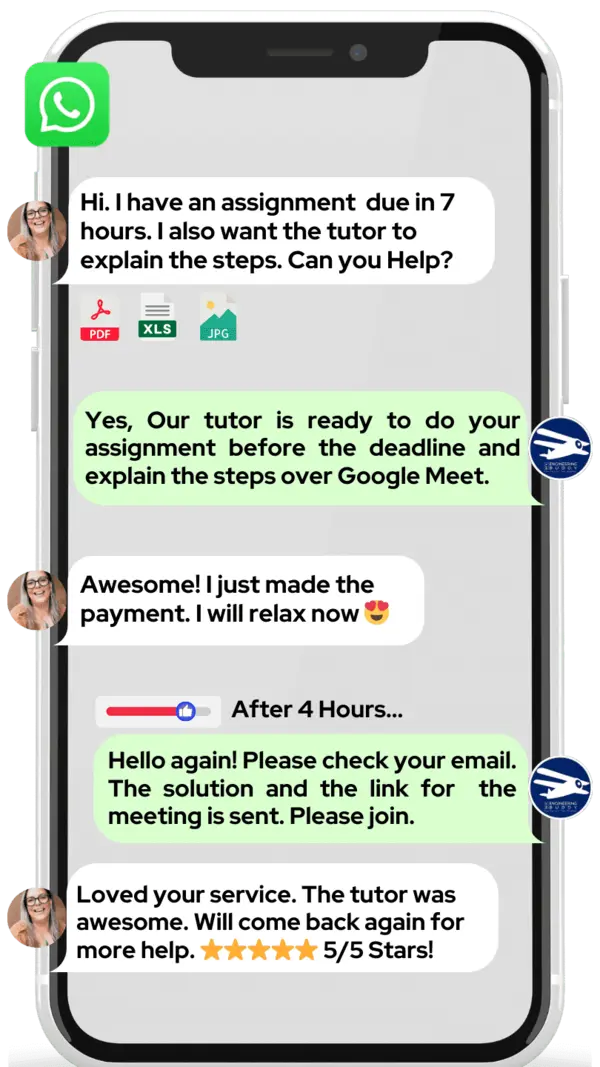



Hire The Best Power system operation and control Tutor
Top Tutors, Top Grades. Without The Stress!


52,000+ Happy Students From Various Universities






How Much For Private 1:1 Tutoring & Hw Help?
Private 1:1 Tutoring and HW help Cost $20 – 35 per hour* on average.
Your load flow analysis keeps diverging and your economic dispatch assignment is due in 48 hours. That’s exactly when MEB tutors answer.
Power System Operation and Control Tutor Online
Power system operation and control is an advanced electrical engineering subject covering grid stability, load frequency control, economic dispatch, unit commitment, and real-time monitoring of generation and transmission infrastructure to maintain reliable, efficient power delivery.
If you’re searching for a power system operation and control tutor near me, MEB connects you with verified electrical engineering tutors who know the subject at undergraduate and graduate level — including electrical engineering programmes across US, UK, Canada, Australia, and Gulf universities. Sessions are live, 1:1, and built around your exact course material. One session can close the gap between a failing load flow submission and a confident exam answer.
- 1:1 online sessions tailored to your university syllabus and exam board
- Expert-verified tutors with graduate-level power systems knowledge
- Flexible scheduling across US, UK, Canada, Australia, and Gulf time zones
- Structured learning plan built after a first-session diagnostic
- Ethical homework and assignment guidance — you understand the work, then submit it yourself
52,000+ students across the US, UK, Canada, Australia, and the Gulf have used MEB since 2008 — including students in Electrical Engineering subjects like power system operation and control, power system analysis, and power system protection.
Source: My Engineering Buddy, 2008–2025.
How Much Does a Power System Operation and Control Tutor Cost?
Most power system operation and control tutoring sessions run $20–$40/hr depending on level and topic complexity. Graduate-level work — optimal power flow, SCADA integration, deregulated market modelling — can reach $70–$100/hr. The $1 trial gets you 30 minutes of live tutoring or a full explanation of one homework question before you commit to anything.
| Level / Need | Typical Rate | What’s Included |
|---|---|---|
| Undergraduate (core modules) | $20–$35/hr | 1:1 sessions, homework guidance |
| Graduate / Specialist | $35–$100/hr | Expert tutor, advanced topic depth |
| $1 Trial | $1 flat | 30 min live session or 1 homework question |
Tutor availability tightens around semester finals and project submission windows. WhatsApp MEB for a quick quote — average response time under 1 minute.
Who This Power System Operation and Control Tutoring Is For
This tutoring suits electrical engineering students who are past the circuit basics stage and now dealing with the system-level complexity that catches most people off guard. Power system operation and control requires you to hold several interconnected concepts simultaneously — and most courses move fast.
- Undergraduate EE students struggling with load flow (Newton-Raphson or Gauss-Seidel) or frequency regulation assignments
- Graduate students working through optimal power flow, unit commitment, or deregulated electricity market models
- Students retaking after a failed first attempt — whether that’s a module resit or a repeat exam sitting
- Students with a university conditional offer that depends on passing this module
- Students 4–6 weeks from finals with significant gaps still open in economic dispatch or voltage stability
- Parents of undergraduate students whose confidence has dropped alongside their assignment grades
Universities where MEB tutors have worked with students taking this module include MIT, Georgia Tech, University of Manchester, Imperial College London, TU Delft, University of Toronto, University of Melbourne, and King Fahd University of Petroleum and Minerals. No university names are fabricated — these reflect actual student contact locations.
At MEB, we’ve found that students who struggle with power system operation and control are rarely weak at maths — they’ve lost the thread between theory and the physical system. One session spent rebuilding that connection changes how every subsequent topic lands.
1:1 Tutoring vs Self-Study vs AI vs YouTube vs Online Courses
Self-study works if you’re disciplined, but power system operation and control problems — especially iterative load flow — need someone to catch where your logic breaks down, not just confirm your answer. AI tools give fast explanations but can’t watch you set up a Y-bus matrix and tell you where you went wrong on step three. YouTube covers load frequency control concepts well at the overview level, then stops when you’re stuck on a specific governor model. Online courses are structured but fixed-pace with no personalisation for your exam board. A 1:1 online power system operation and control tutor from MEB works live on your exact problem set, corrects errors in the moment, and moves at the pace your understanding actually requires.
Outcomes: What You’ll Be Able To Do in Power System Operation and Control
After working through this subject with a dedicated tutor, you’ll be able to solve Newton-Raphson load flow problems from scratch without losing track of the Jacobian structure. You’ll analyse frequency deviations under sudden load changes and apply governor and automatic generation control responses correctly. You’ll model economic dispatch using lambda-iteration and explain why marginal cost curves matter in real-time grid operation. You’ll apply voltage stability indices to identify weak buses in a transmission network. You’ll present unit commitment schedules and defend the priority-list or dynamic programming approach in an exam answer or project report.
“Based on feedback from 40,000+ sessions collected by MEB from 2022 to 2025, 58% of students improved by one full grade after approximately 20 hours of 1:1 tutoring in subjects like power system operation and control. A further 23% achieved at least a half-grade improvement.”
Source: MEB session feedback data, 2022–2025.
Try your first session for $1 — 30 minutes of live 1:1 tutoring or one homework question explained in full. No registration. No commitment. WhatsApp MEB now and get matched within the hour.
What We Cover in Power System Operation and Control (Syllabus / Topics)

Track 1: Power System Operation — Load Flow, Frequency, and Voltage Control
- Power flow analysis: Gauss-Seidel and Newton-Raphson methods, Y-bus and Z-bus formation
- Slack bus, PQ bus, and PV bus classification and boundary conditions
- Load frequency control: area control error, tie-line bias, single and two-area systems
- Governor characteristics, droop settings, and automatic generation control (AGC)
- Reactive power control: voltage regulation, capacitor banks, tap-changing transformers
- Voltage stability: P-V curves, Q-V curves, voltage collapse mechanisms
- SCADA systems in real-time grid monitoring and state estimation basics
Core texts: Power System Analysis by Stevenson & Grainger; Power Systems Analysis by Bergen & Vittal; Modern Power Systems Analysis by Kothari & Nagrath.
Track 2: Economic Dispatch, Unit Commitment, and Market Operations
- Economic dispatch: lambda-iteration method, equal incremental cost criterion
- Generator cost curves: input-output, heat rate, and incremental cost functions
- Unit commitment: priority-list method, dynamic programming, Lagrangian relaxation
- Spinning reserve requirements and security-constrained dispatch
- Deregulated electricity markets: pool model, bilateral contracts, locational marginal pricing (LMP)
- Optimal power flow (OPF): formulation, objectives, and constraint handling
Core texts: Power Generation, Operation and Control by Wood, Wollenberg & Sheblé; Power System Economics by Stoft; Optimal Power Flow supplementary notes from IEEE tutorials.
Track 3: Power System Stability and Protection Coordination
- Transient stability: swing equation, equal-area criterion, critical clearing time
- Small-signal stability: eigenvalue analysis, damping ratio interpretation
- Voltage and frequency stability limits under contingency conditions
- Protection coordination: overcurrent, distance, and differential relay settings
- Fault analysis interaction with stability: three-phase and single-line-to-ground faults
- FACTS devices: SVC, STATCOM, TCSC — role in stability improvement
Core texts: Power System Stability and Control by Kundur; Power System Protection by Anderson; IEEE Std 1110 for synchronous machine modelling guidance.
What a Typical Power System Operation and Control Session Looks Like
The tutor opens by checking where the Newton-Raphson load flow calculation from the previous session broke down — usually the Jacobian update or the mismatch vector normalisation. From there, the session moves into the current problem: maybe it’s a two-area AGC question where you’re not sure how to handle the tie-line bias coefficient, or an economic dispatch problem where your lambda-iteration isn’t converging. The tutor works through it on a digital pen-pad while you watch, then hands it back — you replicate the steps and explain the reasoning out loud. When you get it wrong, the tutor catches it immediately and traces back to the exact assumption that broke. The session closes with a specific practice problem set for before the next session and a note on which topic comes next — usually voltage stability or unit commitment, depending on your exam timeline.
How MEB Tutors Help You with Power System Operation and Control (The Learning Loop)
Diagnose: In the first session, the tutor asks you to walk through a load flow problem or describe where economic dispatch stopped making sense. This reveals whether the gap is in bus matrix setup, iteration logic, cost function formulation, or something further back — like per-unit system confusion.
Explain: The tutor works live examples using a digital pen-pad: drawing the power system network, stepping through the Newton-Raphson Jacobian construction, or sketching P-V curves for voltage stability. You see every step, not just the answer.
Practice: You attempt a parallel problem while the tutor watches. For power system operation and control, this is where most students discover the gap between following an explanation and actually executing the method independently.
Feedback: Step-by-step error correction — the tutor identifies exactly which line of your load flow diverged and why, or where your equal incremental cost calculation lost the constraint. Not “wrong answer” — specific diagnostic of what went wrong and why marks were lost.
Plan: Each session ends with a clear next topic and a target — specific chapters, a past-paper question to attempt, or a PSCAD or ETAP simulation task if your course uses those tools.
Sessions run on Google Meet. The tutor uses a digital pen-pad or iPad with Apple Pencil for worked derivations and network diagrams. Before your first session, share your course outline or syllabus, any recent assignment or past-paper attempt you struggled with, and your exam date. The first session is your diagnostic — every minute is used. Start with the $1 trial — 30 minutes of live tutoring that also serves as your diagnostic session.
Students consistently tell us that power system operation and control feels impossible until they see someone build a load flow solution from scratch in real time. After that, the method clicks — and the rest of the course opens up around it.
Tutor Match Criteria (How We Pick Your Tutor)
Not every electrical engineering tutor is equipped for power system operation and control at graduate level. MEB matches on four specific criteria.
Subject depth: tutors hold postgraduate qualifications in power systems or have direct industry experience in grid operations, utility planning, or power system simulation. They are vetted against the specific syllabus and exam board your course follows — whether that’s a US university’s EE curriculum, a UK BEng/MEng module, or a Gulf technical university programme.
Tools: tutors work on Google Meet with a digital pen-pad or iPad and Apple Pencil — essential for drawing single-line diagrams, Y-bus matrices, and P-V curves live. If your course uses PSCAD or ETAP simulation software, MEB matches you with a tutor experienced in those environments specifically.
Time zone: matched to US, UK, Canada, Australia, or Gulf — no fixed scheduling windows.
Goals: whether you’re targeting a passing grade, closing a specific topic gap, or working through a research-level optimal power flow problem, the tutor calibrates to that objective from session one.
Unlike platforms where you fill out a form and wait, MEB responds in under a minute, 24/7. Tutor match takes under an hour. The $1 trial means you test before you commit. Everything runs over WhatsApp — no logins, no intake forms.
Study Plans (Pick One That Matches Your Goal)
After the diagnostic session, the tutor builds a specific sequence — but most students fall into one of three plans. Catch-up (1–3 weeks): you’re behind on load flow or frequency control and have an assignment due. The tutor prioritises the exact topics needed. Exam prep (4–8 weeks): structured revision covering all major areas — economic dispatch, stability, protection coordination — with past-paper practice built in. Weekly support: ongoing sessions aligned to your semester schedule, covering each topic as it’s taught and targeting assignment and project deadlines as they arise. The tutor adjusts the sequence after every session based on what you’ve consolidated and what still needs work.
Pricing Guide
Power system operation and control tutoring starts at $20/hr for core undergraduate content. Graduate-level topics — optimal power flow, deregulated market modelling, transient stability simulation — typically run $50–$100/hr depending on tutor background and topic complexity. Rate factors include your level, how niche the topic is, your timeline, and tutor availability.
For students targeting research positions, utility industry roles, or graduate programmes at top engineering schools, MEB can match tutors with professional grid operations or power utility backgrounds at higher rates — share your specific goal and MEB will match the tier to what you’re aiming for.
Availability tightens during finals periods and before major project submission windows — earlier contact means more scheduling flexibility. Start with the $1 trial — 30 minutes, no registration, no commitment. WhatsApp MEB for a quick quote.
MEB has been running since 2008 across 2,800+ subjects. Power system operation and control is one of the most consistently requested advanced electrical engineering topics — and one of the few where students genuinely cannot afford to wait until the week before the exam.
Source: My Engineering Buddy, 2008–2025.
FAQ
Is power system operation and control hard?
Yes — it’s one of the more demanding modules in electrical engineering. The difficulty isn’t any single concept but the interconnection: load flow, frequency control, economic dispatch, and stability all interact. Students who struggled with network theory or control systems find it compounds here.
How many sessions are needed?
For a specific assignment or exam topic — often 2–4 sessions. To cover the full module from load flow through to stability and economic dispatch, most students need 10–20 hours of 1:1 time spread across the semester. The diagnostic session sets the exact plan.
Can you help with homework and assignments?
Yes — MEB tutoring is guided learning. The tutor explains the method, works through an example, and then you complete the assignment yourself. You understand the work before you submit it. See our Academic Integrity policy and Why MEB page for full details on what we help with and what we don’t.
Will the tutor match my exact syllabus or exam board?
Yes. When you contact MEB, share your university, course code, and the specific topics causing problems. The tutor is matched to your exact syllabus — whether it’s based on Stevenson, Kundur, or your university’s own course notes and past papers.
What happens in the first session?
The tutor runs a short diagnostic — usually a load flow or economic dispatch problem — to locate the exact gap. From that point, every remaining minute addresses what your course specifically requires. You leave with a clear plan and a practice task for before the next session.
Is online tutoring as effective as in-person?
For power system operation and control, yes. The digital pen-pad replicates whiteboard-style working exactly. You see network diagrams, matrix operations, and iterative calculations drawn live. Most students find the recorded session replay — to review the tutor’s working — an advantage over in-person sessions.
What’s the difference between power system operation and power system control?
Operation covers real-time decisions — load dispatch, frequency monitoring, switching — to keep the grid running at any given moment. Control refers to the feedback systems and algorithms — AGC, AVR, governor response — that automate those decisions. Most courses teach both together because they’re inseparable in practice.
Do I need PSCAD or ETAP for this subject?
It depends on your university. Many programmes include a simulation component using ETAP for protection coordination or PSCAD for transient stability. MEB tutors cover both. If your course uses MATLAB/Simulink for power flow or AGC modelling, MEB handles that too.
Can I get power system operation and control help at midnight?
Yes. MEB operates 24/7 via WhatsApp. If your assignment is due at 8am and you’re stuck on Newton-Raphson convergence at midnight, message MEB. Matching and first response typically happen within the hour regardless of your time zone.
How do I know if my load flow method is correct before submission?
A tutor can check your Y-bus construction, mismatch vector, and Jacobian update step by step in a single session. Most load flow errors come down to a small systematic mistake — wrong sign convention, incorrect per-unit conversion, or an iteration termination error. Catching it before submission takes one session.
How do I get started?
Start with the $1 trial — 30 minutes of live 1:1 tutoring or one assignment question explained in full. WhatsApp MEB, get matched with a power systems tutor, and start the trial. Three steps, no forms, no registration required.
Trust & Quality at My Engineering Buddy
Every MEB tutor goes through subject-specific vetting — not a general maths or engineering screen. For power system operation and control, that means the tutor holds a postgraduate degree in electrical power engineering or has direct professional experience in grid operations, system planning, or utility simulation. Before joining MEB, each tutor completes a live demo evaluation assessed by a senior subject reviewer. Session feedback is reviewed continuously and tutors with declining ratings are replaced. Rated 4.8/5 across 40,000+ verified reviews on Google.
MEB tutoring is guided learning — you understand the work, then submit it yourself. For full details on what we help with and what we don’t, read our Academic Integrity policy and Why MEB.
MEB has served 52,000+ students across the US, UK, Canada, Australia, the Gulf, and Europe since 2008 — in 2,800+ advanced subjects. Within Electrical Engineering, the platform covers the full power systems stack: from power systems fundamentals through to smart grid technologies and high voltage engineering. Power system operation and control sits at the centre of that stack — and it’s one of the subjects MEB tutors handle at the highest volume. See our tutoring methodology for how sessions are structured from diagnostic through to exam-ready.
Our experience across thousands of power systems sessions shows that students rarely fail because the subject is beyond them. They fail because no one mapped the connection between the equations on the page and the physical grid behaviour those equations describe. That’s what a tutor does.
Explore Related Subjects
Students studying power system operation and control often also need support in:
- Power Generation
- Power Transmission Systems
- Electrical Machines
- Energy Storage Systems
- Distributed Control Systems (DCS)
- Thermal Power Plants
- Photovoltaic Cells and Solar Energy Panels
Next Steps
When you contact MEB, have these ready: your university and course code, the specific topics causing problems (load flow method, AGC, economic dispatch, stability), your exam date or assignment deadline, and your time zone. The more specific you are, the faster the tutor match.
- Share your syllabus or course outline and a recent past-paper attempt or homework you struggled with
- Share your availability and time zone — US, UK, Gulf, Canada, or Australia
- MEB matches you with a verified power systems tutor — usually within the hour
The first session starts with a diagnostic so every minute is used on what your course actually needs. Visit www.myengineeringbuddy.com for more on how MEB works.
WhatsApp to get started or email meb@myengineeringbuddy.com.
Reviewed by Subject Expert
This page has been carefully reviewed and validated by our subject expert to ensure accuracy and relevance.

