
Electrical Engineering Tutoring Online: Expert Homework & Assignment Help in 2025

Personalized electrical engineering tutoring helps students master circuits and assignments. Online sessions provide flexible one-on-one support and expert guidance, boosting grades and confidence in a challenging field.

Understanding Electrical Engineering
For many students, electrical engineering means understanding circuits, electronics, and the hidden currents that power our daily lives. It blends physics, math, and creativity to design everything from microchips to power grids. In the classroom, an Electrical Engineering teacher covers these topics broadly, but students often need more personalized help to fully grasp difficult concepts.
Electrical Engineering is a broad field. Here is a visual map of the key areas our expert tutors specialize in:
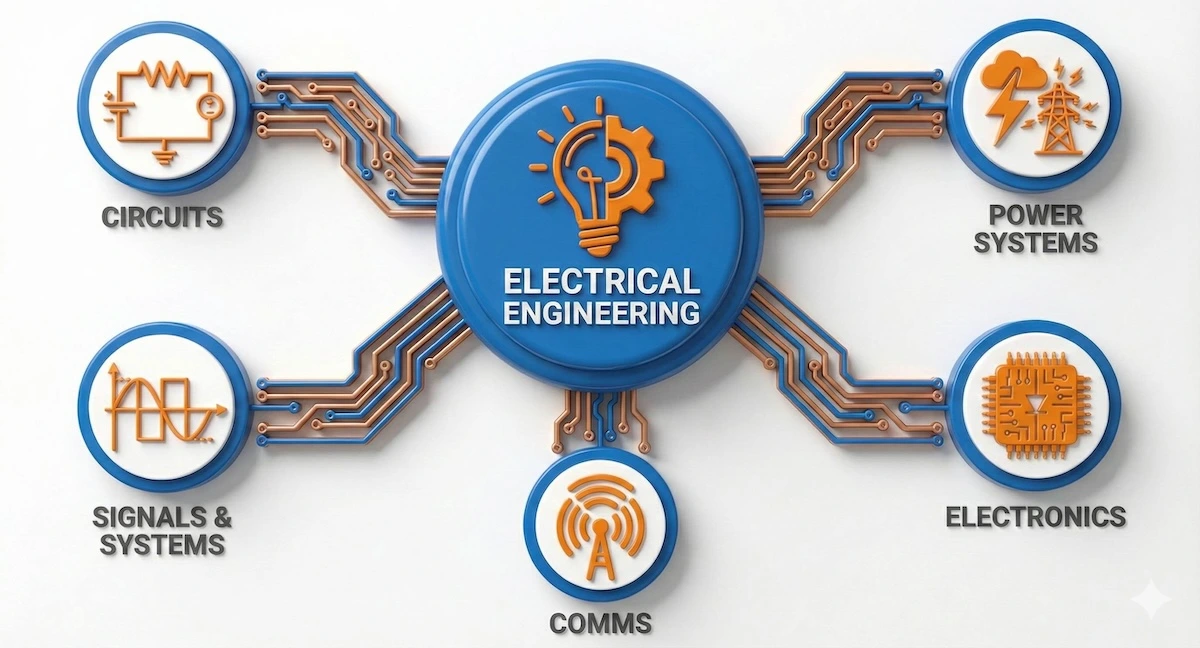
From Power Systems to Electronics, our expert tutors cover the entire spectrum of electrical engineering topics.
Whether you are struggling with basic circuits or advanced power systems, we have a specialist for you.
Teachers vs Tutors: Different Roles
An Electrical Engineering teacher designs the classroom curriculum and explains fundamentals to the whole group, but with large classes, individual attention is limited. A tutor steps in to offer customized help on the student’s schedule. Tutors can adapt to each learner’s style, revisit unclear topics like signals or circuit analysis, and answer every question in depth. This one-on-one support complements the teacher’s lessons and boosts understanding.
Wondering how a private tutor differs from your college professor? The comparison below highlights the key advantages of personalized instruction.
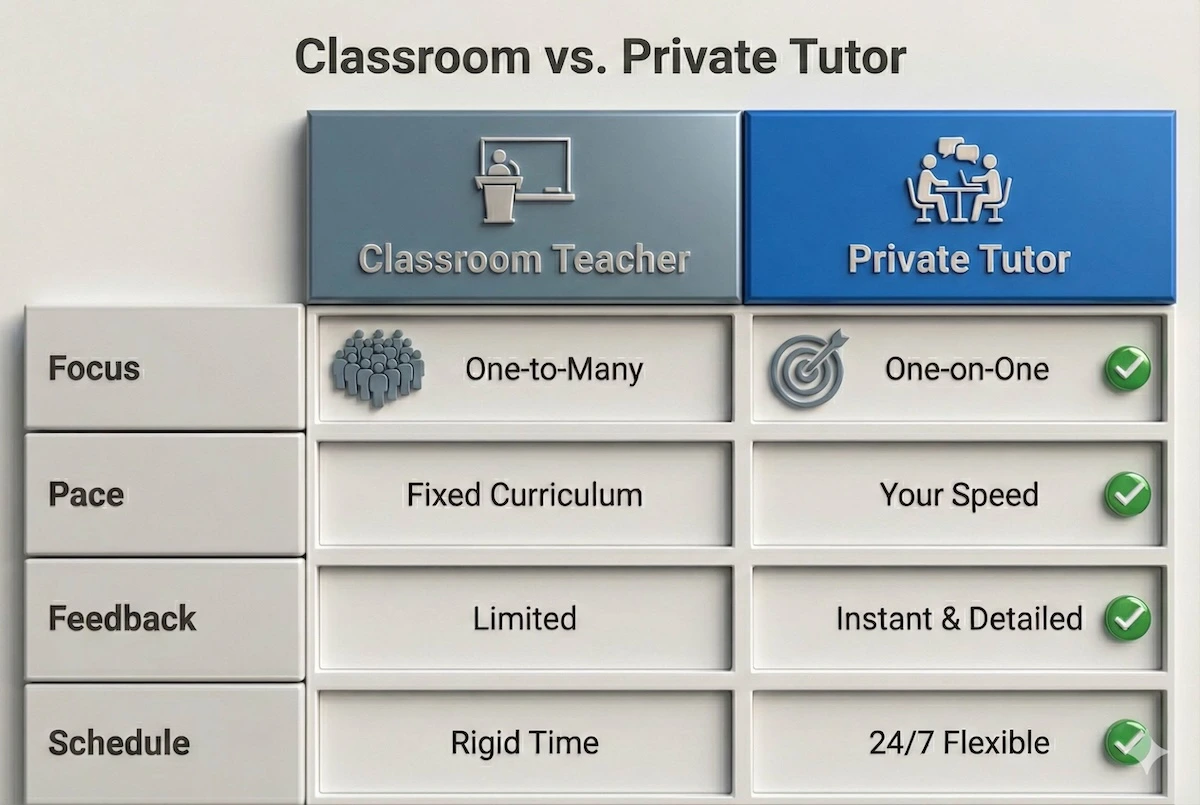
See how personalized tutoring fills the gaps left by traditional classroom instruction.
As you can see, the flexibility and instant feedback provided by a tutor complement your classroom learning perfectly.
Benefits of Tutoring for Electrical Engineering
For a student tackling electrical engineering, a private tutor can make all the difference. One student found that working with a patient tutor turned confusing homework problems into clear, step-by-step solutions. Tutoring sessions provide the time and attention that a busy class might not allow. Interestingly, one study found 76% of students had never used tutoring services even though they believed it would help. Students who do use tutoring often outperform peers: in one study, tutored college students achieved pass rates about 7% higher than classmates who did not use tutoring. Educational research also shows that high-impact, one-on-one tutoring can accelerate learning by several months.
- Personalized attention: The tutor focuses on your specific questions and learning pace.
- Concept clarity: Complex topics like circuit analysis or signal processing are broken down into simple, understandable steps.
For example, taking a fundamental concept like Ohm’s Law, a tutor helps you visualize the relationships between variables:
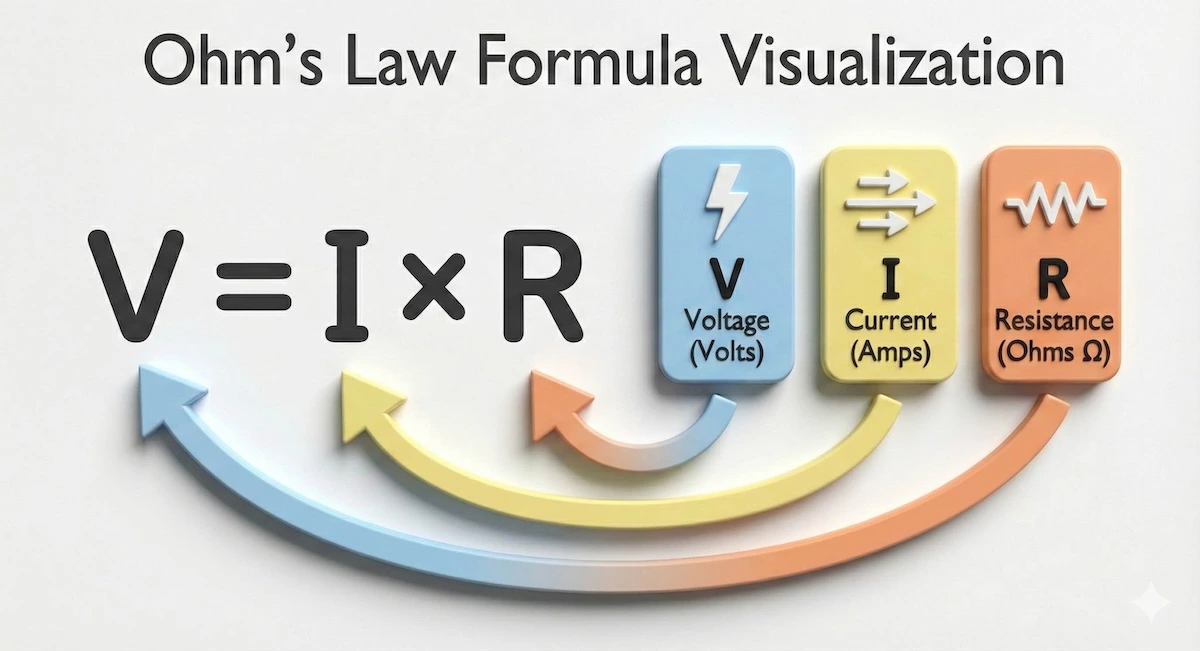
Our tutors break down complex formulas like Ohm’s Law into simple, understandable components.
Mastering these foundational formulas through visualization makes solving complex circuit problems much more intuitive.
- Homework & project help: Tutors provide step-by-step guidance on assignments (often called electrical engineering homework help or assignment help), so you learn how to solve problems, not just get answers.
- Flexible scheduling: Sessions can fit your busy life, especially with electrical engineering tutoring online allowing you to meet a tutor from anywhere.
- Confidence building: Small successes and positive feedback from a tutor boost your confidence and motivation.
With these advantages, many students see clear improvements. For example, a tutoring program in Italy during COVID-19 was shown to raise student test scores by 0.26 standard deviations on average. High-impact tutoring has even been found to increase learning by the equivalent of 3–15 additional months of instruction. These gains highlight how targeted tutoring can boost both grades and understanding in challenging subjects.
The numbers speak for themselves. Let’s look at the data regarding student performance improvement:
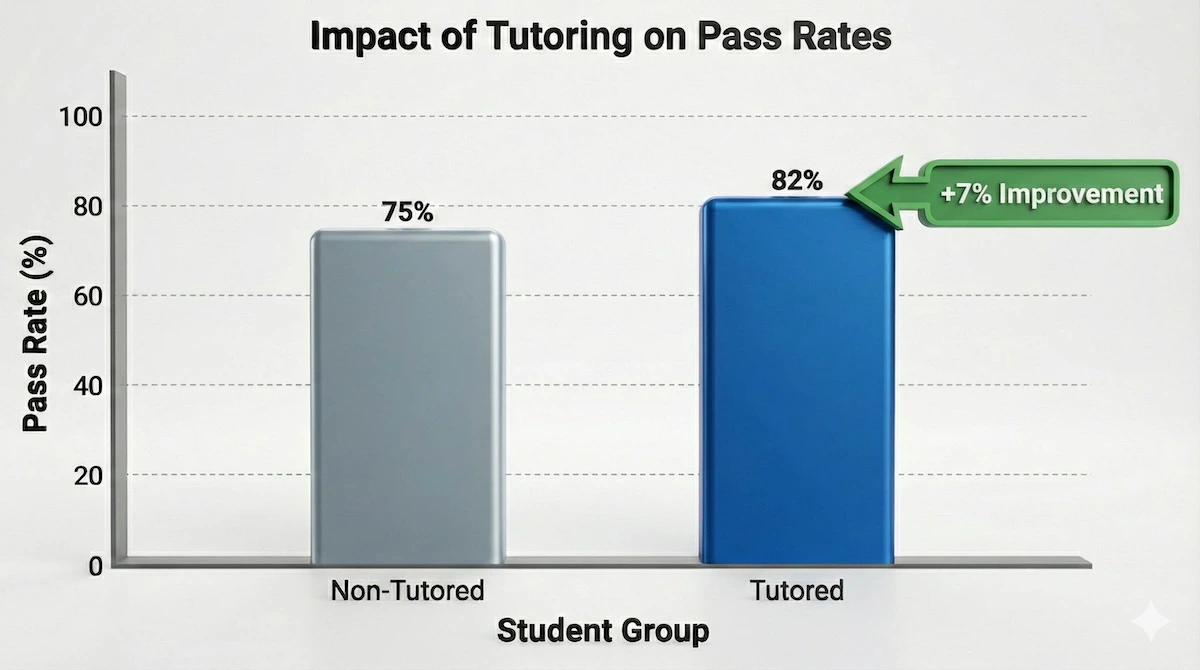
Research shows that students who use tutoring services consistently achieve higher pass rates.
That 7% difference often determines whether a student passes a difficult core requirement or has to retake the course.
Online vs. In-Person Electrical Engineering Tutoring
Online tutoring is increasingly popular in today’s digital age. You can connect with expert tutors from anywhere – even another country – right from home. Video chat and virtual whiteboards let you and your tutor draw circuits or solve equations together as if you were in the same room. This flexibility makes scheduling easy around classes or part-time work. However, some students still prefer in-person tutoring for hands-on lab work or hardware projects. In both cases, tutoring complements classroom teaching and makes it easier to tackle tough homework. The online tutoring industry is booming: one report estimates the global market at about $10.4 billion in 2024, with STEM (science, technology, engineering, and math) subjects accounting for the largest share.
Finding the Right Electrical Engineering Tutor
When searching for help, look for a tutor with a strong background in electrical engineering. Many students choose tutors who hold an EE degree or have industry experience. You can find and hire an electrical engineering tutor on many online platforms, where you view qualifications and ratings in advance. Check if they specialize in the topics you need (circuits, electronics, etc.) and have good feedback from other learners. A good tutor is patient and can explain concepts in different ways. If cost matters, compare rates: many tutors charge around $20–$60 per hour, with higher prices for advanced or specialized expertise. It’s wise to start with a trial lesson to ensure the tutor’s teaching style fits you and to clarify how they can assist with specific assignments or homework problems.
- Qualifications: Look for an EE degree or proven expertise in circuits, electronics, and related topics.
- Experience: Check that they’ve helped students at your level (high school vs. college) and have successful reviews.
- Availability: Make sure their schedule and timezone fit yours, especially if you need regular sessions.
- Teaching style: Some tutors focus on theory, others on problem-solving; find one that matches your learning needs.
- Platform & Cost: Use reputable tutoring websites to find an electrical engineering tutor online; compare profiles and hourly rates (expect $20–$80/hr depending on expertise).
Tips for Successful Tutoring Sessions
- Prepare specific questions or topics before each session to use your tutor’s time wisely.
- Have your textbook, class notes, or homework ready to review during the lesson.
- Focus on understanding each step: ask the tutor to explain the reasoning behind formulas or circuit diagrams.
- Work through examples during the session, then try similar problems on your own afterward to reinforce learning.
- Set clear goals for each session (e.g., finishing a specific assignment or mastering one concept) so the tutor knows what you need to achieve.
With these strategies, tutoring becomes more effective and rewarding. Students often find that active participation—asking questions and solving problems during the lesson—makes a session truly valuable. Over time, regular tutoring can build strong foundations in electrical engineering, making future coursework much easier.
To summarize these tips, here is a quick workflow to keep in mind for your next appointment:
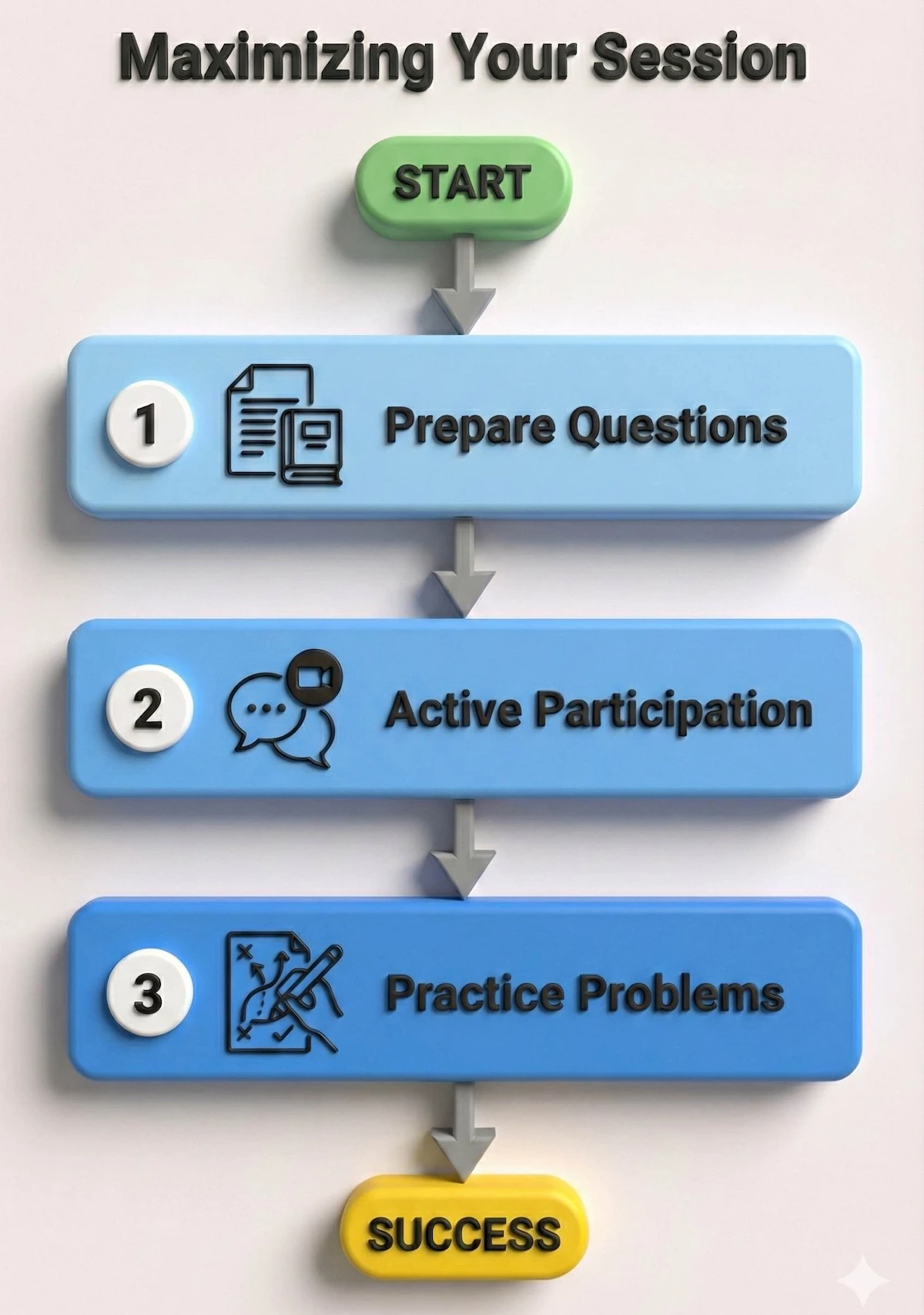
Follow this simple three-step workflow to get the maximum value from every hour of tutoring.
By following this simple cycle of preparation and practice, you ensure that every minute of tutoring translates to better grades.
Frequently Asked Questions
Q: What is electrical engineering tutoring? It’s personalized instruction where a tutor guides a student through electrical engineering concepts (like circuits, electronics, or power systems) and problem-solving strategies.
Q: Who benefits from electrical engineering tutoring? Any student taking electrical engineering courses—high school, college, or certification programs—can benefit, especially if they need extra help with homework or exam preparation.
Q: How does online electrical engineering tutoring work? You connect via video chat and digital tools so the tutor can see and work through your problems in real time; it’s just like an in-person lesson but convenient from home.
Q: What topics do electrical engineering tutors cover? Tutors can cover a wide range, including circuit theory, electronics, signal and systems analysis, electromagnetics, power engineering, control systems, and the math/physics behind them.
Q: How much does it cost to hire an electrical engineering tutor? Rates vary by tutor experience and location, but typically range from about $20 to $80 per hour; specialized experts or exam prep tutors may charge more.
Q: How do I find a qualified electrical engineering tutor? Use reputable tutoring platforms or services and look for tutors with strong EE credentials (degrees, certifications, experience) and positive student reviews; often these sites let you compare tutor profiles and schedule trial lessons.
Related Subjects are below:
Advanced Design System (ADS)
Analog Circuits
Analog Communication
Analog Electronics
Analog Signal Processing
Arduino Programming
Audio Engineering
Basic Electronics
Battery technology
Broadcast Engineering
Circuit Analysis
Circuit Design
Communication Systems
Computer Engineering
Computer Hardware
Control engineering
Control Systems
Digital Circuit
Digital Communications
Digital Electronics
Digital signal processing
Distributed Control Systems DCS
Electrical and Electronics
Electrical Circuits
Electrical Machines
Electromagnetic field theory
Electronic Circuit Design
Electronics
Electronics Engineering
Embedded C programming
Embedded systems
ETAP
FPGA design
High voltage engineering
Industrial Automation
Instrumentation and Control Engineering
Integrated Circuits (IC)
Internet of things (IoT)
Logic gates
LTspice
Microcontrollers
Microelectronics
Microprocessors
Microwave engineering
MOSFET
Multisim
Network Theory
Operational Amplifiers
Optical Communications
Optical engineering
Optoelectronics
PCB Design
Power Electronics
Power Engineering
Power generation
Power system analysis
Power system operation and control
Power systems
PSCAD
Pspice
Radar systems
Semiconductor Devices
Sensors and Actuators
Signals and Systems
Software Engineering
Sound Design
Telecommunications
Transmission lines and Waveguides
Verilog
VHDL
VLSI design
Wireless Communication
******************************
This article provides general educational guidance only. It is NOT official exam policy, professional academic advice, or guaranteed results. Always verify information with your school, official exam boards (College Board, Cambridge, IB), or qualified professionals before making decisions. Read Full Policies & Disclaimer , Contact Us To Report An Error